
Updated: 22 September 2025 22:58:52
The Case of a Sudanese Refugee Touches a Greek Writer and Lawyer
moatinoon
The Greek writer and lawyer Vasilis Papastergiou shared his direct legal experience with the case of a Sudanese refugee, as part of a broader reflection on European migration policies and the humanitarian situation in Africa.
Africa’s Open Wounds
A few days ago, at a gathering, I met a woman I have known for a long time, one of the good people I got to know through my work in the field of migration and asylum. I had not seen her for years. She has been living in Mauritania for three years.
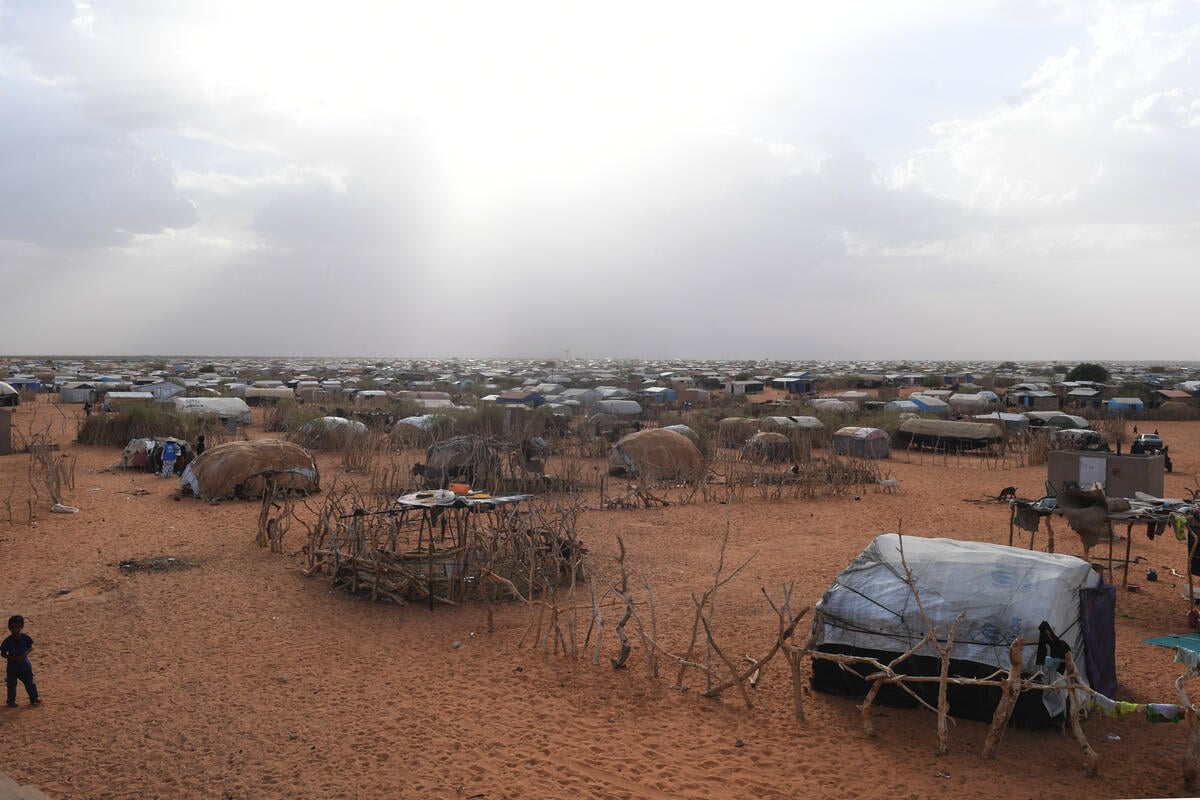
She works on a mission with the United Nations High Commissioner for Refugees at a center (which we might call) for receiving refugees, near the Mauritanian border with Mali.
There is a massive flow of people fleeing Mali toward the Mauritanian coast on the Atlantic Ocean, hoping to reach the Canary Islands by boat, which, as is well known, belong to Spain. The Mauritanian government has increasingly been trying — as much as it wants and can — to block this movement, and has established (mandatory) residence centers for Malians fleeing. My friend works in one of these centers. A year ago, the number of refugees there was 60,000. Today it exceeds 120,000. It is the size of a city like Heraklion, for example. How many of them will manage to reach the Canary Islands? No one knows.
Frankly, until a few days ago, I knew nothing about all this.
In the film Io Capitano (“I Am Captain”), another journey to Europe is portrayed, even more intense and dangerous. Two boys from Senegal head toward the “paradise” of Italy, crossing the desert, leaving behind many who will not make it and will die there, before being imprisoned in the “hell” of Libya, and finally managing to escape and arrive in Italy. It is a journey that millions of men and women from Sub-Saharan Africa attempt to make.
Two or three years ago, I took on the case of a disabled refugee from Sudan. At the same time that Sudan was going through a devastating civil war leaving dead and displaced, the Greek state rejected his asylum request, and then refused to examine his application for humanitarian residence status — on account of his disability — an option that was abolished by law in 2020, even for pending applications. The rejection was overturned by administrative courts, but the Ministry of Migration and Asylum stubbornly refused to review the application, eventually leading the administrative courts to impose a financial fine on the ministry for failing to comply with the court ruling. In the end, the ministry (under Voridis and Plevris, the former and current ministers of migration) was forced to grant the man a residence permit, while we are still waiting for the “very busy” minister to pay him the financial penalty ordered by the court.
On the occasion of this story, I follow the brutal civil war taking place in Sudan: a war between an authoritarian government and rival paramilitary gangs. A war without good guys and bad guys — only bad guys. With hundreds of thousands dead and 12 million displaced. In nearby Chad, South Sudan, and Egypt, there are hundreds of refugee camps for Sudanese people. Of course, had I not met this particular man in the context I described, I would not have known much about all this.
We know very little about Africa — its people, its history, its tragedies. That is why those who come here, to our regions, as refugees and migrants, seem to us completely foreign, all alike despite their many differences — people without a homeland, without a history, although in fact they have all these.
The colonial view of Africa sees peoples who cannot govern themselves and are responsible for their own misery. In reality, when the colonial powers left, they tried to preserve their dominance through relations of economic dependency, as well as through direct political interventions that often exceeded all limits — as the outstanding documentary Soundtrack for a Coup d’État showed us in the case of Congo.
Today, the old colonial powers strive to maintain their control over the continent’s resources in direct competition with new powers, such as Russia and China, which also seek — and have largely succeeded — to control its wealth.
There are people who truly believe that “all of Africa has come to Greece.” The Prime Minister and his ministers talk about invasion and asymmetric threats. This is a great — or deliberate — ignorance. The vast majority of refugees and displaced people in Africa live in reception centers, that is, in camps, in Mauritania, South Sudan, Kenya, and Chad, or fall into the trap of human traffickers in Libya. Very few — very, very few — have the money and courage to reach Europe. They will be the strongest, or the most determined, or the luckiest. And based on this entirely false assumption, the government has taken blatantly illegal measures, such as suspending asylum applications, a decision already overturned by judicial review in the context of provisional protection.
What I want to say is that putting these people, who have gone “through fire and iron,” before the choice of “prison or return,” as the minister does, besides its obvious inhumanity, is also ineffective — like trying to fill a hole with water.
Africa needs real help for development and prosperity, not the looting of its resources. Until then, it needs a humane and compassionate approach to the people who come to Europe and who form an important part of its new working class — as the moving film The Paris of Souleiman showed us this year.
Source: His personal Facebook page
Photo attached with the article: Camp for Malian refugees in Mauritania
