
Updated: 1 October 2025 20:53:31
How the Quad Can Push for Peace in Sudan
Alan Boswell
Project Director, Horn of Africa
International Crisis Group
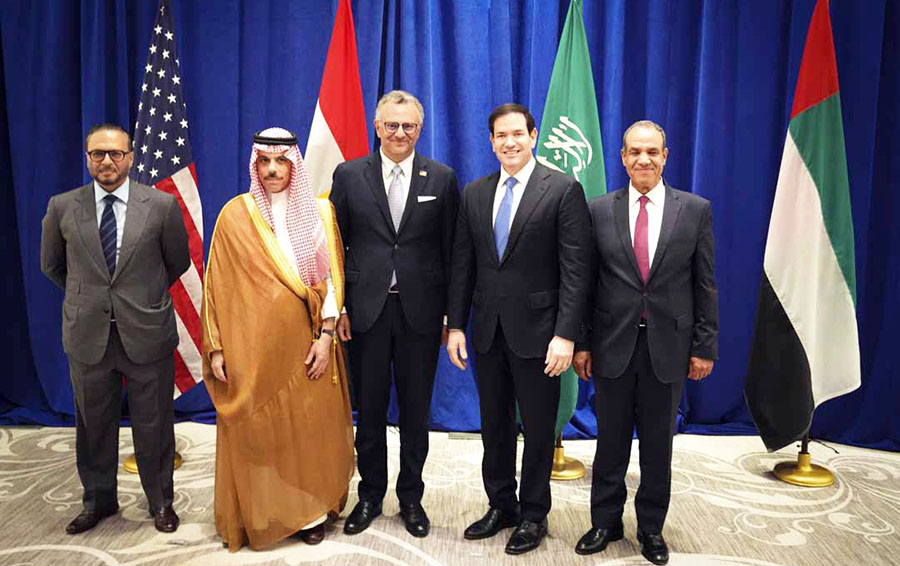
On 12 September, after months of U.S.-led negotiations, the U.S., Saudi Arabia, Egypt and the United Arab Emirates (known collectively as the Quad) issued a roadmap to peace in Sudan, starting with a push for a three-month humanitarian truce. By itself the announcement will do little to end the war, but it represents an accomplishment that was long elusive: a basic understanding of how Sudan’s war should end among the U.S. and the three Arab powers that are closest to the conflict parties.
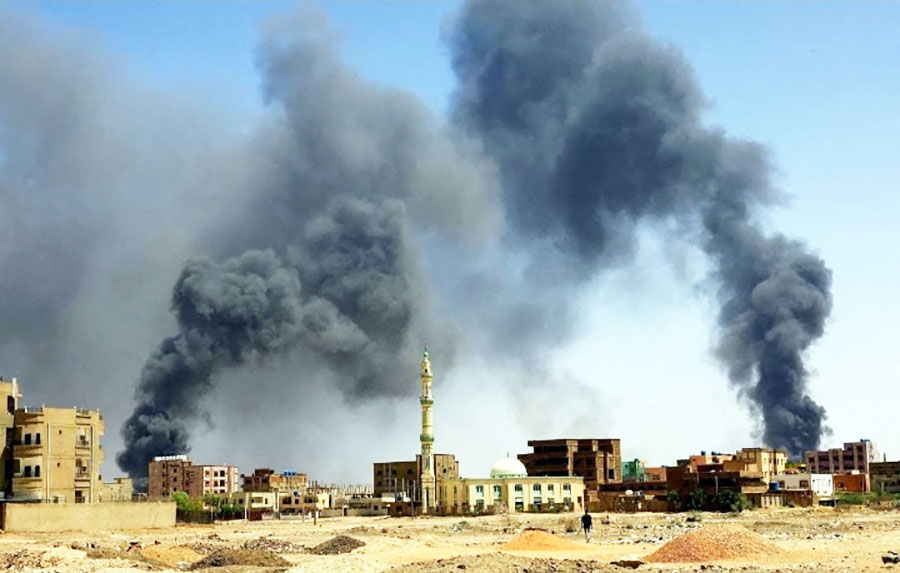
But how to translate this agreement into impact on the ground? While narrowing the gaps among the key external actors has always looked to be a prerequisite for bringing the two sides to the table, the differences between the Sudanese themselves remain stubbornly entrenched, and the Quad members do not seem to be doing much to resolve them. Indeed, two weeks after the joint statement was signed, the situation on the battlefield has arguably worsened. Fighting rages. General Abdel Fattah al-Burhan, the Sudanese army chief who has long resisted direct peace talks, has publicly rejected the Quad’s roadmap, and the RSF has ignored it as it goes about the bloody business of securing its hold upon El Fasher, the capital of North Darfur.
All eyes are thus on the Quad, which needs to push the two sides to enact the 12 September deal before the initiative stalls. To keep that from happening, the Quad will need to be nimble. Given that a humanitarian truce seems unlikely without direct peace talks between the two sides, they should aim for that first, while keeping the rest of the roadmap in reserve as the lodestar.
As the two sides have jockeyed for advantage over the course of these two dramatic years, the war has escalated amid an influx of arms and equipment for both sides. Sudan’s army has the backing of Egypt and most other Arab countries, as well as Iran and Türkiye. On the other side, the UAE has emerged as the RSF’s main patron. While Saudi Arabia has tried to stay neutral, so as to mediate, it has increasingly become aligned with the Sudanese army, which Riyadh and many others see as Sudan’s sole remaining state institution, and which controls eastern Sudan across the Red Sea from the kingdom.
Finally, a U.S. Push
These dynamics have been difficult to navigate. Prior to the Quad initiative, the U.S. struggled to marshal the outside pressure needed to get the conflict parties to stop fighting. Its efforts spanned two rounds of negotiations in Jeddah, Saudi Arabia, in 2023, which excluded Egypt and the UAE, and a failed bid to convene the warring sides in Switzerland in 2024.
Part of the problem may have been that U.S. diplomacy did not bring its A-game. Whereas the George W. Bush and Barack Obama administrations made clear that peace in Sudan was a top U.S. priority, the Biden administration – which was in office when the war started – did virtually the opposite. It kept the White House at arm’s length from the conflict and delegated responsibility for managing the conflict to the State Department’s Africa bureau, which was ill positioned to make headway with the Middle Eastern powers that were the crucial outside actors. The bureau had little leverage with countries that sat beyond its remit. The Biden administration’s eventual decision to bring in a capable special envoy came too late, and even then, the position did not receive the support it needed.
When the Trump administration came into office in January, it ... showed little interest in Sudan’s messy war, but in June it began to send different signals.
When the Trump administration came into office in January, it also showed little interest in Sudan’s messy war, but in June it began to send different signals. The State Department summoned the ambassadors of Saudi Arabia, Egypt and the UAE to acquaint them with Washington’s plans for a high-level Quad meeting and to kickstart negotiations over a framework for ending Sudan’s war.
There are two likely factors behind this shift in U.S. engagement. The first is that Massad Boulos, father-in-law to Trump’s daughter Tiffany, took an interest in the Sudan file. Boulos is a special adviser to the administration focused on Africa, and he appears keen to use his political capital quickly to rack up successes. When he announced the 27 June peace deal between the Democratic Republic of Congo and Rwanda, Boulos said Sudan would be next on his list. His office says Sudan is now his top priority – seemingly in recognition of the scale and urgency of the crisis, though perhaps also in deference to Trump’s evident interest in being seen as a global peacemaker.
Beyond the Boulos factor, a second reason for the administration’s increased attention to the Sudan file may be that Abu Dhabi, Cairo and Riyadh have all lobbied Washington to weigh in, both out of desire to enlist the U.S. in their respective camps on Sudan and as a reflection of growing discomfort with the quagmire that the war has become. Senior Saudi, Emirati and Egyptian officials persistently raised Sudan with their U.S. counterparts in the administration’s early months, exhorting the U.S. to engage.
As for the regional side, three considerations appear to have worked in favour of a new peace push. For one, prospects for a truce rose after the Sudanese army retook Khartoum in March. It was anathema to many among army officers and their outside backers to conclude a ceasefire while the RSF still controlled most of the capital, as the paramilitaries did for almost the first two years of the war.
Secondly, the war is increasingly becoming a hurting stalemate for the countries in the region with the most at stake. Until there is a peace deal, it is unlikely that Sudan will ever be able to achieve any sort of stability, let alone rebuild, risking state failure, and the perpetual headaches that would afflict the country’s neighbours as a result. Egypt and Saudi Arabia – given their geographic proximity to Sudan – thus see the war as directly threatening their national security. The UAE has a wider buffer protecting it from the war’s effects, but it nevertheless is incurring a cost in being so tightly linked to a high-intensity conflict that is taking a huge human toll with little gain for either side. Further, the UAE’s favoured side in the war now appears boxed out of Sudan’s most strategic areas, namely Khartoum, the riverine breadbasket and the Red Sea coast.
Thirdly, for Arab and Gulf countries, contestation over Sudan is reaching a fever pitch that threatens to undermine regional diplomacy on other files at a time when crises are proliferating – from the war in Gaza to Israel-Iran hostilities to the halting transition in Syria to the strikes on Qatar by both Iran and Israel. The RSF’s long-range drone attacks on Port Sudan, site of the Sudanese army headquarters, in May rattled and angered Saudi Arabia and Egypt, which saw them as crossing established red lines proscribing the conflict’s expansion into their periphery. Intra-Arab tensions over the Sudan war have boiled over into other forums, such as the Arab League and the Gulf Cooperation Council. They also derailed a London conference on Sudan in May. An official from an Arab Quad state suggested that regional capitals were losing appetite to let the divisions over the Sudan war fester given the other challenges they collectively face.
The Joint Statement
The U.S. officials hoped to formalise an agreement to push for an immediate Sudan truce with a meeting among the Quad foreign ministers in July, but forging consensus proved tricky. As a result, the U.S. cancelled a meeting at the end of July, but negotiations continued until September.
The 12 September announcement laid out a collective roadmap for ending the war. The four countries agreed to push the Sudanese parties toward a three-month humanitarian truce that, at the end of that period, would become a permanent ceasefire. The next step is to be a nine-month political process among Sudanese to select a “civilian-led” transitional government. The statement specifies that the political process should not be controlled by any warring party. Another clause denounces “violent extremist groups part of or evidently linked to the Muslim Brotherhood”, an apparent reference to the Islamist political movement that ruled the country under the Bashir regime. Along with associated militias, that network of officials is an important component of Burhan’s coalition. The agreement also says it is essential for outside aid to the conflict parties to cease, though it stops short of an explicit promise by the Quad powers to terminate their support.
While the joint statement broke up logjams on a number of key issues, Crisis Group conversations with Quad country officials made clear how difficult forging such consensus proved, exposing again the stark divisions over the war. For instance, in laying out a pathway to get to a transitional government, Egyptian and Saudi negotiators preferred gradual steps that would be minimally disruptive to a status quo in which the army holds Khartoum and arguably has the upper hand. As such, they preferred a sequenced approach in which ceasefire negotiations would take place first, followed by a political process. By contrast, the Emirati diplomats argued for shorter timeframes that would create pressure to form a new transitional government. They disliked the idea of holding up the political process for ceasefire negotiations to conclude. In the end, Egypt and Saudi Arabia got the sequenced approach while the UAE got the compressed schedule.
Now that the Quad has settled on the three-plus-nine-month timeline in the statement, the question is what it will take to put the agreement into effect.
Now that the Quad has settled on the three-plus-nine-month timeline in the statement, the question is what it will take to put the agreement into effect. Early evidence is that it will be an enormous lift. Indeed, there are already signs that the proposal for an immediate humanitarian truce may be dead on arrival. Burhan has already rejected the Quad initiative publicly, and the RSF has resisted ceasefire efforts, believing itself to be on the cusp of victory in El Fasher – the army’s last major base in Darfur. Saudi and Egyptian diplomats seem to be having a difficult time selling the plan to Burhan (assuming that was their intention), and the UAE’s commitment to the deal does not seem uniform across the government. A U.S. push for a second Quad statement on the margins of the UN General Assembly ran into headwinds. At a ministerial meeting attended by U.S. Secretary of State Marco Rubio, Egyptian Foreign Minister Badr Abdelatty and Saudi Foreign Minister Faisal bin Farhan Al Saud, the UAE was represented by Anwar Gargash, the diplomatic adviser to the UAE president. This group failed to agree on a fresh statement, splitting over text calling on the RSF to lift its siege of El Fasher.
In short, neither side looks ready to accept the unconditional truce proposed by the Quad, and it is unclear how hard any Quad member is pressing for the truce now that it appears the proposal is already languishing. Should they pull back, leaving their own initiative to collapse amid finger-pointing and accusations of bad faith, then the result might be a new round of escalation inside Sudan. Adding to the risks, Sudan’s rainy season is ending, and both conflict parties are preparing to roll out new offensives they have been preparing – which will likely involve a contest along the front in Kordofan.
Making It Stick
The Quad is going to have to act more decisively and pragmatically if it wishes to capitalise on the opening its members created with the joint statement. The first step is for Washington to press the signatories to stand by the paper they signed just two weeks ago, reminding them that beyond the implications of failure for both Sudan and the region, their credibility as peacemakers is at stake. If the immediate ceasefire envisaged by the joint statement seems beyond reach for the moment, the Quad members should instead focus on coordinating a high-level push for direct peace talks between the two warring sides, where the truce initially envisioned can be put in place.
To make these talks happen, the U.S. (fronted by Boulos himself) and other Quad members should begin urgent shuttle diplomacy with the warring parties. It appears especially critical to get Burhan on board. The army chief’s acquiescence will likely prove hardest to get, given the opposition within his camp to negotiations with the RSF. Egypt and Saudi Arabia also seem to have less sway over Burhan (who receives support from an array of sources beyond the Quad) than the UAE does over the RSF.
Beyond getting him to the peace table, U.S. diplomacy should aim at understanding what Burhan is willing to give and where his red lines are with a truce, setting the stage for immediate future talks and anticipating his role in a future order. The U.S. may also need to find a way – perhaps through direct engagement – to keep the former Bashir officials who lead Sudan’s Islamist movement from spoiling its efforts. This faction is a pillar of Burhan’s political coalition and felt singled out by the Quad statement; getting to peace in the teeth of their opposition would prove very difficult for Burhan. Countries with ties to the former Bashir officials, including Qatar, Türkiye and Malaysia (which recently hosted a meeting among Islamist political forces in Sudan including Bashir’s party), could help.
In parallel, the U.S. will need to use its influence with the Quad and other outside countries to make sure that the warring parties feel sufficient pressure to reach a deal, including by taking tangible steps to reduce arms flows to both sides. At a minimum, initiating a direct conversation about supplies of weaponry within the Quad would be a welcome start toward regional de-escalation. Down the road, as diplomacy proceeds, hangups and objections should be troubleshot within the Quad, so that the four countries can form a more united front when talking with the belligerents. This process is unwieldy, but there is unlikely to be a better formula, at least not as long as the two sides appear intransigent about laying down their arms.
An Acid Test for Washington
The most important thing about the 12 September joint statement is that the Quad finally projected a unified commitment to use its collective leverage to end the war. Whether the precise terms of the roadmap are followed is secondary to the question of whether the four signatories are committed to a meaningful peace effort. If they can show that they are serious about pressing the conflict parties toward peace, they will have a better chance of enlisting the support they need from other Middle Eastern, African and European capitals with direct lines to the Sudanese army and/or the RSF. If they do not match words with actions, then the war may well escalate further, with unpredictable consequences.
Perhaps the most salient question of all, given the two-year record of disarray in Sudan peacemaking efforts, is whether the U.S. is prepared to roll up its sleeves and commit to a difficult, drawn-out process that will require it to offer sweeteners and disincentives to the Quad members and Sudanese parties to end the war. Boulos – who is stretched thin across many files – will loom large in any such effort, given that it is unclear who else in the Trump administration could or would take on this task. Despite appearing to have their own interests in the file, Rubio and his deputy, Christopher Landau, are even busier than Boulos.
All should hope that the U.S. and the other Quad members stay engaged. Until the joint statement, ending Sudan’s war looked to be virtually impossible. While prospects remain bleak, the 12 September statement has at least created an opening to push for peace. That window may already be starting to close. Taking advantage of it requires that all four Quad members – as well as all others – press hard in the same direction before time runs out. For Sudanese, the stakes could hardly be higher – but it is difficult to understate the stakes for Sudan’s neighbourhood as well. Should peace remain elusive, the ill effects of a collapsed Sudan and contestation among outside forces over its future are sure to ripple through Africa, the Middle East and regions beyond for years to come.

