
Updated: 13 October 2025 16:22:34
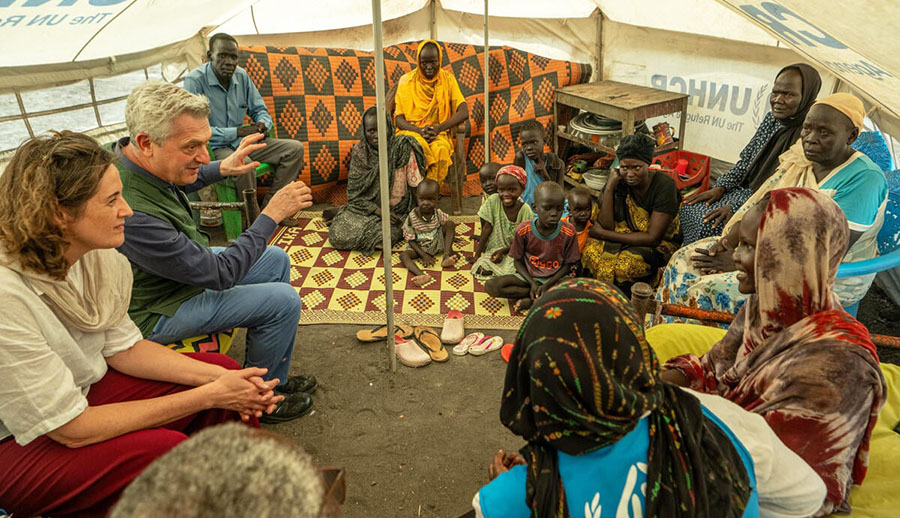
South Sudanese Refugees... Tragic Conditions in White Nile Camps
Source: Al-Araby Al-Jadeed Newspaper
Tens of thousands of refugees fleeing the deteriorating conditions and fighting in South Sudan to refugee camps in neighboring Sudan are complaining of difficult living conditions, with food and medical supplies unavailable and aid scarce.
Thousands of refugees from South Sudan are living in catastrophic conditions in nine squalid camps lacking the most basic necessities of life in Sudans White Nile State, bordering the country. They are suffering from a severe shortage of food and drinking water, along with the spread of diseases and the spread of mosquitoes that cause dengue fever and malaria, amid a dearth of medical care centers and a shortage of medicines.
The refugees, whose official numbers are estimated at more than 270,000, are distributed among the Khor al-Warwal, al-Jamiya, al-Radis 1, al-Radis 2, Umm Sanqur, al-Kashafa, Juri, al-Alqayya, and Daba Bosn camps. They rely on meager aid provided by local organizations with limited capacity, and they also receive irregular food supplies from international and regional organizations.
The refugee camps in White Nile State were established in 2023 and expanded after the Sudanese army recaptured Khartoum and al-Jazirah states from the Rapid Support Forces earlier this year. Sudanese authorities decided to relocate all South Sudanese refugees from camps in northern and eastern cities to the White Nile State camps, after some were accused of participating in fighting alongside the Rapid Support Forces, which Sudanese authorities accuse of recruiting foreign mercenaries since the outbreak of the war thirty months ago.
Between January and June of this year, Sudanese police arrested thousands of South Sudanese refugees who had been residing in various areas of Khartoum, Gezira, and River Nile states since before the secession of the south in 2011. They were deported to camps in White Nile State.
South Sudanese refugee Stephen Paul, who lived in Naivasha camp in Omdurman, told Al-Araby Al-Jadeed: "I spent thirteen years in Naivasha camp, which was established by those fleeing the war in the south before the secession. Throughout that time, we relied on marginal work in Khartoum, until the war broke out and the camp was destroyed, like the rest of the capital. We were displaced to neighborhoods spared by the war. However, we were arrested, 17 members of one family, and deported to White Nile State, where the camps lack all basic services, there are no job opportunities to earn money, and there are no collective kitchens distributing food. All that happens is that some local organizations distribute food baskets to a limited number of refugees."
Stephen continues: "The host communities are no different from the refugees in their struggle to obtain food and healthcare. The war has made life difficult for everyone, and hunger is rampant in refugee and IDP camps. In towns near the camps, citizens are not receiving sufficient food supplies due to rising prices and deteriorating living conditions. Residents have lost their jobs and businesses, while the value of the local currency has plummeted to its lowest levels. Refugees are dying from diseases, and malnutrition is rampant among women and children. No one cares about the numbers because everyone is threatened. There is little concern for the lives of refugees living in semi-prisons within the camps. Security forces arrest any refugee who leaves for neighboring towns on the pretext that they previously fought with the Rapid Support Forces."
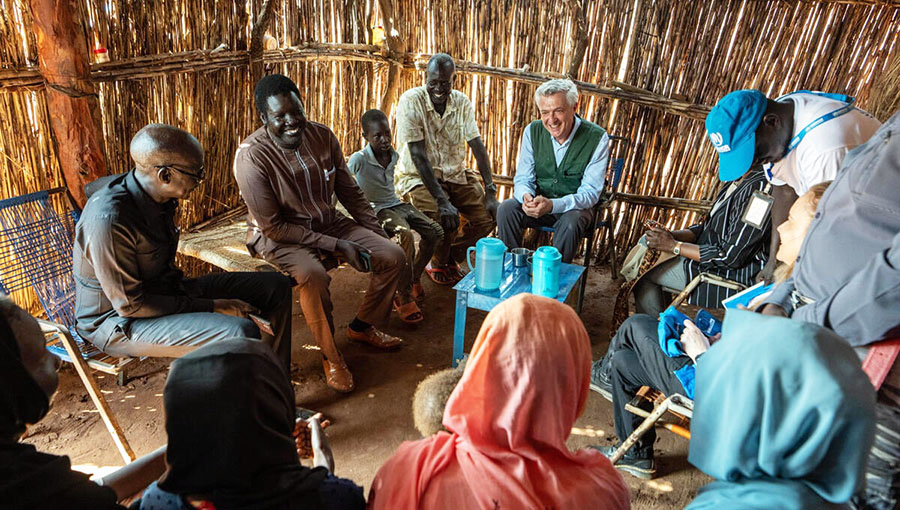
From last June until October 5, the Sudanese Ministry of Interiors Refugee Commission carried out 20 repatriation operations for South Sudanese refugees from the Bentiu, Naivasha, Al-Salam, and Al-Baraka camps in the capital, Khartoum, to the camps in White Nile State. The Assistant Commissioner for Refugees in Khartoum, Major General Idris Abdullah Liman, told Al-Araby Al-Jadeed: "The step of relocating refugees to camps was taken to provide the necessary protection and humanitarian assistance, in addition to strengthening the states authority to control foreign presence. We face difficulties in determining the number of refugees, and it is impossible to know the true number of refugees from South Sudan. There is a dilemma in determining the numbers with the required accuracy."
Despite the difficult living conditions in the squalid camps in White Nile State and the restrictions imposed by the Sudanese authorities on the movement of refugees from South Sudan, some of them are still threatened by accusations of participating in military operations. The Assistant Commissioner for Refugees in Khartoum said: "The southerners were working as artillery crews with the Rapid Support Forces and participated in the shelling of Omdurman and Khartoum."
Refugees describe the deportation operations and living conditions in the White Nile camps as catastrophic. Malwal Mayong, who was arrested in Khartoum and deported to the White Nile camps, told Al-Araby Al-Jadeed: "The camps are unfit for living. They lack all services. They provide us with no food, no drinking water, no medical clinics, no doctors, and no medicine for patients, despite the prevalence of many diseases, including dengue fever and malaria. More than two-thirds of the camps are flooded with rainwater and garbage." Malwal previously lived in Al-Salam camp in Jebel Awliya, south of Khartoum. He explained: "There are no schools in the camps we were transferred to, and our children will not have the opportunity to learn, nor will they find food or medicine. These needs are also not available to citizens suffering from the ravages of war, and I do not think the refugees will receive them."
Refugees living in camps in White Nile State since 2013 have relied entirely on agricultural work in areas adjacent to the camps, despite the low wages. However, the ongoing war has disrupted agriculture across large areas of White Nile State.
From Khor al-Waral camp, refugee Tut Riak told Al-Araby Al-Jadeed: "We face difficulty obtaining food, and aid does not reach us regularly. There are some small organizations that distribute simple supplies to some refugees from time to time. The numbers are large, and the food supplies are not sufficient. Some international organizations distribute some cash in the camps at intervals. In the recent period, the camps have received additional numbers of refugees deported from Khartoum, creating additional difficulties, as the camps were not prepared to receive this large number of new arrivals."
In Umm Sunqur camp, thousands of families are searching for the bare minimum of food and drinking water. One refugee, who requested anonymity, told Al-Araby Al-Jadeed: "In addition to the food shortage and the lack of health centers that provide treatment, many camp residents rely on rainwater due to the severe shortage of drinking water, which increases their chances of contracting diseases such as watery diarrhea and cholera. Refugees are not only suffering from hunger and thirst; basic necessities such as toilets are unavailable, and people are forced to relieve themselves in the open, sometimes near water sources, which they resort to due to the severe water shortages inside the camps."
Despite all this, the influx of refugees from South Sudan has not stopped due to the deteriorating security and economic situation in the newly seceded state. Majong, a refugee who arrived at the Scouts camp in White Nile State three months ago, told Al-Araby Al-Jadeed: "We have not received any services since our arrival. There is no medical care, and food is unavailable in the camps. We struggle daily to find a morsel of food to satisfy our hunger."
He added: "The food supplies distributed to refugees are sometimes insufficient, and many wait months for other aid to arrive, which in turn is not enough for all refugees. Education is unavailable, and there are no teachers in the camps, nor are there hospitals. Whats more alarming is that pregnant women do not receive any medical care, and sometimes they give birth in tents without any medical assistance. The health situation in Sudan is collapsing, and doctors themselves are searching for safety, and none of them risk working in camp areas that lack any type of basic services."

