
Updated: 14 October 2025 18:09:11
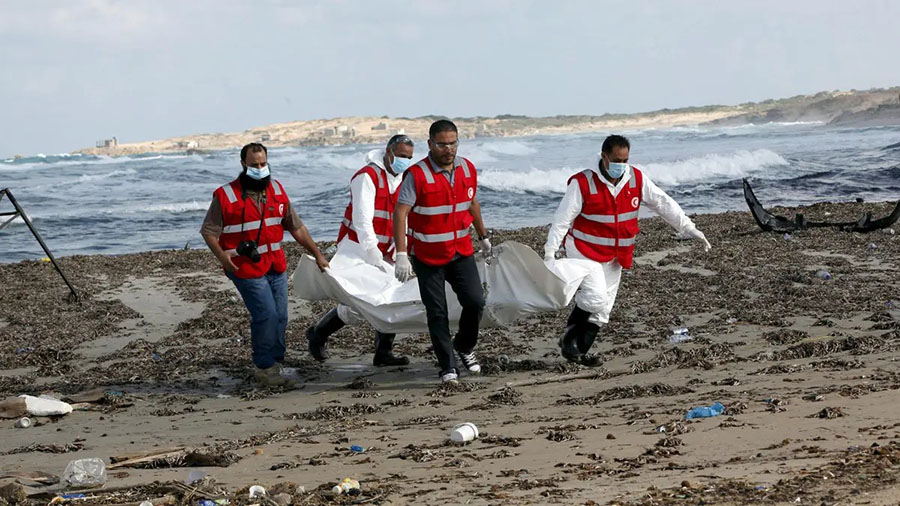
Endless Suffering of the Tragedy of Sudanese in Libya
Source: InfoMigrants
Since the outbreak of armed conflict in Sudan in April 2023, Libya has become one of the main destinations for Sudanese migrants seeking safety or attempting to reach Europe via the Mediterranean. Displacement tracking data in Libya indicates the complex humanitarian conditions these migrants face along the harsh desert migration routes, where they face the dangers of thirst, violence, and exploitation.
Sanaa, a pseudonym for a mother of six, recounts her heartbreaking story after Rapid Support Forces attacked her home in Khartoum, forcing her to flee with her children in fear for their lives. She says she left with nothing but her children, embarking on a long, perilous journey, made through sheer willpower and fear, until she finally reached El Fasher after enduring a life of extreme suffering.
Sanaa explains to InfoMigrants that after arriving in El Fasher, the situation did not improve as she had hoped; rather, it quickly deteriorated, resembling what she experienced in Khartoum. She says, "The bombing doesnt stop, and the shells are falling heavily. Sometimes, if you leave your house, you might find a shell right in front of you or nearby."
Sanaa had no choice but to continue her journey of displacement in search of safety. After the situation in El Fasher deteriorated, she decided to head to Libya on a perilous journey. The road was not just a harsh, endless desert; it was also filled with armed groups that terrorized those passing through. For the second time, Sana left behind everything she owned—even her personal documents—in the hope that she would save her children and reach safety.
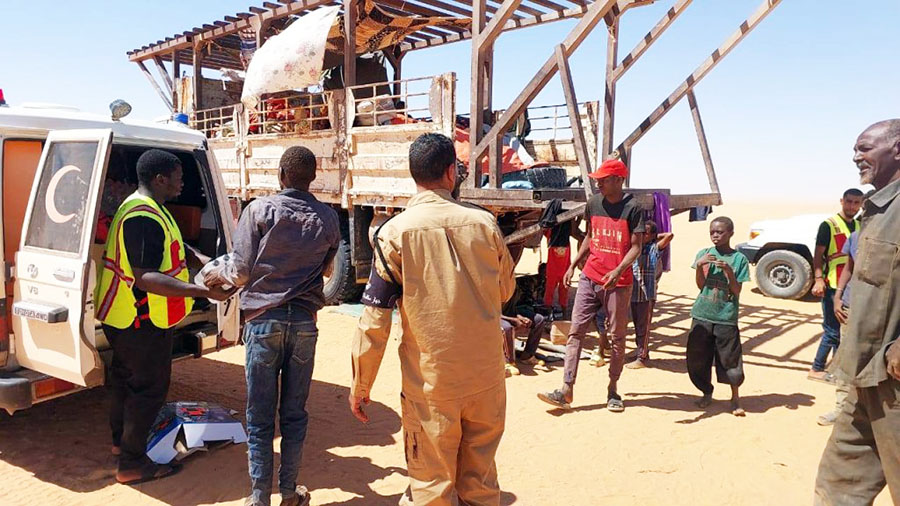
The Suffering of Sudanese in Libya
Sanaa tells InfoMigrants that upon her arrival in Libya, the situation was initially relatively tolerable. But as the number of Sudanese fleeing the war increased, voices of rejection against migrants, especially Africans, began to rise. She says, "The situation has become difficult. There are those who openly threaten us with death to force us to leave Libya. As Sudanese, we just want to return to our country."
She adds sadly, "Europe needs money and its procedures are complicated, so the solution for us is to return to Sudan. But how? The roads are closed, and flying is very expensive and the procedures are difficult. The only way we have left is the desert, but its a road fraught with death. The Triangle Road is closed, and the land route through Egypt is dangerous. We might encounter police confrontations or the driver might abandon us deep in the desert. The journey is long and neither children nor the elderly can bear it."
Sanaa hopes to find real solutions from the UNHCR or the Sudanese embassy, but she says that the initiatives being circulated are no more than words, as none of them have been translated into reality. She adds, "We are threatened at any moment, and they demand official residency permits, but where can a refugee pay the required amounts? The cost of residency can reach thousands of dinars, which is completely beyond our means."
The war in Sudan, which has caused one of the worlds largest humanitarian crises, remains a major driver of displacement. The number of displaced persons has risen to more than 14.3 million, including 11.6 million internally displaced persons (IDPs) and more than two million refugees who have fled to neighboring countries, including thousands who have made Libya a dangerous stop on their way to the unknown.
Hassan, a pseudonym for a young man from the city of Madani, left his country before the war broke out, seeking an opportunity to improve his living conditions. However, conditions were not kind; he injured his leg while playing soccer, making it even more difficult for him to travel within his country of asylum. Hassan adds that the situation in Libya has become extremely difficult, as he has been unable to travel to Europe despite numerous attempts, given the perilous road and the financial and administrative difficulties facing Sudanese refugees.
Hassan told InfoMigrants: "After my injury, I considered traveling via Algeria and Tunisia, and I tried many times, but they dont like foreigners there. In Tunisia, if you try to cross, youre deported to the desert. I tried to enter international waters to reach...
Stuck in Libya
He pointed out that the situation in some detention centers is extremely harsh. "There are more than 24 people imprisoned in the Ouzal area, and only one got out after paying 4,000 dinars. The situation inside the center is very difficult; they only get a little water and bread, theres no bathroom, and the living conditions are very poor."
Since arriving in Libya, Hassan has been working hard, but he hasnt been able to raise any money to support his family in Sudan. He asserts: "I wont stop trying to cross the sea until I reach Europe. I plan to reach Italy, because the situation in Sudan is very difficult and unbearable."
Its worth noting that the Sudanese consulate in Benghazi has launched an initiative for the voluntary return of its citizens residing in Libya, with the aim of returning thousands of Sudanese fleeing the war to their country, following a relative improvement in the security situation in Sudan, according to a press release from the consulate.

