
Updated: 25 October 2025 17:00:14
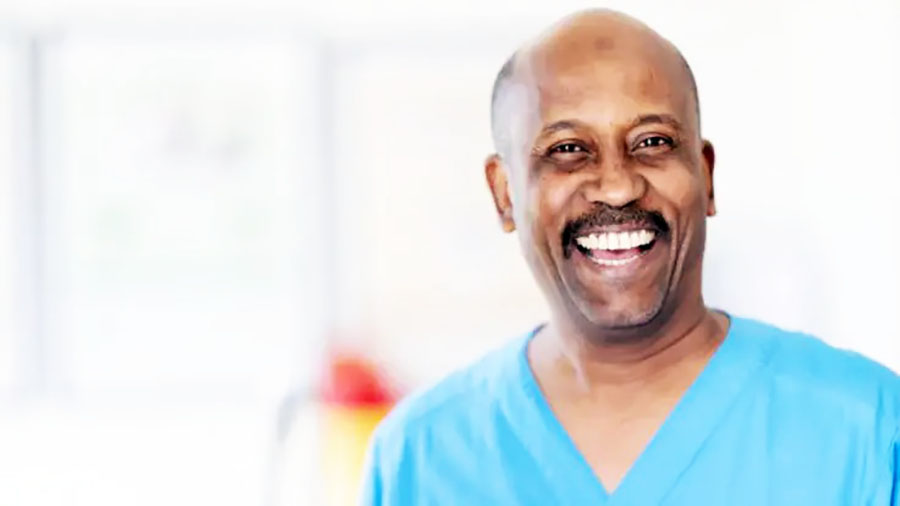
Sudanese Doctor Strives to Save a Swedish Health Center
Moatinoon follow up
From Sudan to Gävle, Dr. Mohamed El-Ghali is on a mission to save the Sätra Health Center, which has struggled for years with doctor shortages and instability. Drawing on his experience in both Sudanese and Swedish healthcare, El-Ghali is leading a new chapter for the center, long affected by the lack of permanent staff.
Since 2022, the Sätra Health Center has lost eight doctors at once, forcing it to rely on temporary physicians who come and go. Today, a new page seems to have turned with the appointment of Sudanese-Swedish physician Dr. Mohamed El-Ghali, a specialist in family medicine and gynecology, who joined the team last summer, according to the Swedish outlet GD.
“I’m the only full-time doctor here right now, but I’m confident there will be more soon,” said El-Ghali. “We have a good working environment, and the staff feel comfortable. We have a solid foundation to develop in a positive direction.”
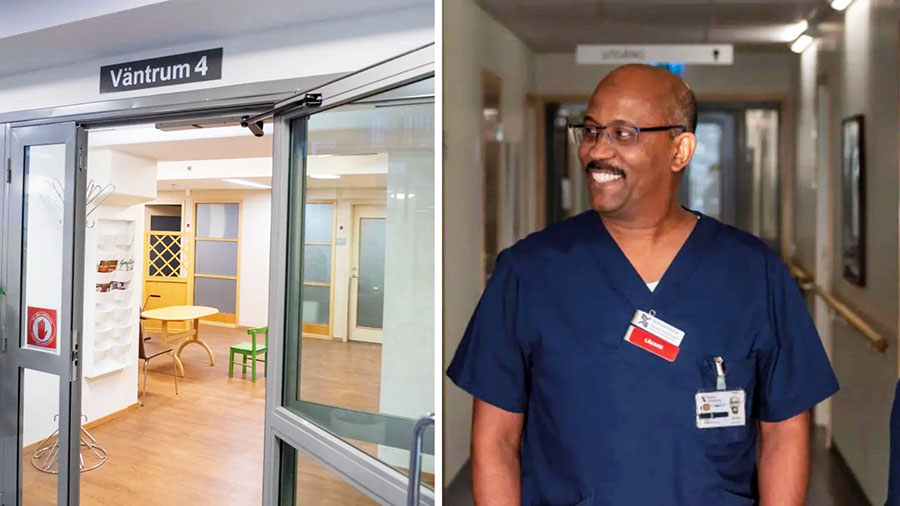
A Doctor with Vast Experience
At 54, Dr. Mohamed El-Ghali came to Sweden in 2013 after more than a decade of medical work in Sudan, where he specialized in gynecology.
He then spent nine years at the Valbo Health Center in Gävle before being tasked with helping to revive Sätra’s struggling facility.
His mission extends beyond treating patients — he’s also been charged with attracting new doctors and training medical residents to ensure the center’s long-term stability.
“I’ll be working with management to recruit more doctors and create a stable work environment,” El-Ghali said. “Trainee doctors need good supervision so that they feel comfortable and decide to stay once their training ends.”
Challenges in a Multicultural Community
El-Ghali describes working in Sätra as a “challenge he enjoys,” given the area’s diverse population.
“Sätra is a multicultural area, which makes the work unique. I like challenges, so this place suits me perfectly,” he said.
He believes his immigrant background and fluency in Arabic give him an advantage in building trust with patients.
“Many residents of Sätra don’t speak Swedish. We can use an interpreter, of course, but direct communication in the patient’s own language builds stronger trust. When the patient understands me and I understand them, they feel safe.”
From Sudan to Sweden
Reflecting on his beginnings in Sudan, El-Ghali said his family encouraged him to study medicine from an early age.
“In Sudan, education is a means of survival. You either become a doctor or an engineer. My family wanted me to be a doctor and helped me achieve that.”
He moved to Sweden in 2013 “for political reasons,” as he put it, seeking a more transparent work environment.
“Leaving Sudan was a very difficult decision, but having my siblings already in Sweden helped a lot. They assisted me with the visa and job opportunity, and I’ve never regretted coming here.”
A Humanitarian Vision for Medicine
After years of working in the Swedish healthcare system, El-Ghali believes the profession there is built on respect and shared decision-making with patients.
“In Sudan, the doctor decides everything, but in Sweden, you have to be a consultant and guide. My role is to assess, explain, and advise — not to impose decisions.”
He added:
“It’s very important to listen to patients. Sometimes, simply paying attention allows them to tell you exactly what you need to know for the diagnosis.”
A New Hope for Sätra
After years of administrative turmoil and reliance on temporary physicians, El-Ghali hopes to restore trust between the health center and the local community.
“I’m optimistic,” he concluded. “We will succeed in building a stable team and make Sätra a model for healthcare in multicultural areas.”

