
Updated: 27 October 2025 08:24:11
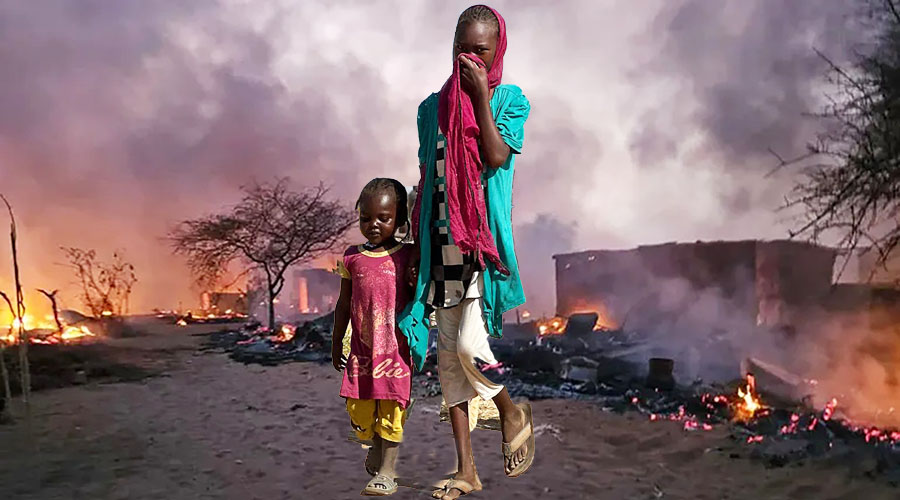
What Does (RSF) Control of El-Fasher Mean Militarily and Politically?
Moatinoon
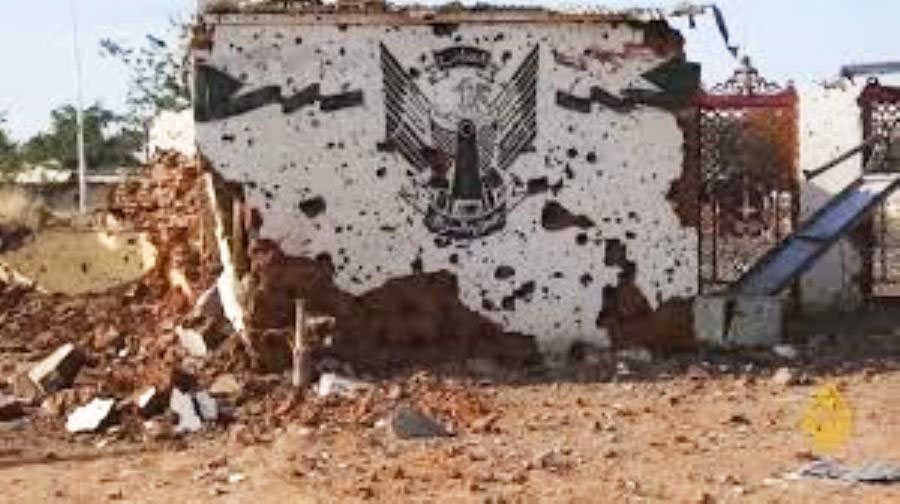
The recent military developments — following the Rapid Support Forces’ announcement that they had taken control of the headquarters of the 6th Infantry Division in El-Fasher, the capital of North Darfur State — have created shockwaves both domestically and internationally.
Observers believe that the battle for El-Fasher is not merely a military event, but a pivotal turning point that could determine the future of the country — either by reinforcing its unity or pushing it further toward fragmentation.
In practical terms, the RSF’s control of El-Fasher means the entire Darfur region is now effectively out of the state’s control. It also signifies RSF dominance over vast border areas stretching from the Kufra Triangle in Libya to Um Dafuq on the borders with the Central African Republic and South Sudan.
1. Militarily
Collapse of the army’s last stronghold in Darfur:
El-Fasher was the last major city in Darfur under the formal control of the Sudanese Armed Forces (SAF) and served as the command center of the western military region. With its fall, the RSF has effectively completed its takeover of Darfur’s major cities — including Nyala, Geneina, Zalingei, and Ed Daein.
A strategic shift in the balance of power:
Controlling El-Fasher gives the RSF a broad territorial depth stretching from the Chadian border in the west to the edges of Kordofan in the east. This provides them with secure supply lines through Chad and the Central African Republic, making it difficult for the army to conduct effective counter-operations.
Isolation of the army in western Sudan:
With the loss of El-Fasher, the army forfeits a key logistical and command hub. Its remaining concentration now lies mainly in northern, central, and eastern Sudan.
Possible eastward expansion of the conflict:
The RSF may use El-Fasher as a launchpad for operations toward El-Obeid, Kordofan, or even northern Sudan, widening the war’s geographic scope.
2. Politically
Strengthened RSF position in future negotiations:
Controlling El-Fasher provides General Mohamed Hamdan Dagalo (Hemeti) with significant leverage in any peace talks or mediation efforts, as negotiations are often dictated by ground realities. This may push international actors to recognize the RSF as a de facto authority in western Sudan.
A direct threat to Sudan’s unity:
Complete RSF control over Darfur could pave the way for a semi-autonomous or separatist entity, especially if the RSF establishes a civilian administration or parallel government. This weakens the central state and evokes fears of fragmentation similar to Lebanon’s factional model.
Severe humanitarian and security repercussions:
El-Fasher has long been a refuge for hundreds of thousands of displaced people. Its fall could collapse humanitarian operations, spark new waves of displacement into Chad, and heighten concerns of mass atrocities. Politically, this would increase international pressure on the RSF over alleged violations against civilians.
A major blow to the army and government image:
The loss of El-Fasher represents a severe moral and symbolic defeat for the army and the Sovereign Council, revealing their inability to defend major cities. It also undermines public confidence in the military leadership’s capacity to regain control or end the war.
RSF control of El-Fasher marks a decisive turning point — transforming Darfur into an RSF-controlled region and redefining the conflict into a standoff between:
An army controlling the north, east, and center; and
The RSF controlling the west and southwest.
Politically, this raises the likelihood of a de facto power and territorial division, and could intensify international pressure for a permanent ceasefire to prevent Sudan’s further disintegration.
Expected Regional and International Reactions
The RSF’s takeover of El-Fasher affects not only Sudan but also the broader regional balance across West and East Africa. Neighboring states will likely move to secure their borders, while major powers increase engagement to prevent Sudan’s collapse — though none will openly back a specific side. This could trigger a new phase of competing mediation tracks — in Jeddah, Addis Ababa, Juba, or even NDjamena.
1. The Immediate Regional Circle
Chad
Chad will be the most affected. Its 1,300 km border with Darfur is now largely exposed to RSF forces. NDjamena is expected to react nervously, given the RSF’s complex tribal ties with Chadian groups such as the Zaghawa, Misseriya, and Rizeigat.
However, Chad might adopt a pragmatic stance — engaging with Hemeti to secure its borders and prevent the influx of fighters and refugees. NDjamena could also emerge as a new on-the-ground mediator, especially after the limited success of the Jeddah and Addis Ababa talks.
South Sudan
Juba fears that an “RSF-controlled Darfur” model might spill over into border regions like Bahr el Ghazal and Upper Nile, where tribes share strong social links with Darfur. Still, President Salva Kiir may view this as an opportunity to reassert himself as a neutral regional mediator.
Central African Republic
Bangui might tacitly welcome the RSF’s dominance, given its role in countering rebel groups along the shared border. However, the presence of Russian Wagner forces complicates the situation — as Moscow could view the RSF as either a potential ally or a rival, depending on future alignments.
2. The Arab Circle
Egypt
Cairo will perceive the fall of El-Fasher as another setback for the Sudanese army — its natural ally.
From a security perspective, Egypt fears that spreading chaos toward the Nile Valley could threaten border stability and trigger new refugee flows.
Politically, Cairo is likely to push for a swift settlement to preserve Sudan’s unity, firmly rejecting any prospect of a semi-autonomous “western region” ruled by a militia.
Saudi Arabia and the UAE
Saudi Arabia will likely seek to restore diplomatic balance, potentially reactivating the Jeddah talks under the pretext of “protecting civilians in El-Fasher.”
The UAE, under growing international scrutiny for alleged past RSF support, may shift to emphasize its role as a “peace and stability” promoter, toning down any overt association with the group.
3. The International Circle
United States
Washington will treat this as a red-alert moment. The RSF’s full control of a region as vast as Darfur could institutionalize a long-term territorial split.
The U.S. is expected to widen sanctions on RSF leaders while pressuring the army toward comprehensive negotiations. Simultaneously, it may open discreet communication channels with Hemeti to moderate his field actions.
European Union
The EU will express deep concern over the humanitarian fallout in El-Fasher and advocate for humanitarian corridors. It could tie future aid to compliance with international humanitarian standards and adopt a tougher stance toward the RSF’s human rights record in Darfur.
4. United Nations and African Union
The United Nations will focus primarily on the humanitarian catastrophe, issuing urgent appeals regarding the “El-Fasher crisis.”
The UN Security Council might revisit the idea of deploying a limited international protection force in Darfur if the security situation worsens.
The African Union and IGAD are expected to attempt reviving the “Addis Ababa track,” though RSF legitimacy will remain highly contentious among members.
Main Scenarios
1. RSF Consolidation and Governance (Likelihood: 45%)
The RSF solidifies military and administrative control over Darfur, establishes local governance, and transforms El-Fasher into a logistical and political hub. This is supported by the army’s retreat, the absence of foreign military intervention, and RSF dominance of all regional command centers.
Consequences:
Effective political separation of Darfur from central authority.
Massive displacement and a worsening humanitarian crisis, especially toward Chad.
2. Military Expansion Toward Kordofan/Central Sudan (Likelihood: 20%)
After stabilizing Darfur, the RSF advances eastward into North or South Kordofan, creating new supply corridors and expanding its territorial reach — aided by drone and artillery use reported around El-Fasher.
Consequences:
Widened conflict zone, further internal displacement, and disruption of trade and agriculture in central Sudan.
3. Internationalization and Diplomatic Pressure (Likelihood: 60%)
The global community responds with strict UN statements, expanded sanctions, and intensified humanitarian aid. Though this may not reverse RSF control, it will erode its legitimacy.
Consequences:
Diplomatic isolation, asset freezes, and mounting calls for international accountability against RSF leaders.
4. Regional Military Escalation (Worst Case) (Likelihood: 25%)
Escalation along borders triggers regional interventions or armed support for one side, deepening Sudan’s fragmentation and potentially turning it into a regional proxy battlefield.
Consequences:
Cross-border clashes, regional instability, and the risk of multiple “failed states.”
Potential Game Changers
Emergence of new armed factions or renewed alliances within the army.
Establishment of humanitarian corridors that shift local legitimacy dynamics.
Strong international sanctions or ICC-related legal actions targeting RSF leadership.
Direct regional intervention — politically or militarily — by Egypt, Chad, or new mediators from Juba or Addis Ababa.
The RSF’s capture of El-Fasher marks a defining juncture in Sudan’s war — militarily cementing RSF control of Darfur and politically reshaping the country’s unity, sovereignty, and future stability.

