
Updated: 21 November 2025 17:31:26
Refugees from the Little Greece of Khartoum
Kathimerini Newspaper
Alexia Kalaitzi
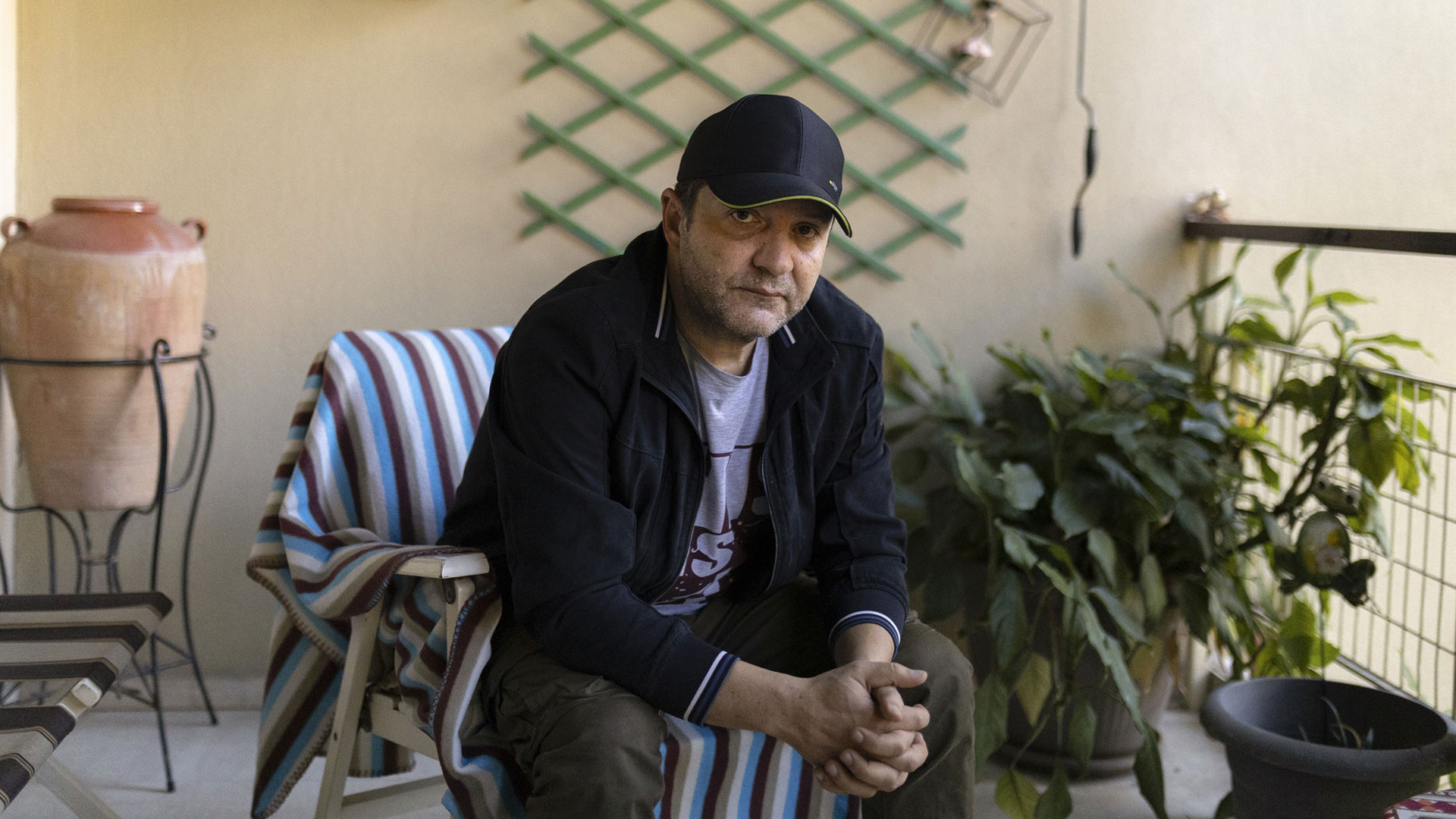
When thoughts overwhelm him, Panagiotis Gavriilidis heads to the sea. For the past two years, since the war in Sudan erupted, he has been living in the Zografou Municipalitys camp facilities in Rafina along with other families from the vast African country. As we were not granted access to enter the site, we met the 60-year-old man at the port.
It is difficult, at this age, to lose everything in a single day, he says, sipping his coffee with bitterness. Panagiotis Gavriilidis was one of the roughly 70 remaining members of the constantly shrinking Greek community. He was born and raised in Khartoum, where his grandfather had migrated in 1896. Throughout our conversation, he repeats the same phrase again and again: We lived well in Sudan.
This is exactly what all Greeks from Sudan tell Kathimerini when asked, as fresh reports emerge about the latest bloody clashes in the war between government forces and the paramilitary Rapid Support Forces (RSF). Although the two sides were allies in the past, they are now fighting for control of the country. The official government accuses the United Arab Emirates of supporting the rebels with weapons and mercenaries—allegations the UAE denies. The war, which has lasted more than two years, has triggered the largest humanitarian crisis ever recorded, with more than 14 million displaced people and 30 million in need of assistance. The international community has forgotten Sudan, they say with sorrow.
Finding safety in Greece
Mr. Gavriilidis still struggles with pain when he walks long distances. He was among the Greeks who were seriously injured when hostilities broke out in April 2023.
It was Holy Saturday. There was church service. I had gone to buy lamb to bring to the community. I saw tanks, turned around, and went back. Then I started hearing explosions.
Just a few meters from the house of a friend where he sought shelter, a bomb struck.
I lost all my teeth and broke one of my legs. I thought I would die. For nine days I remained like that, without any treatment. The hospital was full of rebels—they brought their dead wrapped in bags. They didnt even give me an injection. I stayed in the community. I had five holes in my abdomen. A doctor wrapped me in a sheet.
After surviving those first nightmarish days, he was transported to Greece and hospitalized. For the first 25 days he remained in a coma, followed by seven painful surgeries that saved his life.
In the early months of his recovery, he believed the war would end quickly and he would return home. A foolish dream, he now says. In Khartoum, Panagiotis Gavriilidis owned four food shops—small eateries known locally as cafés—where he sold souvlaki, as well as a coffee-grinding shop.
His reputation was such that each of his shops sold 1,000 flatbreads a day.
Half of Sudan knew me. They called me Hawagia, meaning ‘European. Even Bashir (the former president who seized power in a coup and was overthrown in 2019) bought from me. His secretary would call and we would send souvlaki to the palace.
His day began at dawn with work and ended late at night at the Greek club, playing cards and dominoes. He owned a house inside the Greek community and another large home with a garden in the suburbs. Today, almost everything has been destroyed, and most of his staff are dead.
The transition from that life to living in a 35-square-meter prefab and working as an employee has been harsh.
In Sudan, when people asked, I said I was Sudanese. I love Greece, but I am Sudanese. His blue eyes fill with tears when he thinks of returning one day. Greece is wonderful, he stresses, and he will not deprive his children—now enrolled in school—of life in a European country. But I want to go back when its all over, even just for a little while, just to kiss the ground

At the Acropole
The same emotion is expressed by Gerasimos Pagoulatos, honorary consul of Greece in Sudan and co-owner of the historic Acropole Hotel. He still struggles to comprehend how he and his family were forced to flee the country two and a half years ago. We never imagined we would leave in such a way, or that Sudan would end up like this.
Now 69, he lived through the golden era of Khartoum and the Greek community. He was born in the capital four years after his parents decided to establish the Acropole Hotel in the city center. Its good Greek food and warm hospitality made it famous. Journalists, diplomats, ministers, and archaeologists passed through its doors, enjoying the cozy atmosphere and freshly prepared dishes such as pastitsio and stewed meat. Mr. Pagoulatos describes a life deeply intertwined with the family business he ran with his two siblings.
It was a life full of cinematic moments: boat rides on the Nile, dinners with well-known BBC and CNN correspondents, and regular gatherings with other Greeks at the Club. The good memories far outweigh the difficulties—political unrest, economic crises, and days without electricity or fuel to run the generator. Imagine a country with 45 degrees Celsius and not even a fan.
He was an active member of a once-strong and vibrant Greek community. In the 1970s, it numbered around 3,000 members, many of them industrialists. Khartoum was home to the Greek Orthodox Metropolis and the Greek School. On weekends, the community buildings were filled with children, and large parties were often organized by the pool.
In the good old days, before the 1980s, they would bring orchestras from Greece, and for about 20 days—right before Christmas until Epiphany—we would celebrate, recalls Pagoulatos. The community dwindled after Sudan was declared an Islamic state in 1981, resulting in restrictions on nightlife and alcohol. Cinemas, clubs, and liquor stores—some Greek-owned—shut down, and Greeks gradually left the country.
Now, he says, nothing is left to remind anyone of that past. The Metropolis and Greek community buildings have been destroyed and looted. So has the Acropole Hotel. A journalist friend managed to send him photos: the hotel stands in ruins on one of the capital’s central avenues—doors smashed, beds broken, valuables stolen. They had no time to take anything with them when they fled.
Those who remain
Only two Greeks currently live in Sudan. I will be the third, says Konstantinos Makris, owner of a large factory in the country, inherited from his father. We met him at his home in Athens. Born and raised in Khartoum, he and his sister were sent to private schools in Greece at age 12 for a better education. From then until 2018 he rarely returned to Sudan. But when his father fell ill, he went back to care for him and take over the family business founded by his grandfather in 1956.
Just as he began to rebuild his life—reconnecting with old classmates and making new friends—the war broke out. He still keeps on his phone a photo of the bullet hole that pierced the wall just above his head. In the early months after escaping, he would jump at every loud noise; even now he struggles to cope emotionally with what happened. When he receives videos and photos from the fighting, he looks at them briefly and deletes them. I lose sleep. I can’t. I loved Sudan. We all loved it.
Makris has already contacted some workers and partners and is relocating part of his factory to a town a few hours away from Khartoum. I have to start again from zero. There is no other way. In Greece I leave only my mother.
Before leaving, he meets with Paris Papgis, vice-president of the Association of Greeks from Sudan. Although he left the country at 18, Papgis remains deeply connected to it and uses his position to keep the community network alive.
On December 27th, no matter which country we are in, Greeks from Sudan of my generation—aged 45 to 55—gather and eat together. Without our wives or children, only the people who lived there. It is an unwritten rule.

