
Updated: 23 November 2025 16:09:36
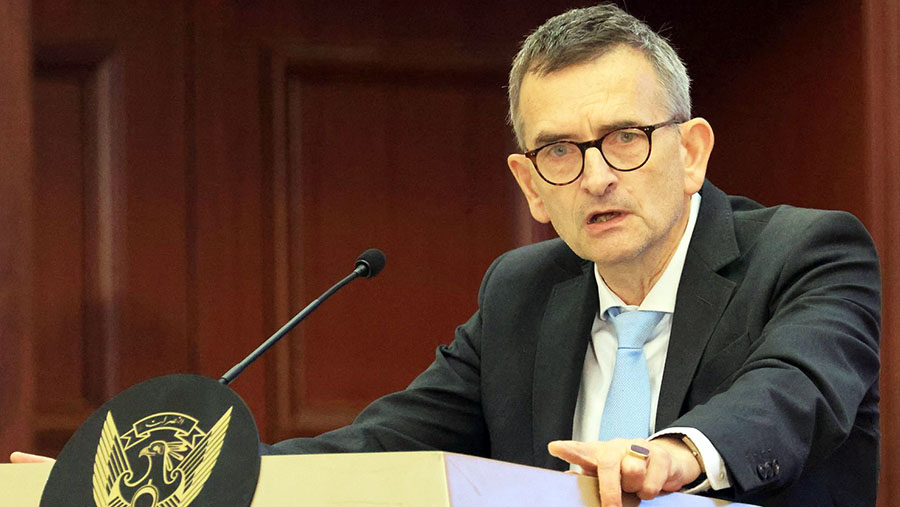
Volker: The world is ignoring Sudan because the displaced arent reaching Europe
Moatinoon
Former UN envoy to Sudan, Volker Perthes, published an article in the German newspaper Süddeutsche Zeitung entitled " Sudan: The story of a war that simply won’t end".
The article provides a comprehensive examination of the devastating war that erupted in Sudan in April 2023 between the Sudanese Armed Forces and the Rapid Support Forces. Volker Perthes argues that the war has evolved into one of the worst humanitarian disasters of the 21st century, yet remains largely ignored globally.
The fall of Al-Fashir in Darfur is presented not only as a significant military event, but also as a reflection of the deep humanitarian collapse. The conflict has led to the destruction of towns and villages, widespread atrocities against civilians, and the resurgence of ethnic violence reminiscent of earlier phases of the Darfur conflict. The social fabric of the country is disintegrating under the weight of displacement, hunger, and insecurity.
According to Perthes, the humanitarian indicators are alarming: more than 12 million people have been displaced or forced to flee, while estimates of the death toll range from tens of thousands to several hundred thousand. Twenty-one million people face the threat of famine as food production has collapsed and supply routes are obstructed. Hunger is being weaponized, with warring parties deliberately blocking or diverting aid to consolidate power.
One of the article’s central arguments is that the world is ignoring Sudan largely because its refugees do not reach Europe. Most displaced people remain inside Sudan or flee to nearby African countries, leading to less political pressure on Western governments and less media coverage. The complexity of the conflict — involving layered tribal, political, and economic dynamics — further contributes to limited international engagement.
Perthes argues that traditional political negotiations among military elites are unlikely to produce a lasting settlement. Sudan’s history shows that agreements negotiated among generals and political elites often collapse. Instead, he highlights the decisive role of civil society — youth groups, women’s movements, professional unions, academics, and grassroots humanitarian networks — which played a key part during the 2018 revolution and continue to support communities despite the war.
The article calls for a stronger international response: opening humanitarian corridors, applying pressure for localized ceasefires in densely populated areas, and ensuring access to aid via routes such as the Chad border. Perthes stresses that while external military intervention is not necessary, sustained diplomatic, humanitarian, and political engagement is crucial.
Ultimately, Perthes concludes that even if the guns fall silent, Sudan will face a long path to recovery. The country requires not just peace, but a new political vision grounded in civilian participation and supported by long-term international commitment.
