
Updated: 24 November 2025 17:30:39
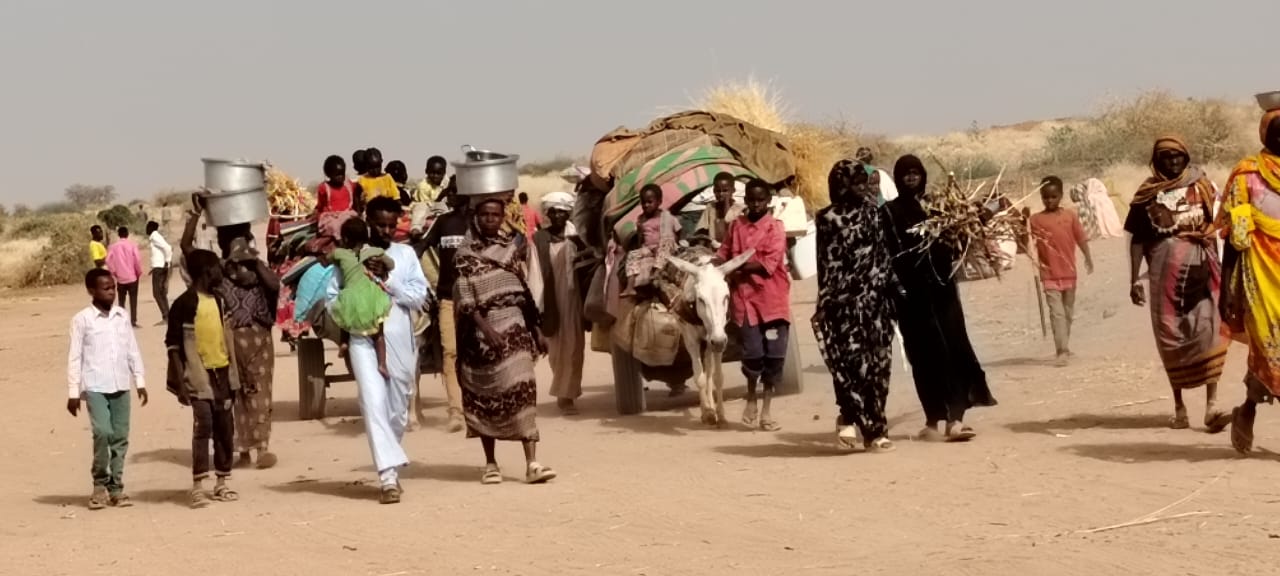
Kordofan Caught Between Mass Displacement and Sealed Escape Routes: Escalating Abuses and Deepening Suffering

Kordofan, El Obeid - Jabraka News
“Many people from our area were prevented by the Rapid Support Forces (RSF) from leaving their villages for El Obeid, even as their humanitarian situation deteriorated. The RSF claims that anyone fleeing to government-held areas will inevitably join the army,” says a survivor from a village in North Kordofan who is now sheltering in Kosti.
Residents are being confined to their villages and barred from seeking safer ground—restrictions that have sharply worsened the already dire humanitarian conditions. As fighting intensifies between the Sudanese Armed Forces (SAF) and the RSF across the Kordofan states, civilians are facing alarming levels of violence, extrajudicial killings, and forced displacement.
Death for Those Who Try to Escape
Speaking to Jabraka News, the survivor recounts that five members of her extended family were killed by RSF fighters while fleeing from Abu Zabad in West Kordofan toward El Obeid—an incident that illustrates the extreme dangers facing civilians attempting to escape the conflict.
She adds that many villages are under virtual siege, with communication to the outside world cut off. Some residents secretly climb trees or hills to catch a weak network signal and contact their families—acts that could cost them their lives.
Amid the escalating conflict, civilians trapped in Kordofan’s war zones face daily fear, hunger, lack of medicine, and the collapse of basic services.
Waiting for a Fragile Hope of a Truce
Some residents told Jabraka News they are clinging to the hope of a future ceasefire that might ease their suffering and allow humanitarian aid to reach them. However, they fear an even wider escalation that could leave them perpetual victims of a war they have no part in.
Ammar—a pseudonym—a humanitarian worker from North Kordofan, says civilians are enduring horrific abuses “committed in silence, away from the world’s attention.” Speaking to Jabraka News, he noted that the conflict has overlapped with the harvest season in western rural areas of El Obeid, forcing farmers to abandon their fields as the fighting spread to their villages and farmland.
He explains that large stretches of territory from El Obeid in the north to Al-Khuwei in West Kordofan have witnessed systematic abuses, pushing thousands to flee. Others have resorted to living in the fields themselves.
Killings and Armed Robbery on the Rise
Ammar reports widespread armed robbery by criminal gangs composed of looters and RSF elements—groups he describes as a greater danger to civilians than the main warring parties. Armed bandits moving on motorbikes prey on villagers, often killing them over the slightest resistance during theft.
He notes that after the RSF was expelled from the town of Bara, robberies briefly declined in eastern North Kordofan. But once the RSF regained control, the violence surged again, more aggressive than before.
Repeated attacks on local markets have also driven mass displacement. Residents now avoid the usual routes and travel long, costly detours to reach El Obeid—paths considered relatively safer for trade and essential errands.
Cities Left Nearly Empty
Local sources told Jabraka News that most residents of North and West Kordofan fled their homes as violence escalated—seeking refuge in El Obeid, Al Rahad, and Umm Rawaba, while others headed east toward White Nile State, including Kosti, Rabak, and Al-Duweim.
The Dar Hamar Emergency Room, which documents abuses in West Kordofan, reported dozens of “horrifying” violations committed by RSF forces in recent weeks.
A community leader from east of Bara said that roughly 98% of the population had fled toward White Nile State, while hundreds of families escaped all the way to Omdurman. Displacement began months ago as random killings and looting by RSF forces intensified, leaving entire villages abandoned.
He told Jabraka News that the situation is catastrophic for those who fled—especially families now living in makeshift huts or sleeping in the open under trees in rural areas west of White Nile State.
Dire Humanitarian Conditions and Growing International Alarm
The leader said displaced families include children, women, and elderly people who face a complete absence of food, medical care, and clean water—conditions worsening rapidly as winter approaches. He said the displaced have received no aid from humanitarian agencies, urging organizations to reach them before the situation deteriorates further.
At a press briefing in Khartoum on 12 November 2025, the Director-General of the International Organization for Migration (IOM) confirmed that approximately 50,000 people were displaced by recent events in the Kordofan region.
On 13 November 2025, UN Secretary-General António Guterres expressed “deep concern” on X over reports of escalating violence in Kordofan. He called for halting the flow of weapons and fighters from external actors and urged both the SAF and RSF to allow immediate humanitarian access and take real steps toward a negotiated settlement.
A War With No End in Sight
The conflict between the SAF and RSF, which erupted on 15 April 2023, has killed tens of thousands of civilians and soldiers. Around 14 million people have been displaced inside and outside Sudan—fueling what UN agencies describe as the world’s single largest humanitarian crisis.
- The Sudan Media Forum and its member organizations publish this report, prepared by Jabraka News, to highlight the extensive abuses committed by the RSF against civilians in North and West Kordofan—violations that have emptied entire towns and villages. The report documents widespread hunger, medical shortages, destroyed services, and systematic repression, drawing on testimonies from survivors and humanitarian workers trapped on the front lines.
