Updated: 25 November 2025 15:33:31
Sudan’s Emergency Response Rooms: A Living Model of the Citizen-Centered State
The war that erupted on April 15 in Sudan between the Sudanese Armed Forces and the Rapid Support Forces exposed the scale of violence inflicted on civilians from the very first day. Civilian service institutions and the health system were systematically targeted, while bullets tore into homes, plunging the country into complete paralysis.
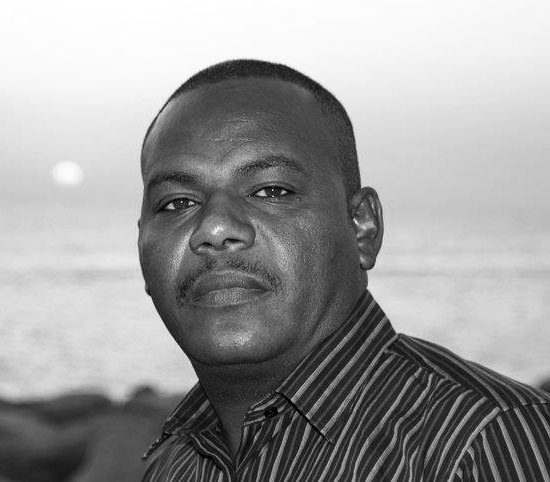
Social activist Monzer Mustafa recounts the first moments of the war, when he found himself trapped with his family in eastern Khartoum — without food, medicine, or any means of escape.
"When the war erupted on the morning of April 15, 2023, we were completely stranded. Everything had stopped. Days later, a member of the Resistance Committees in Haj Yousif called to tell me that an elderly man had taken his own life after despair overwhelmed him, leaving behind a wife and two children with no support. His neighbors informed the Resistance Committees — the only authority still perceived as present, with the police absent and the state collapsed — and they had to intervene immediately."
The question “What can we do?” haunted Mondher in one of the harshest humanitarian moments. But it soon became clear that communities had lost all trust except in their local grassroots leaders. To him, it was evident that the war was targeting local communities first and foremost, and that the warring generals were indifferent to the suffering of civilians.
“From that moment,” Mustafa says, “we threw ourselves into humanitarian action — what later came to be known as the Emergency Response Rooms — with the aim of restoring basic services amid gunfire.”
The biggest concern, he explains, was how to keep the work going when even accessing personal savings was nearly impossible. Yet the answer came quickly: “Everything becomes secondary when lives are at stake.”
Young women and men embarked on what seemed an impossible mission: mobilizing resources in an environment where nothing was available. Despite scarce means and enormous risks, they moved “like angels,” he says. After much struggle, they managed to access a small portion of their own savings to begin the work. Soon after, contributions flowed in from Sudanese inside and outside the country, as well as international supporters.
Only days after the war began, the first humanitarian response operation was launched — distributing more than 20 tons of medical and food supplies.
According to Moiz Al-Zein, former director of the Al-Ayam Center for Cultural Studies and Development, the entire country witnessed a sweeping mobilization of frontline humanitarian responders defending Sudanese rights. He describes the Emergency Response Rooms as having emerged from the social formations of the December Revolution — the Resistance Committees, neighborhood service committees, and women’s collectives — becoming the practical alternative amid state collapse and the delayed arrival of international organizations.
These grassroots rooms used Sudan’s digital revolution to build nationwide platforms and banking applications to organize a far-reaching, decentralized Nafeer (mutual aid) movement, showcasing the depth of Sudanese solidarity. Al-Zein believes that the future of a citizen-centered state, civil solidarity, and a shared, cooperative economy lies in the spirit embodied by Sudan’s Emergency Response Rooms.
This same spirit has driven local and international institutions — particularly those committed to human rights and humanitarian values — to honor the Emergency Response Rooms and celebrate their achievements, which demonstrate that solidarity among Sudanese themselves, and between them and other peoples, is the only path to overcoming catastrophe and moving toward prosperity.
Such recognition serves as a moral certificate of humanity for these grassroots institutions — a validation grounded in the community and for the community.
Mustafa, addressing the global award bodies (the Rafto Prize for Human Rights, the EU Human Rights Award, the Democracy Award – National Endowment for Democracy, the Richard C. Holbrooke Award for International Advocacy, and the First-Class Medal of Courage – Youth Parliament), says:
"Your values reflect those of the social change leaders — the Resistance Committees — who defended equal citizenship rights against the brutal regime that ignited this war. And your sense of humanity mirrors that of the responders to one of the largest humanitarian crises in modern history — the Emergency Response Rooms — who restored hope to a peace-loving people."
Al-Zein affirms that Sudan’s Emergency Response Rooms are “a humanitarian necessity imposed by war and a natural extension of the social revolution,” noting that their ability to work directly within communities has granted them social legitimacy recognized locally, regionally, and internationally. They represent, he says, the future of social organization and foundations for comprehensive development.
International reports likewise highlight the pivotal role played by the Emergency Response Rooms — born out of the Resistance Committees that led the 2019 revolution — since the outbreak of the current war. By February 2024, they had already provided assistance to more than four million people.
Volunteers carried out mass evacuations of tens of thousands from conflict zones, secured clean water and medical supplies, and delivered fuel to the few remaining operational hospitals. They kept water and communications infrastructure functioning and ran community kitchens feeding millions facing severe hunger. They also responded to cases of conflict-related sexual violence.
In addition to receiving prestigious global awards, the Emergency Response Rooms have earned widespread praise from international actors. In a statement issued on April 12, 2024, the Office of the EU High Representative for Foreign Affairs and Security Policy declared:
"The European Union commends the courage and commitment of both local and international humanitarian workers — particularly local NGOs and the Emergency Response Rooms."