
Updated: 26 November 2025 18:03:11
Displaced People from El Fasher Facing Dire Conditions; Fate of Thousands Remains Unknown
moatinoon
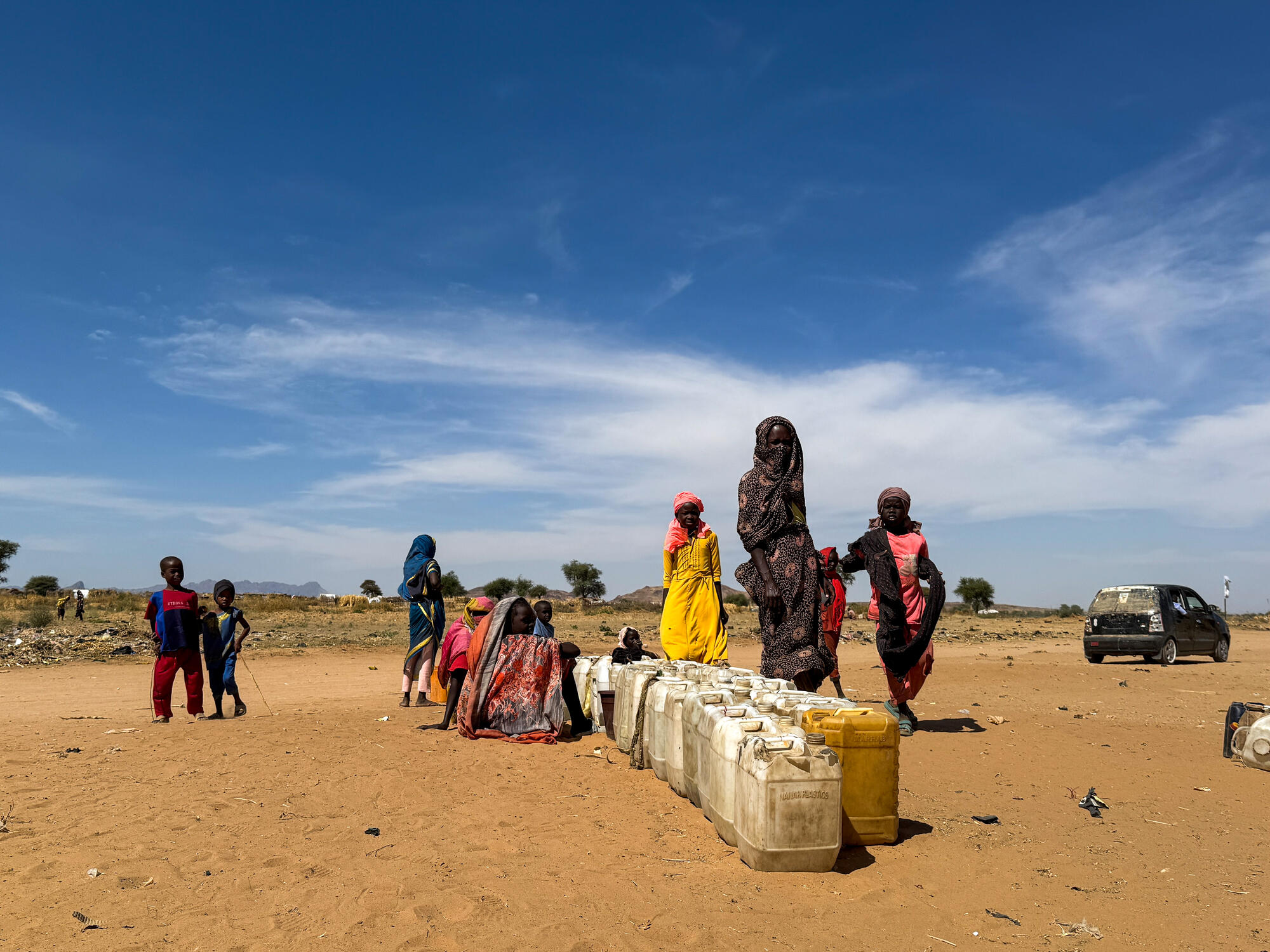
Médecins Sans Frontières (MSF) has warned that thousands of civilians displaced from the city of El Fasher to the Tawila camp are facing extremely dire conditions in overcrowded reception sites.
In a statement released today, the organization said that around 10,000 people who fled to the neighboring Tawila area have found severe shortages of water, shelter, and food.
MSF explained that living conditions fail to meet even basic needs. Camps such as Daba Nayra, which hosts around 210,000 people, are suffering from a massive shortage of water, with the average individual receiving only 1.5 liters per day—far below the humanitarian minimum of 15 liters. The organization added that around 74% of displaced people are living in informal, makeshift settlements lacking adequate infrastructure, increasing the risk of outbreaks of diseases such as cholera.
The statement added that MSF has expanded Tawila Hospital’s capacity from 24 beds to more than 100 beds to treat trauma cases and alarming levels of malnutrition. The hospital is also witnessing a surge in surgical procedures, carrying out around 20 operations per day.
However, MSF noted that the number of displaced people who managed to reach Tawila remains small compared to the estimated 260,000 people who were believed to be in El Fasher as of August. This indicates that many of them have either been killed, have died, or remain trapped and besieged, unable to move or receive assistance—according to survivor testimonies and satellite imagery analysis.
MSF called on the Rapid Support Forces (RSF) and their allies to immediately provide a safe and unobstructed corridor for the wounded, the sick, and all civilians seeking to reach safer areas. The organization also urged donors and humanitarian actors to scale up their emergency response to meet urgent health, food, and water needs in Tawila and surrounding areas.
