
Updated: 29 November 2025 15:36:19
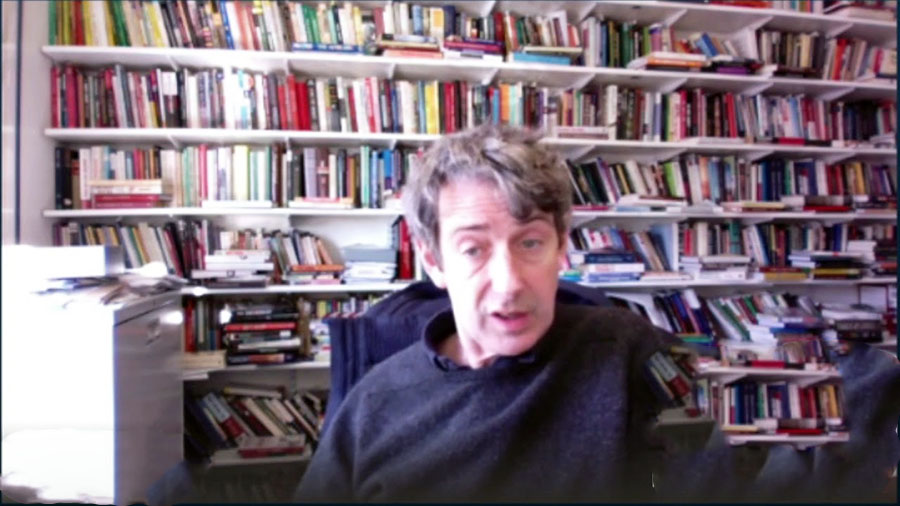
Alex de Waal: USA Must Break Sudan’s Cycle of Destruction Before It’s Too Late
Moatinoon
Alex de Waal, African affairs analyst and Executive Director of the World Peace Foundation at Tufts University’s Fletcher School, said that Sudan, after two and a half years of war, is now “in a state of complete devastation,” with six peace initiatives having failed and none able to pressure the regional powers fueling the conflict. “Many Sudanese today are asking whether the world cares about their lives or their deaths,” he said.
De Waal explained in essay published today “How Trumps pledge to tackle Sudan atrocities could play out”, that the trajectory of the conflict might shift now that the Oval Office has begun to intervene directly. He noted that U.S. President Donald Trump had admitted only days ago that Sudan’s war “was not on my agenda at all,” before Saudi Crown Prince Mohammed bin Salman briefed him during a recent White House meeting and urged him to step in. “After that,” de Waal said, “Trump pledged: ‘We’re going to start working on Sudan.’”
He believes Trump’s personal influence over leaders in Egypt, Saudi Arabia, and the United Arab Emirates—each accused of backing one side or another in Sudan—may make a difference if it is used to end the war rather than deepen it.
Sudan is experiencing an unprecedented humanitarian disaster, de Waal said, with 12 million people displaced and famine emerging in several regions. “After a 500-day starvation siege, the Rapid Support Forces overran the city of El Fasher in one of the worst ethnically driven massacres, killing between five and six thousand people.” Videos filmed by the perpetrators themselves circulated widely online—what he describes as “trophy videos that capture the brutality in raw form.”
De Waal said Sudan’s war now follows a familiar pattern: after committing atrocities, RSF commander Mohamed Hamdan Dagalo (Hemeti) declares readiness for a ceasefire in an attempt to polish his image, while Armed Forces commander Abdel Fattah al-Burhan—backed by Islamist hardliners—refuses to halt the fighting. “Whenever one side advances, both insist on ‘finishing the job,’” he noted.
He argues that the roots of the deadlock stem from forty years of wars in South Sudan, Darfur, and elsewhere, which conditioned Sudan’s leaders to reject mediated settlements. With the country now facing de facto partition, “this is the pattern Trump must break,” he said.
De Waal explained that the “Quad”—the U.S., Egypt, Saudi Arabia, and the UAE—has proposed a three-part plan: a ceasefire, unhindered humanitarian access, and negotiations to form a civilian-led government. But regional rivalries, particularly the Saudi-Emirati competition, have obstructed progress. “Sudan ranks far below issues like Gaza and Syria on both Riyadh’s and Abu Dhabi’s priority lists,” he said.
De Waal stressed that meaningful U.S. influence depends on real pressure on the UAE to halt its alleged support for the RSF—pressure the Trump administration has so far avoided applying publicly. “Even if a ceasefire is reached,” he said, “the next challenge is securing the three billion dollars needed for emergency humanitarian relief—without it, any truce will remain fragile.”
He concluded that Sudanese civilians are “divided, exhausted, and deeply distrustful of the generals,” yet still aspire to a just and democratic peace. “The road ahead is long and perilous,” de Waal warned, “but unless we act now, Sudan risks being lost entirely.”
