
Updated: 1 December 2025 16:25:20
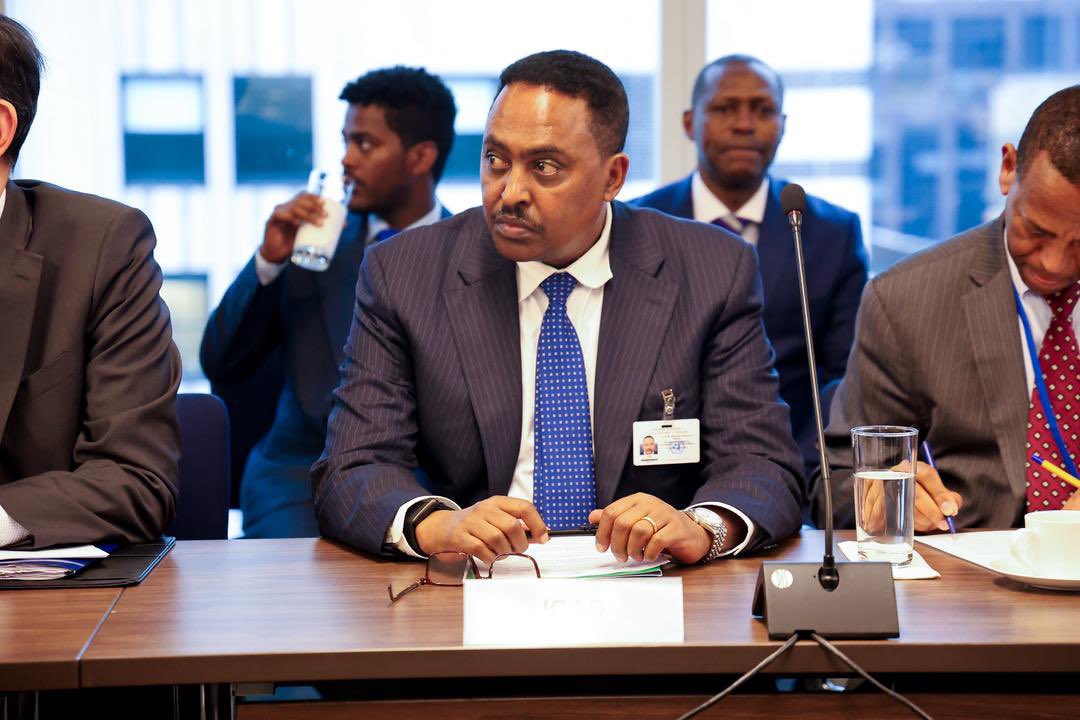
A window has opened to save Sudan
by Workneh Gebeyehu
Source: The East African Newspaper
There are moments in the life of nations when collapse is not a possibility but a process. Sudan is now living through such a moment. A country of 48 million people — once a central pillar of the Horn of Africa — is being torn apart in full view of the world.
The fall of El-Fasher, the last major stronghold of the Sudan Armed Forces in Darfur, was not an isolated tragedy. It was a warning shot. A moral and strategic alarm bell. And, unless something changes immediately, it will be the first of many.
What happened in El-Fasher was predictable. Sudanese civil society warned of it. Humanitarian agencies pleaded for help. Regional actors sounded the alarm. Yet diplomacy — fragmented, hesitant, and often distracted — failed to mobilise. The city was pulverised before it was captured. Communities were erased before they could flee. A preventable massacre was added to the long catalogue of horrors in Sudan’s modern history.
And yet, amid the devastation, a narrow but credible window has opened.
In the weeks following the fall of El-Fasher, the United States and Saudi Arabia have renewed their commitment to secure a humanitarian truce. For the first time in months, both sides the have signalled preliminary willingness to consider it. This is the most promising diplomatic opening since the war began.
But a humanitarian truce is not a victory. It is a lifeline — a fragile window that may not stay open for long. Unless the world wraps that lifeline in a coherent political strategy, Sudan will continue to bleed even as aid convoys begin to move.
As the regional organisation that Sudan helped found, Igad cannot — and will not — sit back and watch one of its member states disintegrate. The collapse of Sudan is not just a Sudanese tragedy, it is an existential threat to the entire Horn of Africa — a region already overloaded with conflict, economic fragility, and political polarisation. If Sudan falls, the shockwaves will engulf us all.
Sudan’s conflict is not simply a feud between two armed formations. It is the unmaking of a state and the destabilisation of an entire region.
Trade routes have become arms corridors; borderlands have become safe havens for militias; agricultural heartlands have collapsed into famine zones; and a war economy now binds together actors who profit from Sudan’s disintegration.
From the Red Sea to the Sahel, Sudan’s collapse is fuelling displacement, weapons flows, organised crime, and political extremism.
The world must understand: Stopping the war in Sudan is not an act of charity. It is a matter of regional and global security.
Neither party can win this war. Not with their current capabilities. Not with their external backers. Not with a collapsing economy and a shattered social fabric.
Sudan’s sovereignty has become a battleground for ambitions that have nothing to do with the hopes of Sudanese civilians. Yet the world continues to indulge the illusion that the conflict will “burn out” or “balance itself.” These are not strategies. They are excuses.
The truth is stark: Sudan is closer to fragmentation today than at any point in its history.
For the first time since April 2023, there is a shared international framework for ending the war. The African Union, Igad, the UN Security Council, the League of Arab States, the European Union, and the Quad have converged around five core principles:1. There is no military solution.2. Sudan’s Unity is non-negotiable3. Civilian voices must be at the centre of the political process.4. Humanitarian access must begin now.5. Ending the war is the entry point to all progress.
Sudanese civic and political actors — despite their differences — broadly agree on these principles.
Igad and the African Union are therefore preparing a Preparatory Civilian Political Consultation in Djibouti, designed to give Sudanese political formations the space to articulate a coherent civilian position and “Sudanise” the emerging global consensus. This is not another conference for its own sake. It is a foundational step toward a credible political track.
No truce can hold without a political roadmap. No political roadmap can succeed without Sudanese civilian leadership. And no civilian leadership can emerge without coherent preparation.
The renewed US–Saudi push for a humanitarian truce is the doorway to peace — but it is not the destination. To succeed, it must be tied to: Verified and monitored cessation of hostilities; guaranteed humanitarian corridors; commitments from external actors to stop arming proxies; a sequenced political process anchored by Sudanese civilians; and a clear transition timetable.
Humanitarian access without politics is temporary relief. Politics without humanitarian access is impossible. Only a combined approach can prevent Sudan’s total collapse.
Sudan is not just another crisis in a turbulent region. It is a central state whose history, geography, economy, and people link the Horn of Africa to North Africa, the Red Sea, and the Sahel. Its destruction would rupture the region’s cohesion, undermine economic integration, and reverse two decades of progress toward interdependence.
This is why Igad sees Sudan’s survival as a matter of regional security, moral responsibility, and historical obligation. Sudan stood with its neighbours in their times of crisis. Today, those neighbours — and the wider world — must stand with Sudan.
El-Fasher must be a turning point, not an epitaph. Sudan can still be saved. Its unity can still be preserved. Its people can still reclaim dignity, stability, and peace.
But only if the Africa and the world moves now — together, coherently, and with courage.
The humanitarian truce emerging from US–Saudi engagement is the first real opening in many months. It must be seized, protected, and expanded. Igad is ready — morally, politically, and institutionally — to work with the AU, the UN, the Quad, the League of Arab States, and the broader international community to stop the fighting and accompany Sudan toward a comprehensive peace.
Dr Workneh Gebeyehu is Igad Executive Secretary.
