Updated: 8 January 2026 16:01:30
Will South Sudan be Dragged into Sudans Civil War?
*By Nosmot Gbadamosi
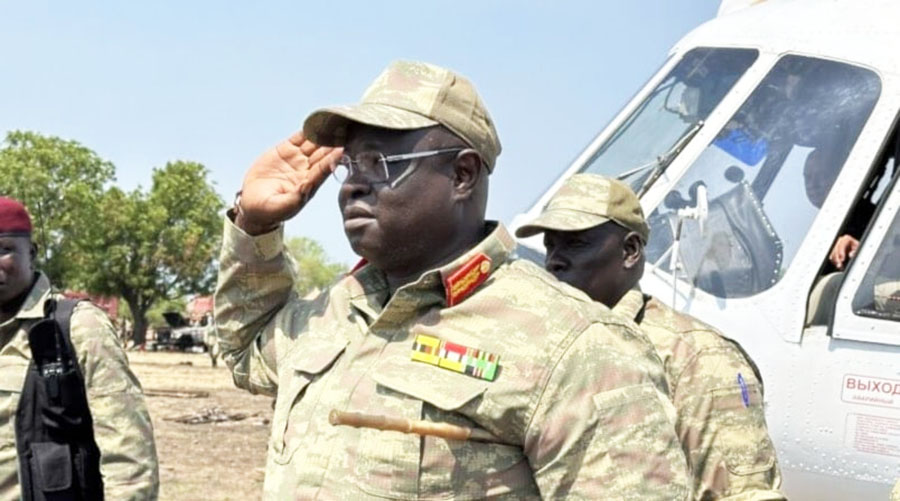
Ongoing fighting in the Kordofan region is raising fears that South Sudan may become further embroiled in the conflict, while the country itself stands on the brink of civil war due to a power struggle between President Salva Kiir and opposition leader Riek Machar.
South Sudan gained independence from Sudan in July 2011, ending decades of civil war. Only two years later, another civil war erupted within the country when Kiir dismissed Machar, his vice president. That conflict resulted in the deaths of approximately 400,000 people and concluded with a 2018 power-sharing agreement that deteriorated this past March.
Since late 2024, the Sudanese Armed Forces (SAF) have alleged that armed groups from South Sudan are fighting alongside the Rapid Support Forces (RSF). Last February, the RSF formed an alliance with the Sudan Peoples Liberation Movement-North (SPLM-N) led by Abdelaziz al-Hilu—a faction of the SPLM party that led South Sudan’s independence push and now forms the government led by Kiir.
Last March, Sudan’s then-Minister of Minerals, Mohamed Bashir Abunumo, accused South Sudan of allowing the United Arab Emirates—the primary backer of the RSF—to establish a "base of aggression" under the guise of a field hospital in Ayiel East, near the Sudanese border. He also claimed that the South Sudanese government is turning a blind eye to the recruitment of its citizens into the RSF and facilitating the smuggling of Sudanese gold to the UAE. South Sudan has denied these allegations.
In July, the RSF and the SPLM-N formed a parallel Sudanese government along with other armed supporters. The Sudanese army believes that Kiir supports this new RSF-led alliance.
The Oil Factor
Analysts fear that oil may drive Juba deeper into the conflict. South Sudan is landlocked and relies on oil for more than 90% of its government revenue. Its oil flows through pipelines in the Heglig oil field in West Kordofan State, located on the border with Sudan.
After the RSF announced it had taken control of Heglig last December 8, Juba reached a rare tripartite agreement with both the SAF and the RSF to allow South Sudanese forces to secure the facility and ensure the export of oil through Heglig to Port Sudan. The facility processes approximately 130,000 barrels of South Sudanese oil per day. By deploying its army to Heglig, South Sudan has become directly involved in managing a sensitive strategic point in Sudan’s civil war.
Humanitarian Crisis
Meanwhile, within Sudan, heavy fighting in South Kordofan has displaced more than 1,500 civilians to the city of Kosti in neighboring White Nile State. Camps on the outskirts of the city are overcrowded amidst mass displacement and a lack of international aid.
The UN World Food Programme (WFP) announced last month that it would cut food rations in Sudan due to a funding shortfall, even as famine grips the country. In November, the Integrated Food Security Phase Classification (IPC) confirmed the recurrence of famine in the country for the second time in less than a year, noting that approximately 21.2 million people—nearly half the population—face acute food insecurity. UNICEF estimates that about 825,000 children will suffer from severe acute malnutrition in 2026.
UN Human Rights Chief Volker Türk warned that the Kordofan region could face a wave of atrocities similar to the large-scale attacks documented in El Fasher last year.
*Nosmot Gbadamosi is a multimedia journalist and the author of Foreign Policy’s Africa Brief.
