
Updated: 10 February 2026 10:33:14
Challenges of a Humanitarian Truce in Sudan
Al-Asma‘i Bashari
As the war in Sudan continues and evolves into one of the most complex humanitarian crises in the region, talk has once again resurfaced about a possible humanitarian truce. This comes at a time when fighting persists at varying intensity in the Kordofan and Blue Nile regions, amid sharp exchanges of accusations between the two sides to the conflict over obstructing the delivery of humanitarian aid. This reality raises fundamental questions about the feasibility of such a truce, and whether it could serve as a genuine entry point toward a ceasefire, or merely become a tactical pause in an open-ended war with no clear horizon.
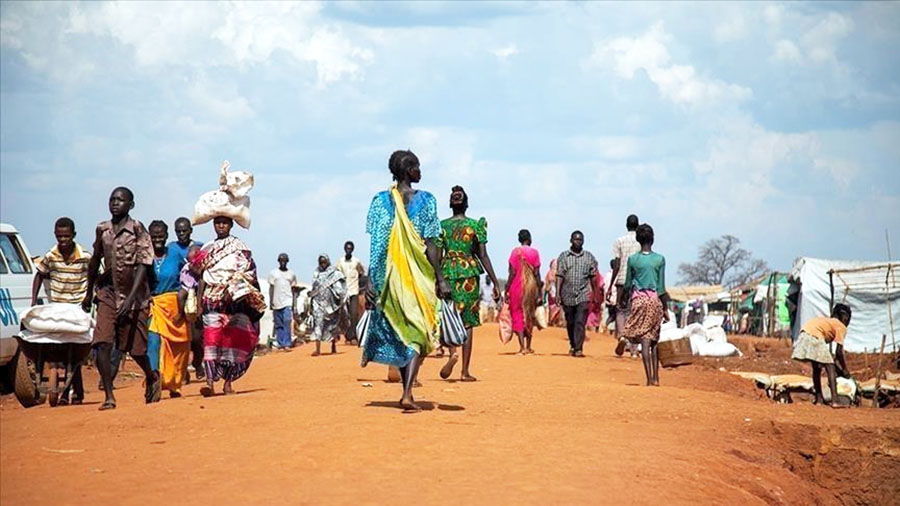
Since the outbreak of fighting between the Sudanese Armed Forces (SAF) and the Rapid Support Forces (RSF), the conflict has no longer been confined to a conventional military struggle for power. It has instead evolved into a complex crisis with deep humanitarian, social, and economic dimensions. Millions of Sudanese have been forced into internal displacement or to seek refuge in neighboring countries. Health and education infrastructure has suffered near-total collapse, while hunger and food insecurity have sharply worsened—particularly in historically marginalized peripheral regions such as Kordofan and the Blue Nile. In this context, a humanitarian truce appears as an urgent necessity, not as a political solution, but as a moral and humanitarian imperative to stem the bleeding of civilians.
However, the core dilemma lies in the fact that the very concept of a humanitarian truce has become a subject of political and military contestation. Each party to the conflict seeks to instrumentalize the truce to serve its own interests—whether by improving its image before the international community or by rearranging its positions on the ground. The Sudanese Armed Forces view with suspicion any truce that does not include clear commitments from the RSF to withdraw from cities and strategic areas, fearing that it could become an opportunity for regrouping and consolidating control. Conversely, the RSF argues that the truce should be unconditional, emphasizing the humanitarian dimension and the opening of safe corridors, while accusing the army of obstructing aid convoys through aerial bombardment or administrative restrictions.
This divergence in perspectives reflects a profound crisis of trust between the two sides—one that has accumulated over years of conflict, fragile alliances, and political coups. Without addressing this crisis of trust, any truce remains vulnerable to rapid collapse, as seen in previous experiences since the war began, when multiple temporary ceasefires were announced only to quickly unravel amid mutual accusations and field violations.
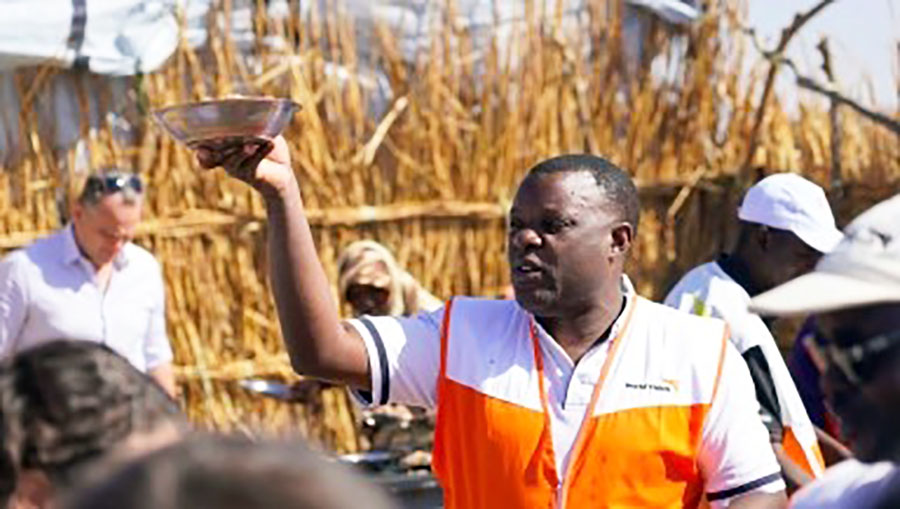
Beyond political mistrust, the humanitarian truce faces serious operational challenges on the ground, particularly in regions such as Kordofan and the Blue Nile, where frontlines are blurred, local armed groups proliferate, and state authority is almost entirely absent. Delivering aid in these areas requires not only a cessation of hostilities between the two main parties, but also complex security arrangements, guarantees for the protection of humanitarian workers, and coordination with local communities. In an environment marked by insecurity and the widespread availability of weapons, even minor disruptions can be enough to derail humanitarian efforts altogether.
Despite these challenges, the importance of a humanitarian truce as a potential gateway to a political opening should not be underestimated. International experience shows that many armed conflicts began their peace trajectories through limited humanitarian arrangements that helped build a minimum level of trust and created space for indirect dialogue. In the Sudanese case, a truce could help create a less tense environment and allow civilian forces and civil society to play a greater role in pushing toward a comprehensive political solution, rather than leaving the scene entirely dominated by the logic of the gun.
Achieving this, however, requires several essential conditions—chief among them the establishment of an independent and effective monitoring mechanism to oversee the implementation of the truce, rather than relying solely on verbal commitments. It also requires balanced international and regional pressure that does not favour one party over another and places the protection of civilians as an absolute priority. Furthermore, the humanitarian truce should be linked to a clearly defined political process, so that it does not become an isolated measure with no future, or a tool for prolonging the war.
Ultimately, the real wager on a humanitarian truce lies not merely in a temporary cessation of hostilities, but in its ability to transform the very logic of the conflict—from a logic of military victory to one of political settlement. This demands political courage from the leaders of both sides, and a willingness to acknowledge that the continuation of war will lead only to further destruction and fragmentation, and that Sudan, in its fragile and fractured state, can no longer afford more military adventurism.
In conclusion, the anticipated humanitarian truce in Sudan represents a decisive test of the warring parties’ will for peace, and of the international community’s seriousness in addressing one of the world’s gravest humanitarian crises today. It is either a first step toward a comprehensive ceasefire and the building of sustainable peace, or merely a fleeting stop in a long war whose costs are borne solely by civilians. Between these two possibilities, the fate of millions of Sudanese remains suspended on the ability of internal and external actors to translate humanitarian rhetoric into tangible action on the ground.

