
Updated: 10 February 2026 11:08:54
Sudan’s Return to IGAD: Have the Reasons for Freezing Its Membership Disappeared?
Ameer Babiker Abdalla
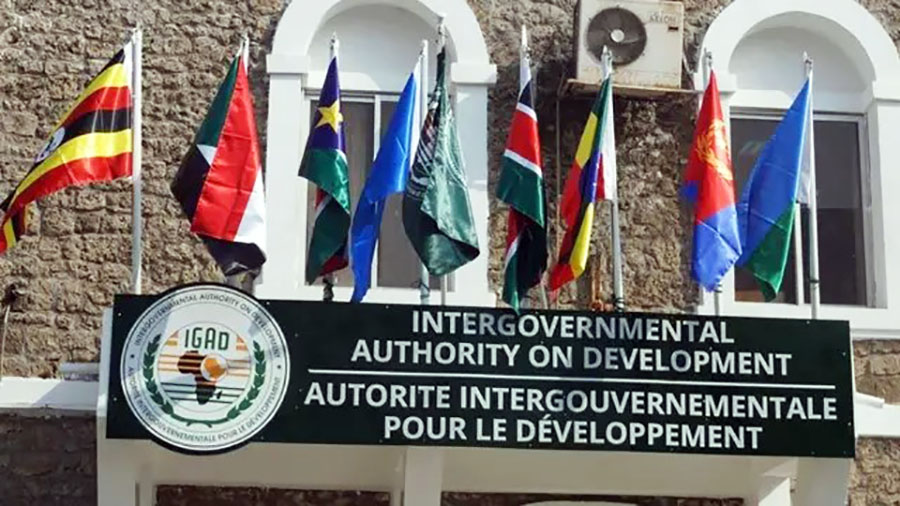
In a warm-toned press statement, the Intergovernmental Authority on Development (IGAD) welcomed Sudan’s decision to resume its full participation in the organization, at a time when Sudan’s efforts—so far—have failed to restore its engagement at broader continental levels.
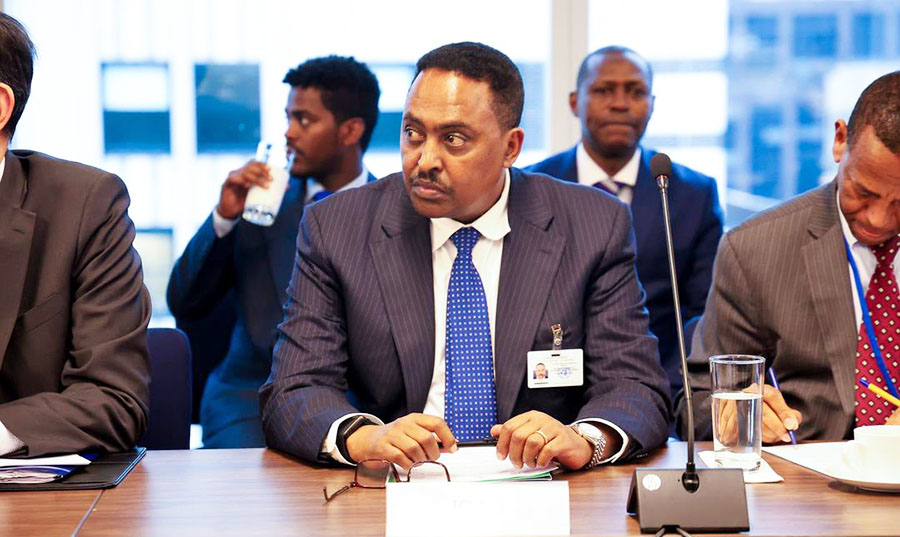
IGAD’s Executive Secretary, Workneh Gebeyehu, described Sudan’s return as an affirmation of regional solidarity and a collective commitment to peace, stability, and cooperation across the region. He noted that Sudan’s renewed engagement, as a founding member state, strengthens the unity of the organization and enhances its capacity to address shared regional priorities.
IGAD’s statement followed Sudan’s announcement of its return to the organization after two years of freezing its membership. In a statement, Sudan’s Ministry of Foreign Affairs said that “the Government of the Republic of Sudan will resume its full activity within the organization.”
Sudan explained that its decision to resume participation in IGAD comes “in line with the positive statement issued by the Secretariat of the Intergovernmental Authority on Development (IGAD), in which the organization expressed its commitment to the founding frameworks governing joint regional action.” This refers to IGAD’s statement issued on January 29, in which the organization condemned violations committed by the Rapid Support Forces (RSF) in the war, which is approaching its third year.
According to the Sudanese Foreign Ministry, IGAD also expressed its commitment to “non-interference in the internal affairs of member states, foremost among them full recognition of Sudan’s sovereignty, territorial integrity, unity of its people, and the safety of its existing national institutions.”
IGAD and Its Mandate
The Intergovernmental Authority on Development (IGAD) is a regional African organization established in 1986 to combat drought and desertification in the region. Headquartered in Djibouti, it comprises eight East African countries: Ethiopia, Kenya, Uganda, Somalia, Djibouti, Eritrea, Sudan, and South Sudan.
In 1996, IGAD was restructured and its mandate expanded to include the promotion of economic cooperation, food security, stability, and mediation in regional conflicts.
Within this framework, IGAD played an important role in ending Sudan’s civil war that began in 1983, culminating in the signing of the Comprehensive Peace Agreement (CPA) in Naivasha, Kenya, in 2005. Since the outbreak of the current war, IGAD has also been actively engaged in efforts to lay the groundwork for resolving Sudan’s crisis.
The Story Behind Sudan’s Membership Freeze
In the early weeks of the war, IGAD moved relatively quickly compared to other regional frameworks, calling for an immediate ceasefire, the protection of civilians, and the opening of humanitarian corridors.
It also placed the Sudan crisis high on the agenda of its meetings, in an attempt to prevent the conflict from spilling over regionally—particularly given the flow of refugees into neighboring countries such as South Sudan, Ethiopia, and Chad.
IGAD’s most prominent intervention was the formation of the so-called “Quartet Committee” (Kenya, Ethiopia, South Sudan, and Djibouti) to take charge of mediation efforts. While this move was welcomed internationally, it sparked Sudanese reservations from the outset—especially due to Kenya’s chairmanship of the committee, amid accusations by Khartoum that Nairobi was biased.
Tensions reached their peak when IGAD invited the commander of the Rapid Support Forces, Mohamed Hamdan Dagalo (Hemedti), to participate in a regional summit—an invitation Khartoum viewed as political legitimization of an armed militia and an attempt to place it on equal footing with the national army.
With the issuance of the Entebbe Summit communiqué in January 2024—containing language Khartoum interpreted as infringing upon Sudan’s sovereignty and unity—the relationship between Sudan and IGAD shifted from tension to rupture. Sudan officially announced the freezing of its membership in the organization.
IGAD Member States’ Positions on the War in Sudan
This month, after two years of frozen membership, Sudan returned to resume its activity within the regional African organization, following IGAD’s latest statement—which did not depart from the organization’s general principles and did not reflect any change in member states’ positions on the war in Sudan.
IGAD’s role in Sudan’s war has never been independent of its member states; rather, it has been a direct product of their conflicting interests. Instead of shaping a unified position, the organization has often become an arena for quiet diplomatic contestation between divergent visions regarding the war, legitimacy, and external intervention.
As such, IGAD’s decisions, initiatives, and even its crises with Khartoum cannot be understood in isolation from the roles of its constituent states and their differing approaches toward the war, the army, and the Rapid Support Forces.
IGAD is not an organization that stands above states; it is a fragile coordination framework whose positions are shaped by internal balances among member states, immediate security and border interests, and political calculations that extend beyond Sudan to the region as a whole.
Consequently, IGAD has failed to articulate a unified vision on the war, instead producing an uneven mix reflected in hesitant decisions and, at times, contradictory statements.
Influential States Within IGAD
At the top of the list of influential IGAD states is Kenya—a controversial mediator and one of the main sources of tension between Sudan and IGAD. Kenya played the most prominent role through its chairmanship of the Quartet Committee on Sudan and by hosting meetings and political engagements involving the Rapid Support Forces and their allied political actors.
This role, however, was met with clear Sudanese rejection, as Khartoum accused Nairobi of political bias, promoting the internationalization of the crisis, and treating the RSF as a political actor rather than as a rebel force. This disagreement directly affected IGAD’s decisions and weakened its ability to impose a comprehensive mediation track.
The second country with a complex relationship with Sudan—due to geography and history—is Ethiopia. Addis Ababa adopted an extremely cautious stance, driven by security concerns along the al-Fashaga border, its fragile internal situation following the Tigray war, and fears regarding Sudan’s relations with Tigray, Eritrea, and Egypt—an axis that Ethiopia views as its primary source of concern.
While Ethiopia formally supported IGAD’s role, it avoided exerting direct pressure on any Sudanese party or taking an explicit public stance, limiting its influence despite its regional weight.
South Sudan, for its part, adopted from the outset a mediation-oriented discourse and calls for an end to the war, without delving into sharp political details. This reflects the deep structural ties between Sudan and South Sudan across economic and security spheres that persisted even after South Sudan’s independence. President Salva Kiir sought to play a balancing role within IGAD, but his efforts were constrained by limited leverage.
Djibouti, the organization’s host country, emerged—particularly during its rotating chairmanship—as a less confrontational actor toward Khartoum and more focused on preserving the cohesion of the organization. Its role centered on containing the crisis triggered by Sudan’s membership freeze, reshaping IGAD’s discourse around sovereignty and non-interference, and paving the way for Sudan’s return to active participation.
The Return: Victory or Acknowledgment?
Sudan’s return to IGAD was neither a victory for the organization nor for Sudan. Rather, it represented a mutual acknowledgment of the limits of IGAD’s ability to impose a solution, and the limits of Khartoum’s capacity to sustain regional isolation—especially given Sudan’s continued suspension from African Union activities since the October 25, 2021 coup, after the AU froze Sudan’s membership in line with its policies on unconstitutional changes of government.
While Sudan’s return to IGAD reflects a sovereign decision to re-engage with part of Africa’s organized regional activity, the dilemma of its return to broader continental engagement remains contingent upon the removal of the reasons behind its suspension—namely, Sudan’s return to constitutional and legitimate governance.
The African Union, established in its modern form in 2002 after a long experience with military coups, adopted constitutional legitimacy as one of its core pillars. Accordingly, it recognizes governments—not merely states—and suspends the membership of any country that undergoes an unconstitutional change of power.

