
Updated: 4 March 2026 19:55:14
The Impact of an Iran War and Regional Rivalries on Sudan’s Conflict
By Ameer Babiker Abdalla
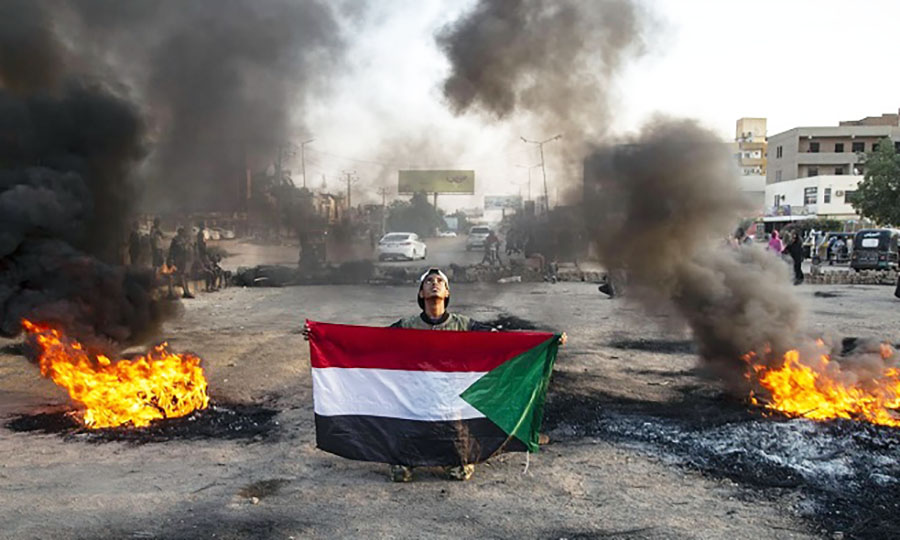
The ongoing conflict in Sudan has become part of a complex web of regional power balances, where great power calculations intersect with struggles for influence in the Middle East and the Horn of Africa. Amid the prospect of continued confrontation between Iran and its adversaries—chiefly the United States and Israel—a fundamental question arises: to what extent could this broader conflict alter the balance of war inside Sudan?
Iran: An Old Alliance in New Bottles
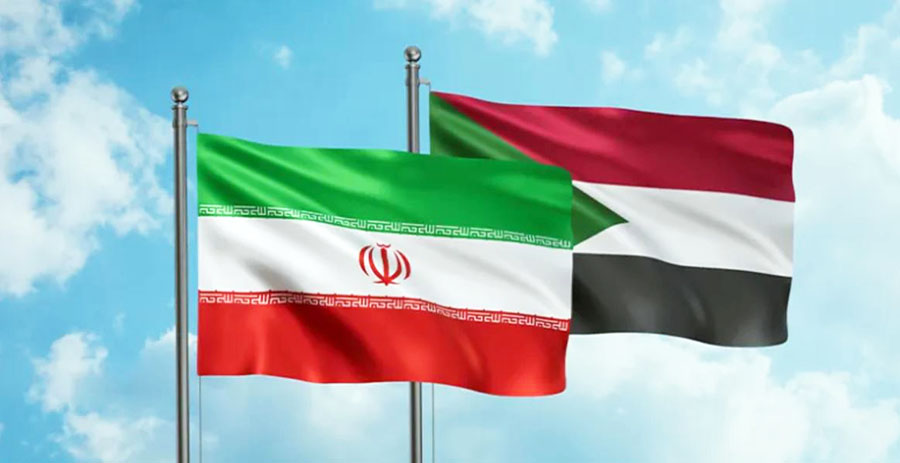
Relations between Khartoum and Tehran did not begin with the current war. Their roots stretch back to the 1990s, when a strategic alliance emerged that included extensive military and technical cooperation, particularly after the United States imposed sanctions on Sudan and designated it a state sponsor of terrorism. At the time, Sudan benefited from Iranian expertise in military manufacturing and maintenance, while Iran viewed Sudan as a gateway for expanding its influence into Africa.
These ties were severed in 2016 when Khartoum aligned itself with the Gulf bloc. However, they gradually resumed after the outbreak of Sudan’s war in 2023. The nature of the relationship has changed: rather than an ideological alliance, it is now grounded in mutual interests. Sudan seeks qualitative military support, while Iran aims to expand its geopolitical footprint.
The War of Drones
Estimates and reports suggest that drones have played a pivotal role in shifting certain battlefield dynamics during Sudan’s war, particularly in urban combat environments where conventional air power is less effective.
Drones offer several key advantages: precise surveillance of targeted forces, the capacity to conduct highly accurate strikes at relatively low cost, and the reduction of casualties among ground troops.
However, these advantages depend on continued technical and logistical support. Should Iran enter a large-scale direct war, it would likely redirect its military resources to its primary fronts. This could result in reduced external support to the Sudanese army and the loss of one of its most important tools of tactical superiority.
The Intersection of Economics and Security
Sudan’s geopolitical location places it at the center of international attention. It overlooks the Red Sea—one of the world’s most critical maritime corridors—and lies between North Africa and the Middle East. This position grants Sudan significant strategic value.
Economically, it offers potential leverage over global trade routes. From a security perspective, it represents a possible foothold for powers seeking to expand their naval influence.
Accordingly, any military escalation against Iran would place Sudan’s Red Sea coastline under heightened international scrutiny. It could become an arena of competing influence among powers determined to prevent it from evolving into a strategic base for Tehran.
Domestically, multiple reports indicate that the economic impact of any regional confrontation would be felt swiftly in Sudan. The country’s economy depends heavily on imports to secure basic necessities, particularly fuel, wheat, and agricultural inputs. Any disruption in trade routes or spike in oil prices resulting from war would directly lead to sharp inflation, shortages of goods, declining purchasing power, and an expanded humanitarian crisis. Given that Sudan’s economy is already fragile due to ongoing conflict, an external shock on the scale of a war involving Iran, the United States, and Israel could significantly compound the current crisis.
Gulf Rivalries and Their Repercussions
Media reports, including coverage by The New York Times, have pointed to differences in the positions of Saudi Arabia and the United Arab Emirates regarding Sudan’s war. While there has been no official confirmation of deep disputes, the mere existence of divergent perspectives underscores a critical reality: Sudan has become a theater of regional balancing.
Such divergence could weaken initiatives aimed at ending the war and establishing peace, while increasing Sudanese factions’ reliance on external backers. In this context, Sudan risks becoming a proxy battlefield, where outside actors support local parties to advance their strategic interests—further complicating prospects for political settlement.
The continuation of war without resolution would gradually transform Sudan into an arena of indirect regional competition.
External military support thus represents a double-edged sword for Sudan’s warring parties. While it enhances their capabilities, it also ties their fate to the strategic calculations of supporting states. Should these supplies suddenly cease, the conflict could devolve into a prolonged war of attrition dependent on local resources and stockpiles.
Moreover, shortages in official arms supplies often fuel the growth of smuggling networks and black markets across porous borders, making the conflict more chaotic and less controllable.
Possible Scenarios
1. Comprehensive Regional War
If a broad confrontation erupts against Iran—especially in light of statements by leaders of France, Germany, and Britain expressing readiness to coordinate with the United States and regional allies to defend their interests—this would likely reduce Iranian support to its allies. In Sudan’s case, such a shift could deprive the Sudanese army of important sources of weaponry and intensify international pressure on Khartoum.
2. Limited Escalation
If the confrontation remains confined to reciprocal, limited strikes, the primary impact on Sudan would be economic. The military balance within the country would likely remain relatively stable.
3. Regional De-escalation and Settlement
Should regional states and the United States reach understandings that lead to de-escalation, Sudan could become part of a broader political settlement framework. This scenario would increase the prospects for a political solution to the war and potentially reduce external support to the warring parties.
The situation can be summarized in a single equation: the future of Sudan’s war is no longer determined solely within its borders. It is now shaped by the interaction of three overlapping pressure circles—the internal military conflict, regional competition for influence, and international tensions among major powers.
The escalation of any one of these circles further complicates resolution. Analysts therefore argue that ending Sudan’s war will not be possible without broader regional understandings that place Sudan’s stability within the framework of collective regional security.
In this sense, any war between Iran and its adversaries will not remain distant from Sudan. Even if no shots are fired on Sudanese soil, the military, economic, and political reverberations will reach it swiftly. Likewise, any regional rivalry that supports the warring factions will further complicate the internal landscape—operationally and humanitarianly—and may ultimately redraw the map of conflict within the country altogether.

