Updated: 4 March 2026 20:02:47
Sudan: Caring for extremely sick children - Part Tow
Moatinoon Follow up
Source: MSF Australia
Dr Josephine Goodyer’s reflections continue in this second article after her return from Tawila in North Darfur, Sudan, in September 2025. She describes the valuable medical insight she’s carried from her first MSF assignment as a paediatrician in Liberia, how family circumstances need to be factored into their children’s care, and the importance of communicating about Sudan when back in Australia.
YOUVE WORKED IN A MALARIA CONTEXT WITH MSF BEFORE, IN LIBERIA. DID THAT ASSIST YOU AT ALL?
I will never forget what I learned in Liberia.
I had some bedside handover, which was fantastic, from the outgoing paediatrician, as I was coming in. We had worked together in Sydney, so knew each other from there, and she took me around to see the sickest children in the intensive care unit (ICU) in our hospital in Monrovia. Handing over one of the patients she said, “See, this is what Im talking about. Children examine as if, in an Australian context, they have a neurological disorder because theyre so floppy.” This was a child who had severe acute malnutrition and comorbid severe malaria, and she said, “They dont have a neurological problem. They just have no potassium, and usually its not recordable when they’re that floppy.”
That has stayed with me in all of my contexts, including in an Australian context when kids are floppy and they have a diarrhoeal illness.
When patients were floppy in Tawila and had ongoing losses, particularly those who we thought possibly could have cholera, although they were managed at the cholera treatment centre to try to prevent spread of the outbreak, that really helped in the absence of access to diagnostics.
So, I had seen severity of illness to this extent before. I had certainly experienced a malaria peak season before, and rainy season before, but I hadnt worked in a context that had only point-of-care diagnostics and where we could not test the potassium.
We really had to weigh up risks and benefits of giving what could be relatively dangerous electrolyte replacement and not knowing the number.
WERE THERE ANY OTHER CHALLENGES FOR THE WORK, FOR YOU, FOR THE TEAM?
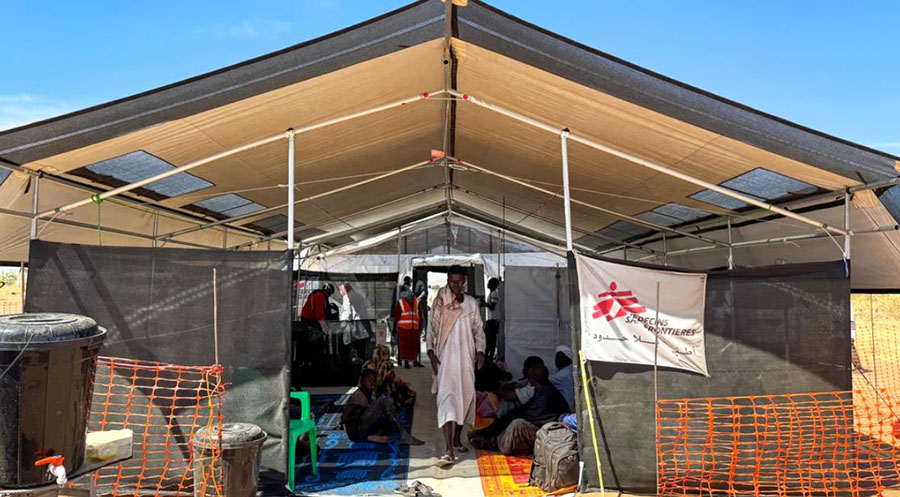
The conditions are always challenging, arent they? Even for the MSF team, its hot and its cramped and its difficult, for example particularly before we had a paediatric ICU. Previously the ICU was shared with adults, and it was a very cramped space that was really too hot to think in. Id often have to walk out of the space to have a conversation with staff, despite some standing fans. Also, you could only just fit walking sideways between the bed spaces which, for an ICU and for a setting where theres patients who have infective symptoms, is really difficult to think through from a clinical perspective. And it’s an occupational risk for your staff as well. It was really a marked improvement once we shifted that into one of the tents.
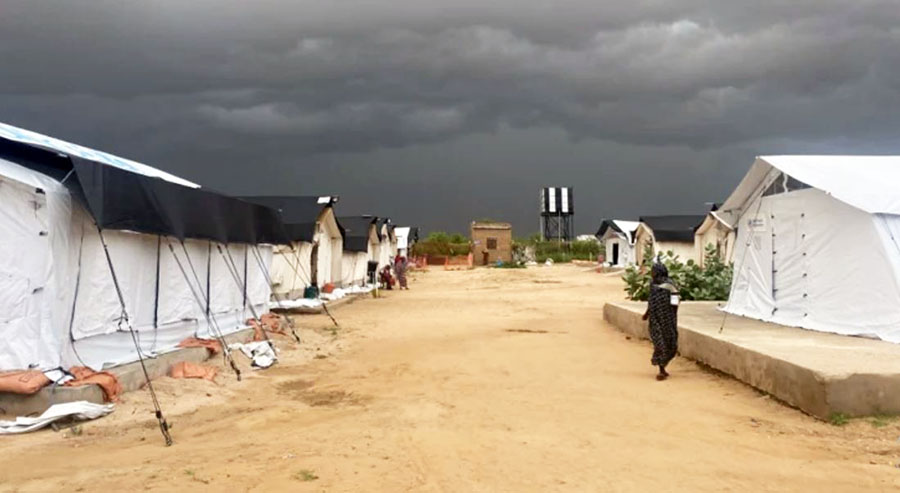
Other big challenges were really around providing care for children living with HIV and TB in the absence of access to a national program. How do you manage that in a context where people continue to flee and continue to become displaced? What do you give them? A huge number of the patients were lost-to-follow-up. And then how do you do contact tracing, thinking about what that looks like culturally, when people have to take daily medication or when theyre giving daily medication to their children and theyre living in these extraordinarily cramped conditions with zero privacy?
So there was lots to think through in terms of challenges without access to any kind of additional structures beyond which we created and shaped to an extent, and a very mobile population.
AS A PAEDIATRICIAN, WHEN YOURE THINKING OF THE FAMILY, WHAT ARE YOU THINKING ABOUT? WHAT ARE YOU TRYING TO ADDRESS?
As a paediatrician, yes, its not just the child thats in front of you, it’s the whole family. I learn so much from the communities that I work with and that I treat, and often they show me the way forward, and are hugely vulnerable in sharing what their needs are and what they need to do for their families and for survival.
Maybe the best way for me to talk about this is in the story of a mum and her baby who was admitted with severe acute malnutrition.
It was the second or third time that this baby, around four months old, had been admitted with severe acute malnutrition, and mums main concern was that she didnt have breast milk. It wasnt her first baby, or the first baby that she didnt have breast milk for, which can sometimes happen for women and their children. She had malnutrition herself when we screened her, so we were supporting her and her baby nutritionally. Whilst her baby was still in the acute phase of treatment, she said suddenly one day that she needed to go home, to provide care for her other children.
My concern was this baby was not a baby who could have any solids yet. Theres no access to formula in Darfur thats affordable or safe, and its not something thats supplied on discharge from the hospital in Tawila. And so I was trying to find a way forward with her and understand her circumstances in terms of what her baby would have for nutrition, and she said, “No doctor, my baby will receive goats milk.”
It was my first experience in having this presented as a solution and so I asked more questions. Then I had concerns clinically about things like brucellosis due to unpasteurised milk. But this is what this family needed to do for survival, and to find a way forward. So I did some reading and caught up on the nutritional content of goats milk and decided that we would provide iron and vitamin D supplements for this baby in the context of this baby receiving goats milk.
That baby dropped back in for follow-up – because the door is always open – and there were huge concerns from the mum because the goat had died and she was having challenges again feeding her baby. We admitted the baby to ITFC again. He received some therapeutic milk and again had a period at home with mom and family so she could meet the requirements for her other children.
NOW YOU’RE BACK IN AUSTRALIA, WHAT WAS IT LIKE SEEING THE DEVELOPMENTS IN DARFUR INCLUDING MASS KILLINGS IN EL-FASHER IN OCTOBER?
I felt strongly at the time and I feel even more strongly with the developments, since coming back, that Sudan is the largest global humanitarian crisis currently. On some occasions its been described as “the forgotten war”, which really resonates with me.
In Tawila one day I had this total out-of-body experience when I walked out of the main hospital compound to get across to the paediatric tents, because there was a donkey in my way. There were often donkeys in my way, but this donkey didnt have a cart attached to it. I thought, “Why is there a donkey in my workplace?” And then I couldnt work out whether you go in front of the donkey or behind the donkey, and if donkeys are like horses and they kick you if you go behind.
I came back to Australia and I was trying to cross the road to get to my workplace in the eastern suburbs of Sydney, and I had gotten better at relearning how to cross the road with cars. But this particular morning there was a tram, a stationary tram, and I had again this almost parallel experience with the donkey, where I was standing, looking at the tram, wondering if you walk in front of the tram or behind the tram. And I thought, “How strange is this, that less than a month ago I was trying to decide if you go in front of the donkey or behind the donkey, and now Im standing on a paved road, having picked up a coffee, trying to decide if you walk in front of the tram or behind the tram.”
Its funny what pops up in your mind and elicits these feelings of it being similar, but so disparate.
And whats helped me since Ive been back, though a little bittersweet, is that Sudan is now receiving some media attention.
I’ve presented to colleagues and its been helpful to highlight the need in Sudan and to highlight the extraordinary – I dont know a better word for it – work that the whole MSF team continues to do in the face of huge, overwhelming need. Its important to be able to talk about it because everyone shares humanity and everyone is interested in it, and everyone is really supportive from afar for the staff and the people of Sudan, but they find it difficult to know where to start, because its not something thats been visible.
I guess thats whats been valuable about being back, even with the increasing crises in Sudan, is trying to bring that connection for people who really do care.

