
Updated: 6 April 2026 17:09:50
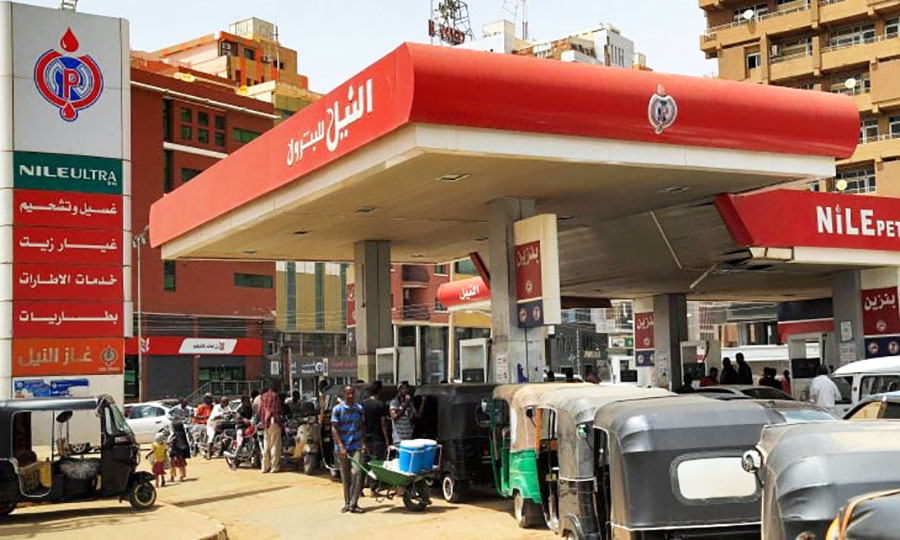
Hormuz Strait Chokes Sudanese Citizens
Moatinoon
Since the closure of the Strait of Hormuz, following the outbreak of war between the United States and Israel on one side and Iran on the other, the suffering of citizens in Sudan has doubled. In addition to the repercussions of the internal conflict, displacement, difficulty accessing basic goods, and soaring prices, the closure of the strait has further intensified hardship—especially in fuel supplies.
Official reassurances attempting to downplay the impact of the war, claiming that Sudan lies outside the circle of direct influence and that petroleum supplies are proceeding normally, have proven unrealistic and ineffective in the face of rapidly changing fuel prices at service stations.
The Minister of Energy and Petroleum, Al-Mutasim Ibrahim, had earlier reassured citizens in press statements that the war’s impact on Sudan would be very limited, noting that necessary precautions had been taken to address any indirect effects.
However, Sudan’s Ministry of Oil has recently acknowledged the worsening crisis and its inability to control it. The ministry stated that the price of a barrel of diesel has tripled—from around 78 to 245—due to the war’s repercussions.
The ministry added that it has no option but to urge importers to reduce profit margins in order to ease the burden on citizens. This crisis reveals a recurring pattern: the effects of any regional disruption quickly spill into Sudan, transforming from an energy crisis into a comprehensive cost-of-living crisis.
The impact is not limited to fuel alone but extends to all aspects of daily life, as reflected in the dramatic surge in consumer goods prices.
Sudanese markets are witnessing an unprecedented wave of price increases in essential goods and services, coinciding with new fuel price hikes across different states. This has prompted some shops to suspend sales in anticipation of further market fluctuations.
These increases are compounding the challenges faced by Sudanese families, who are already struggling with a deteriorating economy, low public-sector wages, and the ongoing humanitarian crisis affecting displaced populations in camps.
Bread prices have risen significantly, with quantities dropping to four pieces instead of six for 1,000 Sudanese pounds. Traders and fuel station owners confirmed that they are often forced to halt sales whenever new fuel price increases occur, as these directly impact the cost of all other goods due to higher transportation expenses.
The effects are not limited to goods transportation; they have also significantly driven up urban transport fares and intercity travel ticket prices.
Fuel prices have varied across states. In Shendi and Al-Matamma, a liter of diesel reached 7,220 Sudanese pounds; in Atbara and Al-Damar, 7,199 pounds; while in Kassala it rose to 7,538 pounds. In Al-Jazira State, gasoline reached 5,496 pounds per liter, while diesel climbed to 7,678 pounds per liter.
