
Updated: 30 July 2026 17:59:32
Sudanese Women: When Projects of Domination and Violence Pass Through Their Bodies
Moatinoon Follow up
Republished from Ultra Sudan
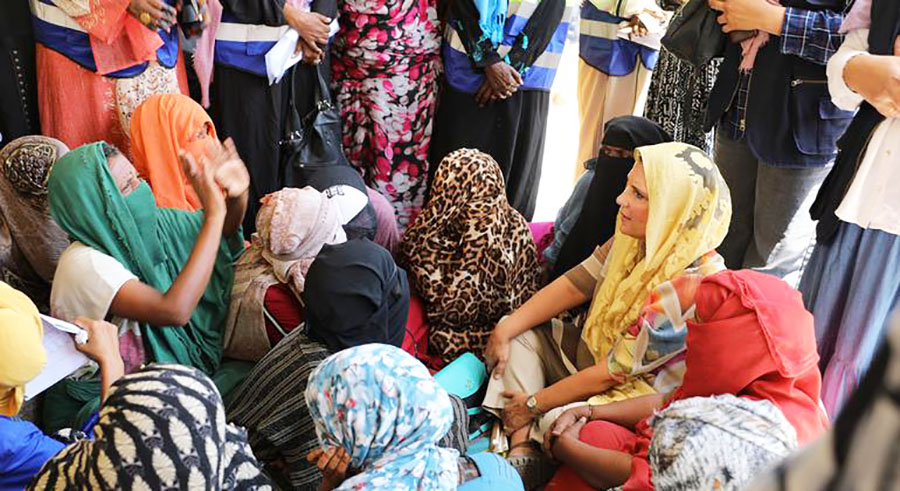
A warning issued by UN Women over the escalating pattern of violence against women and girls in the Sudanese city of El Obeid has once again highlighted the immense suffering endured by women across Sudan. Despite the pivotal social role Sudanese women have played throughout the countrys history, they have consistently remained the most vulnerable target through which projects of domination and violence seek to impose themselves by threatening the violation of their bodies.
According to UN Women, women in El Obeid now face the danger of drone strikes during the day and the constant threat of assault and rape at night as they struggle to carry on with their daily lives.
Reports by the United Nations and international and local human rights organisations indicate that sexual violence and rape have been systematically employed as weapons of war and tactics of terror since the outbreak of the conflict in Sudan in April 2023. These abuses have been used to intimidate civilians, force displacement, and exploit women. Human rights groups agree that officially documented cases represent only a fraction of the actual scale of the crimes because of the collapse of Sudans health and justice systems, communication challenges, and the social stigma that discourages survivors from reporting sexual violence.
Displacement as the Only Option
I met "A.A." at a market in East Nile, where we spoke at length about war and displacement. I hesitated before asking why her marriage had been delayed. Only weeks before the war, she had been preparing for her wedding shortly after Eid al-Fitr. More than three years have now passed.
After a brief silence, she said: "I had planned every detail of that day. I imagined the life that awaited me and everything I would do with my husband. But fate had other plans, and then the war broke out."
She told me that the man she had chosen to spend her life with was killed during the first months of the conflict while trying to flee the fighting in East Nile. She and her family managed to escape first to a village in Al Jazirah State and later to eastern Sudan after the Rapid Support Forces overran Al Jazirah.
Speaking to “Ultra Sudan”, she recalled that reports of girls and women being raped had already become widespread before her father decided the family had to leave East Nile.
When I told her about what women in El Obeid are now experiencing, she slowly shook her head and said: "God is sufficient for us, and He is the best disposer of affairs. Why is it always the women?"
Rape as a Weapon of War
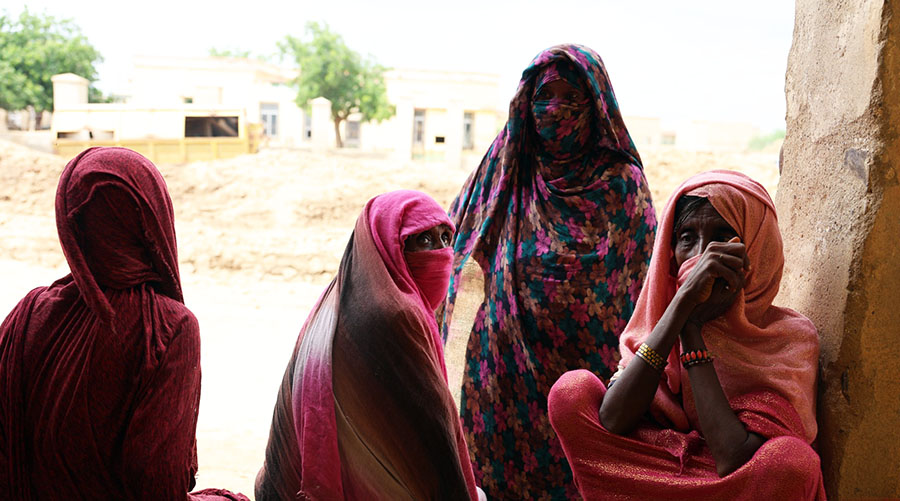
The use of sexual violence and rape during Sudans armed conflict has not been merely the result of individual misconduct or an unavoidable by-product of war. Rather, it has become a deliberate military tactic and a systematic strategy carrying profound political, social, and psychological implications whose consequences will extend far beyond the current conflict.
Sexual assaults have been carried out inside homes and along displacement routes to force families to abandon their homes and property. Victims have also been targeted on ethnic grounds. Testimonies documented in Darfur describe survivors being subjected to racist insults and threats of ethnic cleansing during the assaults.
Women and girls have also reportedly been abducted and held in camps or private houses, where they were subjected to forced labour and repeated sexual abuse.
One of the clearest indications that rape is being used systematically as a weapon of war is the deliberate denial of medical care to survivors. The looting and destruction of hospitals and health centres have prevented access to emergency contraception and post-exposure treatment for sexually transmitted infections, depriving victims of essential medical assistance.
Journalist Muzdalifa Mohamed Osman told “Ultra Sudan” that Sudanese women have paid an enormous price since the war began in 2023. Entire generations of children, she said, now face an uncertain future shaped by displacement, refugee life, and escalating violence that continues to affect every segment of society.
She added that throughout the long history of armed conflicts, she has never witnessed a tragedy comparable to that experienced by Sudanese women—from the wars in Darfur and southern Sudan to the current conflict, which has engulfed much of the countrys centre, west, and south, while even Khartoum and its surrounding cities have not been spared from indiscriminate shelling and drone attacks.
Documented Statistics
A comprehensive United Nations report documented the widespread scale of conflict-related sexual violence across Sudan, recording 546 incidents in 16 of the countrys 18 states, affecting at least 838 victims.
Women and girls accounted for 98 % of all documented victims, including 64 % adult women and 34% girls under the age of 18, while men and boys represented only 2 % of the reported victims.
The Horn of Africa Women Solidarity Network has also documented hundreds of cases through civil society organisations and grassroots activists operating in Khartoum, Darfur, Al Jazirah, and Kordofan. The network estimates that officially documented reports represent only 2 to 5 % of the actual number of cases, suggesting that the true number of survivors runs into the thousands.
The network has also documented cases of suicide among survivors suffering from severe psychological trauma, unwanted pregnancies, and the crushing social stigma attached to sexual violence.
Meanwhile, Human Rights Watch has concluded that the Rapid Support Forces (RSFand allied militias are responsible for the majority of documented cases of conflict-related sexual violence in Khartoum, Al Jazirah State, and the Darfur region, while also recording isolated abuses committed by other armed groups and forces affiliated with the Sudanese Armed Forces.
The Meaning of Rape as a Weapon
Rape is used as a rapid and effective means of breaking the will of local communities, forcing families to flee their homes and abandon their land without the need for prolonged military confrontations. This facilitates territorial control and, in many cases, contributes to altering the demographic composition of affected areas.
In conservative societies where family honour is closely linked to social cohesion, sexual violence extends far beyond the immediate victim. It is intended to humiliate entire families and communities while instilling feelings of shame and helplessness among men who are unable to protect their relatives. In doing so, it tears apart the social fabric and inflicts deep and lasting wounds on communities.
Journalist Muzdalifa Mohamed Osman says that in every war Sudan has experienced, perpetrators have used rape alongside bullets and drones as a principal weapon against women.
"These crimes leave deep scars on thousands of women and girls, especially those living in conservative communities where survivors are often treated as a source of shame and are ostracised rather than supported."
She explained that many survivors become so psychologically shattered that suicide appears to be their only escape.
"This has already happened in several states, including Al Jazirah, where a number of women took their own lives to escape the stigma after the Janjaweed violated their dignity and subjected them to extreme humiliation. Even men were not spared from degrading treatment."
Long-Term Social Consequences
The use of rape and sexual violence as weapons of war produces both immediate and long-term consequences.
In the short term, survivors endure devastating psychological trauma that often extends to their families and surrounding communities, with effects that can become life-threatening if left untreated.
Over the longer term, these crimes will leave behind a generation of children born as a result of sexual violence. Many are expected to face overwhelming legal challenges concerning birth registration, identity documents, and parentage, in addition to social rejection, discrimination, and marginalisation.
Systematic sexual violence also passes trauma from one generation to the next. Communities subjected to these abuses inherit fear, grief, humiliation, and anger, affecting childrens emotional development and increasing the likelihood of recurring cycles of violence.
The legacy of these crimes is also expected to complicate future efforts toward justice and national reconciliation. Ignoring such violations, or granting amnesty for them as part of future political settlements, would remain a major obstacle to achieving genuine social reconciliation and lasting peace in Sudan.

