
Updated: 18 September 2026 17:14:18
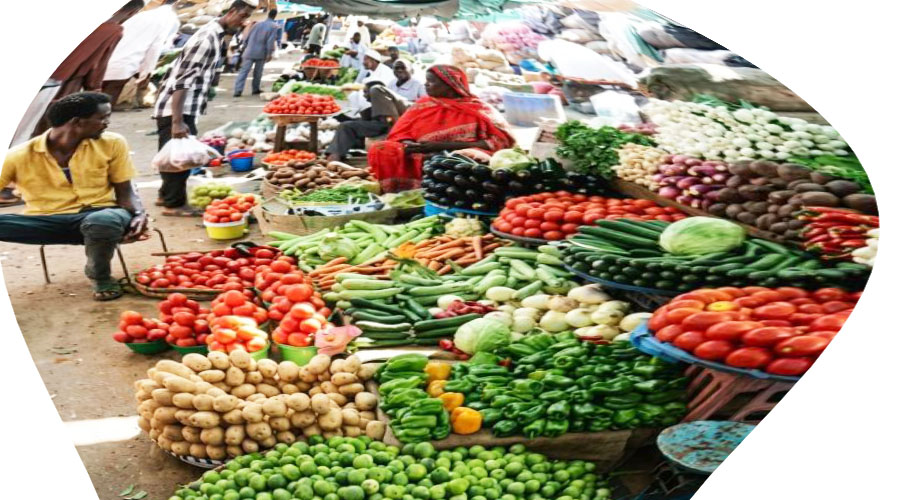
Amid Declining Local Production, Ethiopian Vegetables Flood Al-Qadarif Markets
Moatinoon
Discussions regarding vegetable prices in Al-Qadarif markets cannot be separated from the reality of Sudanese agriculture, which faces mounting challenges affecting production volumes and the flow of goods to markets.
Vegetables imported from Ethiopia are not new to Sudanese markets; they have long been part of the trade between the two nations. However, their presence has become increasingly prominent recently due to a decline in local production. This shift is driven by the war’s impact on key agricultural regions, the loss of productive land in the Gezira Scheme, and rising costs for farming and transportation.
As local production wanes, Ethiopian vegetables have become more prevalent in certain markets, helping to meet consumer demand. Yet, these products are subject to transportation costs and trade regulations, all while food prices continue to climb.
Munzir Ahmed, a tuk-tuk driver who transports goods from the border to the city of Al-Qadarif, believes that the growing presence of Ethiopian vegetables reflects the decline in local agricultural output.
Munzir notes that he was once transporting a shipment of vegetables that was subsequently confiscated. In his view, such measures can lead to the loss of produce that might otherwise have reached the market. However, he does not view this specific incident as the core issue; rather, he links it to the broader context of vegetable availability, high costs, and the critical need for a steady supply of produce to the markets. In contrast, Ismat Al-Sajjan, a merchant at the Gallabat market, states that these vegetables were never banned. He explains that the absence of customs duties on them was due to the nature of the goods, whereas duties are imposed on other imports such as fava beans, rice, and coffee.
These two accounts reflect the dynamics of trade between Sudan and Ethiopia, driven by the markets need for agricultural produce from neighboring countries—a necessity arising as local production capacity falls short of meeting consumer demand.
Agriculture Facing Mounting Challenges
Sudan’s agricultural sector faces a multitude of challenges, including the high cost of production inputs, fuel, and financing, alongside difficulties in transportation and marketing, and the impact of the war on economic activity and supply chains.
These conditions directly affect the availability and pricing of agricultural products—particularly vegetables, which require continuous production and rapid transport and marketing networks due to their perishable nature.
As local production declines, markets have increasingly turned to imports to meet citizens needs; however, transportation costs, trade procedures, and levies on certain goods can drive up product prices.
The Consumer at the End of the Chain
While merchants strive to meet market demand through a mix of local production and imports, the consumer remains at the end of the cost chain, bearing the brunt of rising prices amidst declining purchasing power and a soaring cost of living. Market participants believe that resolving the vegetable crisis requires more than just imports; it necessitates revitalizing local agricultural production, securing financing and production inputs, and improving transportation, storage, and marketing—alongside establishing clear regulations for the movement of goods from neighboring countries.
The influx of vegetables from Ethiopia brings to the fore a broader issue: the capacity of Sudan’s agricultural sector to regain its role in ensuring food security and narrowing the gap between local production and market demand.
The increased presence of imported produce does not necessarily imply that importing is a new phenomenon; rather, it reflects the scale of the demand facing the market amidst declining local production and ongoing challenges in agriculture, transportation, and marketing.
