
Updated: 20 September 2026 16:14:36
A Humanitarian Reading of UN Officials’ Statements on the Sudan Crisis
By Dr. Salah Al-Amin
Following his recent visit to areas controlled by both the Sudanese Armed Forces (SAF) and the Rapid Support Forces (RSF), Carl Skau, Acting Executive Director of the World Food Programme (WFP), warned that Sudan is facing the world’s largest hunger and displacement crisis, with around 20 million people experiencing acute hunger.
Among the most significant remarks made by the senior UN official, highlighting the scale of the humanitarian crisis, were that nearly 14 million people are displaced, around 5 million are facing emergency levels of hunger, while approximately 200,000 people are living in catastrophic conditions reaching famine levels.
The funding crisis is another major obstacle. Funding for the WFP’s Sudan operations has fallen by roughly half this year, to 206 million compared with 645 million last year. This has forced the organization to reduce assistance or distribute half rations, as is reportedly happening in Tawila, North Darfur.
Highlighting the gap between operational capacity and available resources, the UN official stressed that the agency has the capacity and field access needed to assist millions of people, but severe funding shortages are preventing it from making full use of its presence on the ground.
Climate-related pressures have also become increasingly prominent. Skau pointed to an unprecedented drought in Darfur in recent decades, threatening the agricultural season and livestock, in addition to the consequences of the continuing war.
He stressed the need for international action, including meaningful political pressure and serious political investment to end the conflict, particularly as the UN General Assembly meetings get underway.
Other reports and data issued by UN agencies point to a rapid and severe deterioration in humanitarian conditions in Sudan’s conflict-affected areas.
El Fasher is one of the clearest examples. The city has previously endured a crippling siege and continued fighting, with famine officially confirmed in some surrounding locations, including the Zamzam and Abu Shouk displacement camps. These areas are suffering from severe and, in some cases, near-total shortages of essential commodities and nutritional supplements for children.
El Obeid, another major frontline city, has also faced severe restrictions on the movement of commercial and humanitarian trucks. The restrictions have contributed to sharp increases in commodity prices and made it extremely difficult to deliver water supplies and medical services to thousands of families trapped by the fighting.
The International Organization for Migration (IOM) and other agencies have warned of the potential collapse of Sudan’s entire humanitarian response system within a matter of weeks as a result of severe funding shortages and dwindling relief stocks.
The agencies have indicated that emergency shelter materials, water supplies and sanitation equipment could run out by the end of September.
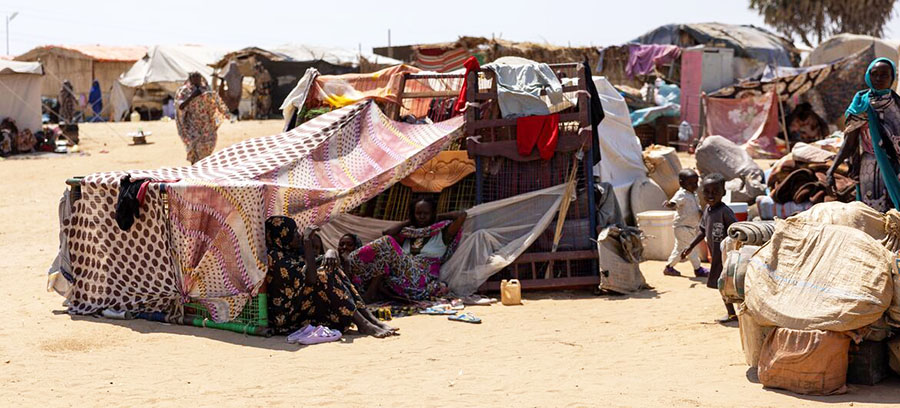
According to these organizations, the total number of internally displaced people has surpassed 8.6 million. Millions more have crossed Sudan’s borders as refugees into neighboring countries, including Chad, South Sudan, Egypt and Uganda, placing enormous pressure on the already limited resources of host communities.
Humanitarian agencies are also facing a combination of other challenges. Their logistical difficulties are caused not only by the conflict but also by heavy rains and flooding, which have destroyed millions of temporary shelters and increased the risk of outbreaks of epidemics and waterborne diseases.
Taken together, the reports of the World Food Programme and other humanitarian organizations point to an extremely bleak near-term outlook for Sudan’s humanitarian situation.
Unless the international humanitarian community intervenes, or a humanitarian truce is reached to facilitate the delivery of aid and protect civilians, the system for delivering humanitarian assistance risks being severely disrupted or even brought to a complete halt. Rebuilding it at the same level of efficiency afterward would be extremely difficult.
This should serve as an alarm for the entire humanitarian supply chain, from donors at one end to the delivery of assistance to beneficiaries on the ground at the other.
According to previous assessments, the number of donors has already declined from 20 to 16, and that number could continue to fall.
Some organizations that remain operational on the ground and still have access to limited funding are increasingly being forced to prioritize the most vulnerable beneficiaries and the areas facing the greatest needs, providing them with the limited assistance available while leaving others without support.
The potential collapse of the humanitarian system must also be understood in the context of the rapidly declining value of the Sudanese pound and the sharp increase in the cost of the food basket, which has risen by 22%. Global fuel prices have also increased amid the closure of the Strait of Hormuz, while rising agricultural input costs, declining rainfall and a lack of financing threaten the success of the agricultural season.
This year, agricultural production has declined by 40%, while industrial production has fallen by 70%. The price of sorghum, a staple food for much of Sudan’s population, has increased by 23%, while wheat flour prices have risen by 27%.
The livestock sector has also been directly affected by declining rainfall, shortages of vaccines and inadequate veterinary care. At the same time, many young herders have abandoned their grazing areas, with some joining armed groups, turning to artisanal mining, or undertaking dangerous journeys by boat toward Europe.
There is also a growing risk of shortages of shelter, sanitation and water supplies, which could contribute to the spread of disease.
So, What Can Be Done?
First, the current operational space for humanitarian organizations must be preserved and protected from further deterioration. Re-establishing that operational capacity once it collapses would be extremely difficult.
Second, there must be direct engagement with international donors to urge them to fulfill their responsibilities toward civilians affected by the war.
Third, humanitarian action and civilian protection must be placed at the centre of all efforts aimed at ending the war.
Above all, Sudanese themselves must develop creative and locally driven initiatives to provide relief and protection to their communities.
Sudan’s humanitarian crisis is a complex, multidimensional crisis that cannot be addressed through conventional relief tools alone. To begin addressing it effectively, we must first break down and understand the interconnected layers that make up the crisis:
The layer of armed violence
Military geography
Administrative collapse
Protracted hunger
Social divisions
Regional and international entanglements
