
Updated: 22 September 2026 18:24:35
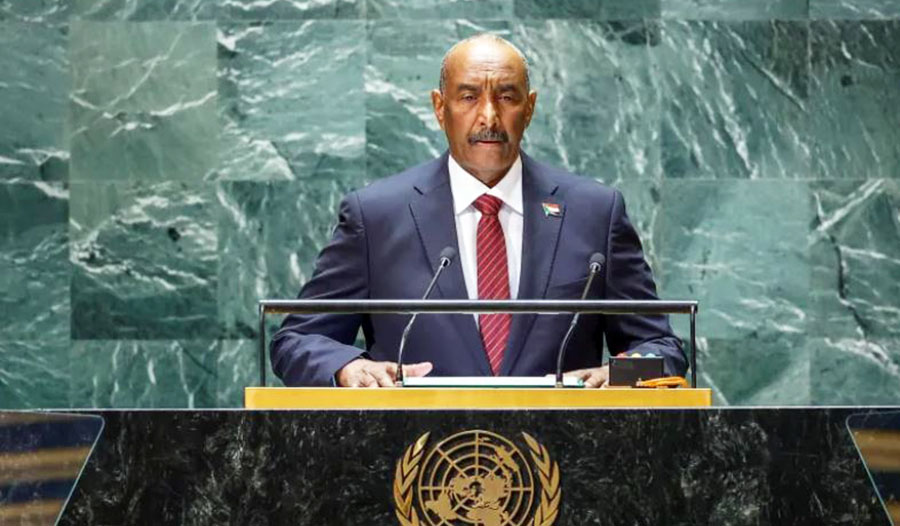
Washington Links Burhan Visa to Agreement on Ceasefire
Moatinoon
The United States has yet to issue an entry visa to Sudanese army chief and head of the Sovereignty Council Abdel Fattah al-Burhan, just days before his scheduled appearance at the United Nations General Assembly in New York, prompting diplomatic efforts by Sudan and the UN amid reports that the delay may be linked to Washington’s ceasefire initiative.
Reuters reported on Tuesday that the United States was withholding Burhan’s visa, citing a letter from Sudan’s UN ambassador to the international body calling for intervention over the delay.
According to Reuters, the issuance of the visa appears to have been linked, according to a Sudanese diplomatic source and a Western analyst familiar with US and Sudanese officials, to Burhan agreeing to a proposed 90-day ceasefire.
Washington has not publicly confirmed that the visa is conditional on Burhan accepting the ceasefire proposal, and there has been no official US statement establishing such a link.
UN Secretary-General António Guterres said on Tuesday that the UN Secretariat had raised the issue of Burhan’s visa with US authorities and urged that it be issued in time for the Sudanese army chief to attend the General Assembly.
The intervention comes as concerns grow that the visa delay could complicate Sudan’s high-level participation in this week’s General Assembly meetings in New York.
Burhan was expected to attend the 81st session of the UN General Assembly at a time when Sudan’s war and its devastating humanitarian consequences remain major issues of international concern.
The visa dispute comes against the backdrop of a US diplomatic initiative aimed at ending Sudan’s war between the Sudanese Armed Forces and the Rapid Support Forces.
The US proposal called for an immediate **90-day humanitarian truce**, followed by negotiations on a permanent ceasefire and a civilian-led political transition toward elections. It also envisaged a UN-supported mechanism for limited RSF withdrawals from designated areas.
However, the Sudanese government objected to the proposed scope of the RSF withdrawals.
Documents reviewed by Reuters in July showed that Sudan’s army-led government said any agreement should require the RSF to withdraw from all cities it had occupied since May 2023, rather than limiting withdrawals to specific areas identified in the US proposal.
The documents indicated that Khartoum had accepted most elements of the proposal but rejected the provision for limited RSF withdrawals.
The delay in issuing Burhan’s visa has therefore become part of a sensitive diplomatic interaction involving Khartoum, Washington and the United Nations.
Sudan’s UN ambassador has asked the international organisation to intervene, while Sudanese diplomatic sources have linked the delay to Washington’s efforts to secure progress on its ceasefire initiative.
The US administration, however, has not publicly stated that Burhan’s visa is conditional on Sudan accepting the proposed ceasefire.
The dispute comes as Washington steps up diplomatic efforts over Sudan’s war. UN Secretary-General Guterres has also called on countries supplying weapons and other military support to the parties to the conflict to take responsibility for their role in prolonging the war and civilian suffering.
The General Assembly is taking place as the United Nations continues to push for an end to the fighting, expanded humanitarian access and a political process capable of addressing the conflict.
Against this backdrop, the visa issue goes beyond a routine travel procedure. It intersects with the wider diplomatic effort over the war, the proposed ceasefire and the positions of Sudan’s warring parties on the terms of a potential settlement.
With the General Assembly already underway, the issuance of Burhan’s visa and whether he will be able to appear personally in New York have become significant diplomatic questions surrounding Sudan’s participation in this year’s UN meetings.
