
Updated: 23 September 2026 09:34:27
Informal Housing in Al-Qadarif: Between Demolition and the Test of Urban Equity
Mujahid Nasr al-Din
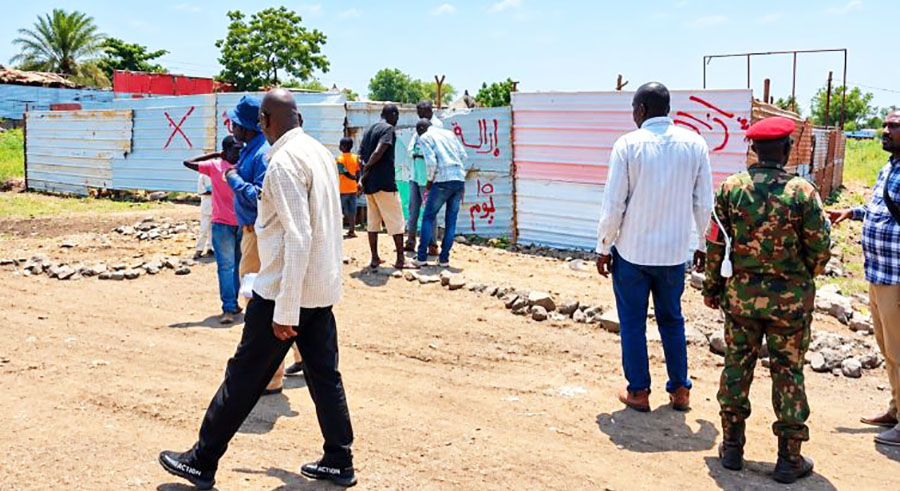
The Public Land Protection Unit within the Al-Qadarif State Land Administration has continued its field campaigns to issue warnings to violators and those encroaching on public land. These measures pave the way for the demolition of unplanned housing and the removal of unauthorized urban structures across several neighborhoods and key locations in the state.
In statements reported by the Al-Qadarif Radio and Television Corporation, Murtada Issa, Director of the Land Protection Unit, explained that the warnings issued to violators are final regarding encroachments on urban layouts, roads, and public squares. He confirmed that the demolition plans are proceeding according to the established schedules.
The campaigns covered the "Street 60" corridor, as well as the Al-Malik (West Block 1), Yathrib, and Ruwaina Al-Muwahhada neighborhoods. Operations also extended to Al-Sadaqa (Block 17), southeast of the Traffic Department; Wad Al-Kabir (Block 9), south of the International Organization for Migration (IOM) headquarters; the "October Compensation" area north of the French Bank silo; the Sawakin and Arkwit compensation areas; and informal settlements in the Deim Saad district and the housing scheme adjacent to the cemeteries.
Issa noted that the Unit employs a system of administrative and legal measures to combat unplanned housing and public land encroachment. Simultaneously, efforts are underway to regularize the status of eligible groups within the governing legal frameworks, aiming to establish secure housing and achieve what he described as the "elimination of informal settlements" in Al-Qadarif State. As authorities prepare to carry out demolitions, residents of these sites find themselves facing a reality far more complex than a mere zoning violation. For many families, moving to unplanned settlements was not a calculated urban planning decision, but rather a response to economic and humanitarian pressures—driven by war, displacement, and the soaring costs of living and housing.
When Housing Becomes a Necessity, Not a Choice
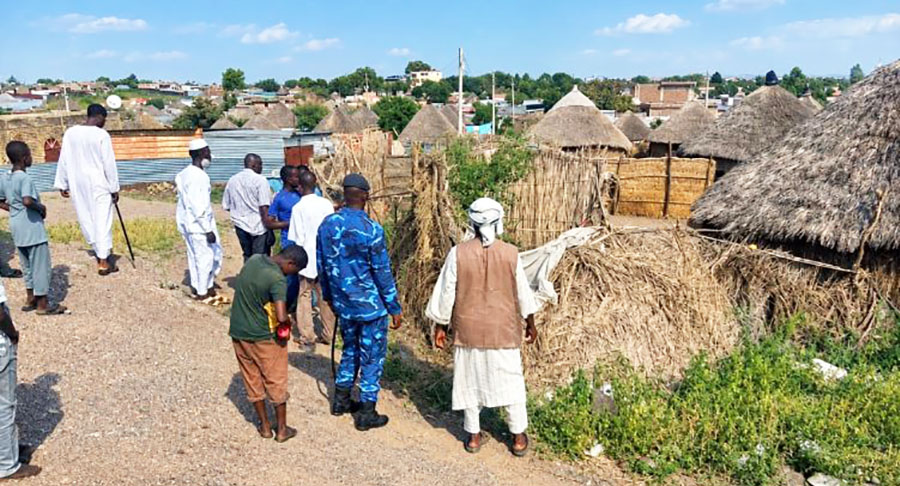
Demolition campaigns are taking place at a time when Sudanese cities are grappling with mounting pressure on housing and services—consequences of the war, displacement, and economic decline. These factors have driven many families to seek out any available space for shelter, even if it lies outside official urban planning zones.
An observer closely following the issue—who requested anonymity—notes that while addressing unplanned housing and protecting public land is a fundamental state responsibility, treating every case merely as an urban encroachment risks overlooking the circumstances that drove families to settle there in the first place.
He points out a crucial distinction: the difference between those who encroach on land for investment or speculation, and families seeking a safe place to live after losing their homes or finding formal housing unaffordable.
He adds that the war has not only created a massive displaced population but has also forced impoverished families to relocate due to skyrocketing rents, shrinking incomes, and the difficulty of accessing planned housing.
From this perspective, residents of unplanned settlements do not view their homes as illicit gains at the states expense; rather, they see them as a necessary, temporary refuge that—due to the protracted nature of the crisis—has evolved into a permanent place of residence. Eviction Should Not Mean Loss of Shelter
The observer emphasizes that protecting public land and enforcing the law remain fundamental state responsibilities; however, urban justice requires that the eviction process does not result in the loss of shelter for families who have no alternative.
He notes that the success of demolition operations is not measured solely by the number of homes removed, but by the authorities ability to relocate eligible families to safer, more stable housing—thereby preventing the problem from simply shifting from one location to another.
The Director of the Land Protection Agency had previously confirmed that the measures include addressing the status of violators and providing safe housing alternatives for eligible families in accordance with regulations; this makes the issue of housing alternatives a key factor in evaluating the outcomes of demolition operations.
For a family living in a modest home built out of sheer necessity, demolition can mean far more than the removal of an unauthorized structure; it can result in the loss of shelter, the disruption of childrens education, the loss of proximity to jobs and services, and potentially a return to square one.
Balancing Urban Planning and Human Welfare
The challenge in Al-Qadarif does not appear to be a choice between protecting land and protecting residents, but rather finding a way to reconcile the two. While protecting roads, public squares, and urban layouts is essential for organizing the city and preventing chaotic urban sprawl, protecting people from homelessness or forced relocation to more vulnerable areas is equally important.
Observers point out that a sustainable solution requires expanding residential planning, making land available to eligible groups, and simplifying the procedures for obtaining authorized housing. It also requires addressing the effects of displacement and the economic pressures that drive families to settle in unplanned areas.
Furthermore, halting new encroachments requires addressing the root causes that drive citizens to build outside official plans, rather than merely reacting to the consequences after they have already emerged.
“Eliminating Informal Settlements": Treating the Symptom or the Root Cause?
As authorities prepare to carry out demolitions at sites subject to final notices, the greatest challenge remains preventing the phenomenon from re-emerging in the future.
While removing unauthorized housing may address one aspect of the urban planning issue, it does not necessarily eliminate the underlying factors that gave rise to it—particularly given ongoing displacement, declining household purchasing power, and the pressing need for housing.
Achieving the goal of "zero informal settlements" depends not only on removing existing structures but also on the states ability to prevent new settlements from forming. This requires providing realistic and accessible housing alternatives, accommodating population growth and displaced persons, expanding urban planning, and addressing the poverty and economic pressures that force families into desperate choices.
Ultimately, the impending warning and demolition campaigns in Al-Qadarif reveal an issue that extends far beyond urban planning. Behind many of these modest homes are families seeking safety, children in need of stability, and displaced people who never chose the war that forced them to flee their communities.
While protecting land and enforcing the law are responsibilities that cannot be ignored, the concept of urban justice raises a practical question: how can the city be organized without that organization becoming a new burden on the most vulnerable families?
The most sustainable approach lies in combining law enforcement and land protection with the provision of safe housing. Priority must be given to those forced by war, poverty, and displacement to live outside formal planning frameworks; otherwise, demolition risks simply destroying existing shelter rather than serving as a step toward a more organized and equitable city.

