
Updated: 23 September 2026 22:17:17
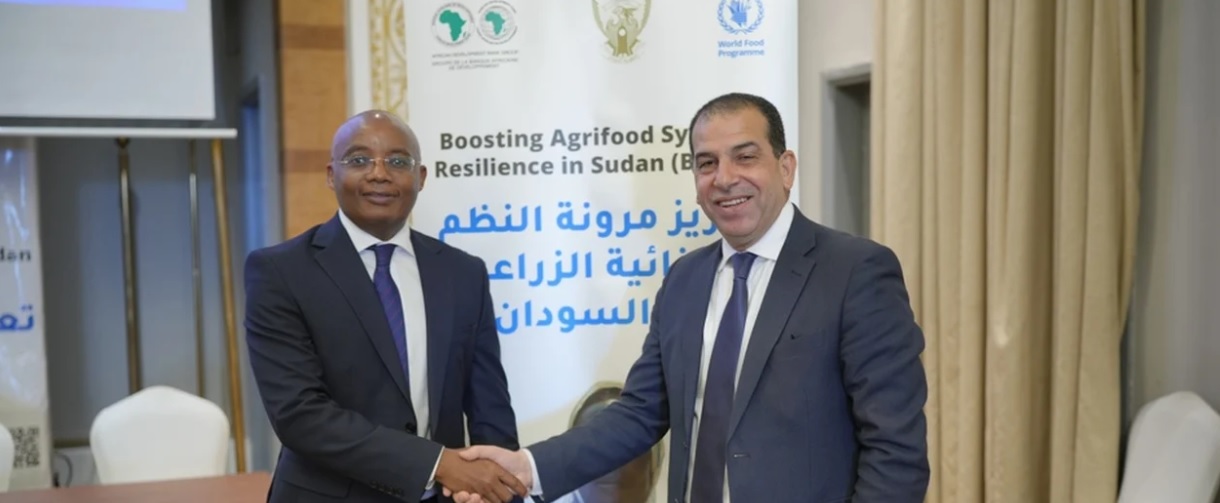
African Development Bank Launches Project to Support Agriculture in Sudan
moatinoon
The African Development Bank (AfDB) has officially launched the Strengthening the Resilience of Agricultural Food Systems in Sudan project, known as BOOST, with the aim of strengthening food security, restoring agricultural production and improving livelihoods in communities affected by conflict and climate shocks, according to an AfDB statement.
The project is being implemented by five regional and international institutions: the African Development Bank, the World Food Programme (WFP) as the implementing partner, the Food and Agriculture Organization of the United Nations (FAO), UN Women, and the International Maize and Wheat Improvement Center (CIMMYT). It targets around 232,000 smallholder farmers organized in 175 agricultural cooperatives in Sudan’s Blue Nile and Sennar states.
The project is financed by the African Development Fund, the concessional financing arm of the African Development Bank Group.
According to the AfDB statement, the project also focuses on creating economic opportunities for young people and women through youth-led cooperatives, small agricultural enterprises and startups, with support including training, financing, technology, mentoring and improved access to markets.
Agriculture is a major source of food, employment and household income in Sudan and accounts for more than 40% of the country’s workforce. However, conflict, displacement and climate shocks have disrupted production and weakened livelihoods in rural areas, increasing reliance on food imports.
David Muthosi Motoko, Country Manager of the African Development Bank Group in Sudan, described the project as “an investment in food security, resilient infrastructure, economic enterprises, and creating opportunities for women and young people in Sudan.”
He added: “By equipping women and young people with better skills and facilitating their access to finance, technology and markets, the project will help Sudanese people move from seeking employment to establishing their own businesses and creating jobs for others.”
For his part, Abdullah Al-Wardat, WFP Representative and Country Director in Sudan, said: “This partnership goes beyond being simply an agricultural initiative. It aims to shift the trajectory from dependence on humanitarian assistance to resilience, from vulnerability to self-reliance, and ultimately from subsistence farming to farming for the market.”
Project implementers expect the initiative to improve production across 1.16 million hectares, generate more than 980,000 tonnes of agricultural output with an estimated value of 468 million, and increase overall productivity by 25%.
The project will also distribute more than 1.2 million storage bags to over 200,000 farmers and reduce post-harvest losses by between 20% and 25% through the rehabilitation and equipping of 140 community-managed storage and processing facilities.
It will also give farmers greater access to climate-resilient seed systems, advanced technologies and more sustainable production practices.
The project builds on broader support from the African Development Bank Group for the recovery of Sudan’s agricultural sector, including the Sudan Emergency Wheat Production Project – Phase II, also implemented by the World Food Programme. By March 2026, the project had reached 86,585 farmers and distributed more than 18,000 tonnes of certified seeds and fertilizers.
