
Updated: 25 September 2026 17:59:28
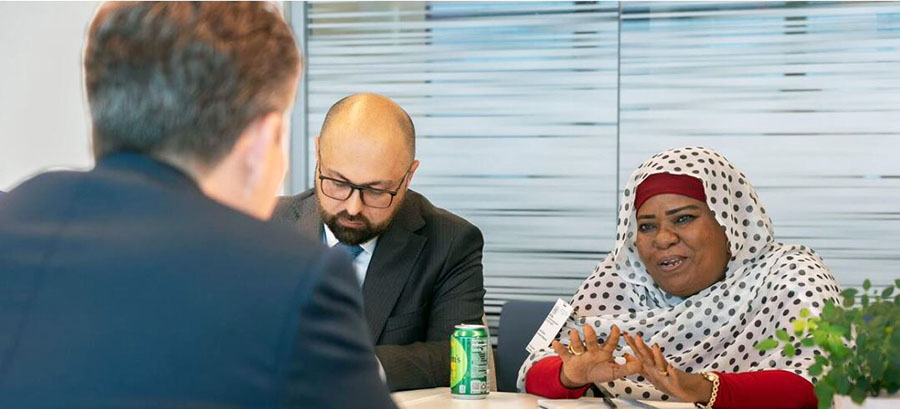
Mama Nour: a journey to rebuild the lives of children and women in Sudan
Moatinoon Follow up
Source: UN News
In Khartoum—home to the Maygoma Orphanage, the primary shelter for children without parental care (including those of unknown parentage)—began the story of Nour Hussein Al-Suyuti, known to many as "Mama Nour." Having lost her parents at a young age, she grew up in the very institution that would later become the launchpad for a career dedicated to helping women and children who had endured circumstances similar to her own.
Mama Nour traveled to New York alongside aid workers from various regions, at the invitation of Tom Fletcher—the Under-Secretary-General for Humanitarian Affairs—to co-lead several meetings during the UN General Assembly’s High-Level Week.
"Where Are Our Families and Kin?"
In an interview with UN News, Mama Nour reflected on her childhood: "When we saw our peers in the neighborhood and at school living with their families, we would ask ourselves: Where are our families and kin? These feelings grew with us."
The contrast between life in an institution and life within a family was stark for her and her peers. Despite the care provided by their guardians, nothing could replace a childs biological parents. She says, "It was a painful experience, because it was impossible to replace a childs real parents and family."
Impacts Spanning Generations
Over the years, a strong bond of brotherhood formed among the children of Maygoma, united by a shared experience and a common destiny. For Mama Nour, the impact of that experience did not end with childhood; its effects extended to subsequent generations.
"The experience didnt end just because we grew up and moved past it," she says. "It didnt end; our children are still paying the price." She offers a message to parents: "If you arent ready to be a real father or a real mother, dont attempt to take that step."
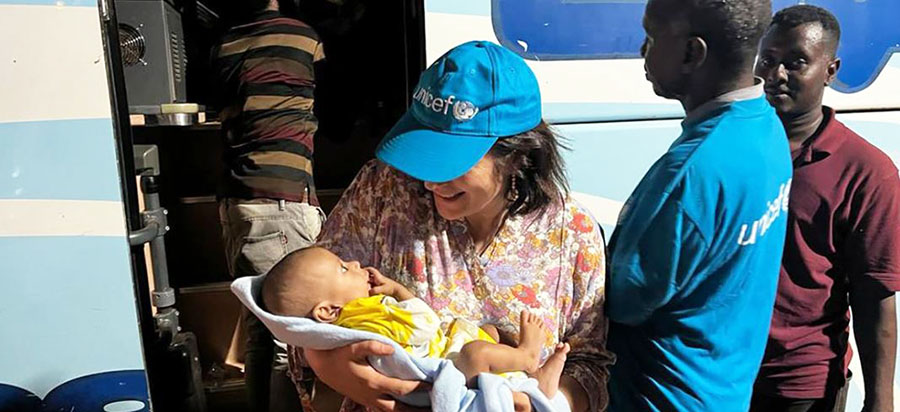
When a painful experience turns into a beacon of hope
In 2007—after completing her university studies, getting married, and starting her own family—Mama Nour founded the "Shama" (Candle) organization. She notes that the decision was not made on a whim; rather, it was a lifelong dream, driven by the gaps she observed in services available to children deprived of parental care.
She explains: "It wasnt a sudden decision or a spur-of-the-moment idea. It was a decision that had been taking shape since I was a child—growing and evolving with me—until the right moment arrived in 2007."
Since its inception, Shama has focused on providing legal, social, and educational services to children and young people deprived of parental care. These services include assistance with official documentation, social support, and guidance regarding education and employment, as well as scholarships ranging from kindergarten through university.
The organization also addresses issues related to a childs identity and their right to know the truth, while working to prevent the separation of children from their mothers. It provides support to mothers, striving to assist both them and their families in keeping the child within their natural family unit, while handling cases with "confidentiality and discretion."
War Dictates a New Path
Before the outbreak of war in Sudan in 2023, Mama Nour states that the "Shama" organization had addressed the needs of approximately 5,000 families. Following the wars onset, it assisted over 2,000 additional children, bringing the total number of cases handled to between 7,000 and 8,000.
However, the war forced the organization—along with the children and mothers under its care—onto a new path. Mama Nour explains that the organization supports more than 30 children and over 45 mothers; with the assistance of the "Saiha Organization," it managed to evacuate them from Khartoum to Wad Madani. When the conflict reached Wad Madani, the organization relocated them once again to Port Sudan.
She describes the journey as one fraught with fear, hunger, panic, and psychological distress. "There were many moments when death felt closer than life," she says, adding that the organization succeeded in protecting the children and mothers and bringing them to safety.
In Port Sudan, the International Organization for Migration (IOM) and UN-Habitat helped refurbish a damaged building—temporarily granted to the organization by the government—to serve as a shelter for the mothers and children until the situation in Khartoum stabilized.
Mama Nour notes that Shama continued its operations throughout the war, reaching over 600 mothers and children, providing psychological, social, and health rehabilitation, and facilitating the reintegration of some individuals into their families and communities. "Shamat Nour" Continues to Shine Despite Losing Everything
Despite the loss of the organizations assets and the destruction of its initial services, Mama Nour affirmed that the work continues. She addressed a message to donors and benefactors, stating: "We need everyone to stand with us for the sake of Sudan."
"We are in urgent need of support," she added, noting that the war has created significant gaps in society and that rebuilding services is essential to ensuring dignity and well-being for those who have suffered greatly.
Mama Nour continues her work supporting women and children, drawing on her personal experience at the Maygoma orphanage, while the "Shama" organization carries on providing services from Port Sudan, awaiting an improvement in conditions and a return to Khartoum.

