
Updated: 26 September 2026 21:14:43
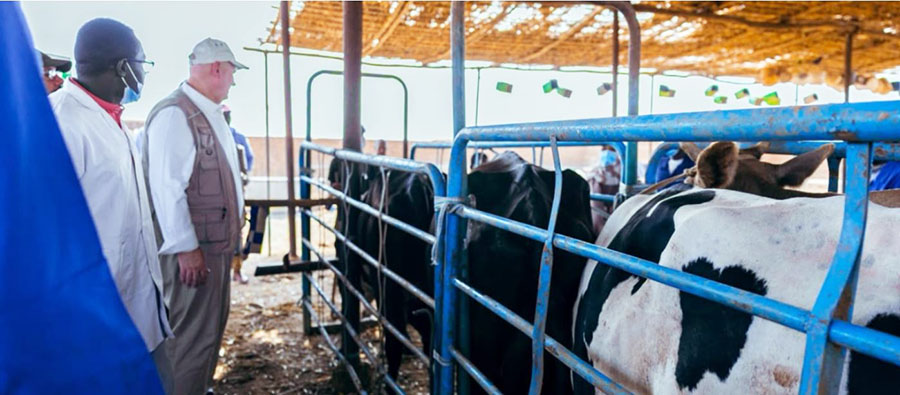
FAO Launches Livestock Vaccination Campaign in Sudan
Moatinoon
The Food and Agriculture Organization of the United Nations (FAO) has announced the launch of a national livestock vaccination campaign in Sudan. The initiative aims to protect 9.8 million head of livestock and safeguard the livelihoods of 1.2 million livestock-owning households amidst ongoing conflict, displacement, and a worsening food crisis.
In a statement issued yesterday, the international organization noted that the campaign—an extension of a successful 2025 initiative—will cover all 18 of Sudan’s states during the 2026–2027 period. It forms part of the FAO’s broader emergency response to protect agricultural production, enhance food security, and support the recovery of rural communities.
The campaign’s launch was announced in the East Nile area during a visit to Sudan by Rein Paulsen, Director of the FAO’s Office of Emergencies and Resilience. Paulsen traveled this week across Khartoum, White Nile, and Sennar states, meeting with government officials, farmers, herders, fishers, technical experts, women, and youth.
"It is clear: Sudan’s farmers, herders, and fishers are resilient," Paulsen said. "I met people determined to rebuild their lives despite the challenges. For many, livestock are their most valuable asset, and for families in need of humanitarian assistance, livestock provide a vital source of nutritious milk." Sudan’s livestock sector—estimated at approximately 115.4 million head in 2025—is a vital source of nutrition and income for millions of pastoralist and farming households. For internally displaced communities in particular, milk plays a pivotal role in preventing malnutrition among children.
The conflict that erupted in April 2023 disrupted animal health services, damaged veterinary infrastructure, and weakened disease surveillance and vaccination systems. The Organization estimates livestock-related losses at approximately 3 billion.
The destruction of the Central Veterinary Research Laboratory in Soba—the national veterinary reference center and the country’s sole producer of veterinary vaccines for over five decades—further eroded national capacity to diagnose and respond to animal diseases. Prior to the conflict, the laboratory produced up to 35 million vaccine doses annually.
To bridge this gap, the Organization supported the importation of approximately 23 million vaccine doses in 2025, alongside managing the cold chain, transport, and distribution. For the first time, the Organization delivered vaccines via a cross-border supply corridor from Chad to Darfur. Between October 2025 and July 2026, the Organization vaccinated 8.4 million head of livestock, benefiting around 537,000 households—equivalent to 2.7 million people.
Beyond protecting livestock, the Organization’s support in Sudan extends to crops and fisheries. National cereal production remains 22–25 percent below the average of the past three years.
The Organization has supported vulnerable farming households by distributing crop seeds and other agricultural assistance. During the 2024–2025 season, it reached over 832,000 households across 15 states with more than 8,000 tonnes of seeds, contributing to a total cereal production of 6.6 million tonnes.
However, needs continue to outstrip available resources. The Organization’s current emergency and resilience portfolio in Sudan stands at 44.1 million, against a 193 million appeal under the 2026–2028 Emergency Response Plan. Only 11 percent of the emergency agriculture requirements outlined in the 2026 Sudan Humanitarian Response Plan have been funded.
The Organization calls for increased funding for emergency agriculture to help farmers and herders protect their crops and livestock, sustain food production, and build resilience in the face of conflict and climate shocks.
