
Updated: 27 September 2026 20:51:26
Sudan and Post-War Questions: What Happens After the Guns Go Silent?
By: Ameer Babiker Abdalla
Published at Ultra Sawt
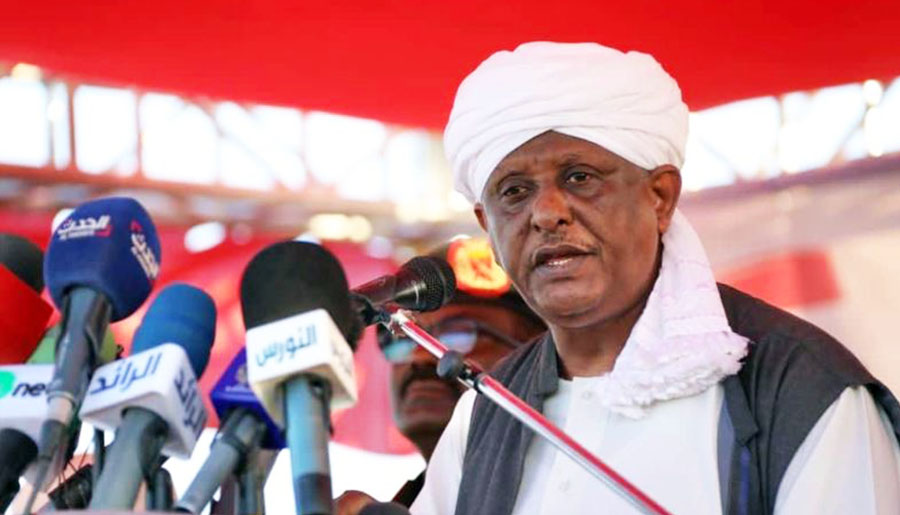
General Yasir Al-Atta, Deputy Commander-in-Chief of the Sudanese Armed Forces, stated in an interview with the Egyptian newspaper Al-Shorouk published on Sunday that "Al-Burhan is not clinging to power, but we fear for our country from collapsing, and we fear for the entity of the state. We will force him to stay in power, to be the head of authority for a number of terms until we are able to strengthen and support our parties into becoming national parties, and for the Sudanese youth to form new, strong, national parties whose sole agenda is the nation. We will involve them in governing so that they acquire experience until we hand over power to them."
Al-Atta revealed the existence of more than one vision within the army leadership regarding the arrangements for the upcoming phase. Among these is that the Commander-in-Chief of the Armed Forces serve as head of state during the first electoral term, while the winning political parties manage the executive branch, after which the Commander-in-Chief would retire and run in a subsequent election.
This statement—which dropped like a stone into a pond that was far from still, its surface already overflowing with the war and its repercussions—indicates that leaders within the military establishment are placing two "sand tables": one for operational military planning and another for political planning to shape Sudan’s future according to their vision, shuttling between them simultaneously. To the same extent that commanders strive to draft military plans as a primary professional duty for a state institution, they devote equal attention to the "sand table" of political planning.
Despite Al-Atta’s reference to Al-Burhan’s rejection of a youth group’s initiative announcing his presidential candidacy, Al-Burhan made his statements from Al-Atta’s own home in the presence of that very group, pointing to a link between their move and Al-Atta’s recent remarks.
Despite the roar of monumental events gripping Sudan and its people, these statements forced post-war questions to float powerfully to the surface, carrying within them the root causes of the wars outbreak, the history of civil wars in the country, as well as their repercussions and impacts on the people.
Perhaps the first question that surfaced following Al-Attas statements is: Who will shape Sudan when the guns go silent? The question of the "day after" the war is no longer a deferred inquiry awaiting the end of battles. While military operations continue, differing visions are already taking shape regarding the state, authority, the army, elections, and the transitional phase. This means that the struggle over the next Sudan has begun before the war over the current Sudan has even ended.
The Army and Politics: The Deferred Question
In turn, I threw what General Yasir Al-Atta said into the "WhatsApp" contact list on my phone to gauge the opinions of various groups, including political observers across the right, left, and center, former military officers, youth, and women. The engagement was remarkable as an indicator, suggesting that the statement had a strong impact—between those supporting the idea, those opposing it, and others who mocked it, viewing it as a demolition of any middle-ground dialogue amid their daily struggles to secure basic livelihoods.
These statements brought back to the forefront the oldest dilemma of the Sudanese state: the relationship between the military establishment and politics. The army is an extraordinary institution in a country like Sudan, which has long known coups and military rule, remaining one of the key actors in defining the structure of power—and at times, being the power itself.
Writer and political activist Montaser Ibrahim told Ultra Sudan that Yasir Al-Atta’s remarks explain the nature of political life in Sudan and the countrys post-war future. He added that this proposal expresses the specific Sudanese crisis of consensus—consensus as a political project, agreement, and efficacy—"including political parties and their ineffectiveness, the military establishment, and the lack of a minimum level of agreement and consensus among all parties."
Ibrahim sees an urgent need to find a formula to overcome the agreement crisis surrounding governance and state administration. He noted that the military establishment, by virtue of reality, holds the reins of the Sudanese state and hands out certificates of patriotism. He argued that this issue requires serious dialogue to create common ground on governance, which is essential to transitioning away from political instability, civil war, and economic collapse, "rather than the arbitrary judgments issued by Yasir Al-Atta."
To achieve this transition, Ibrahim made it a condition that all political and military actors, bureaucratic leaders, and intellectuals sit down together to agree on a shared vision, rather than each party turning inward around its own perspective.
In the same context, historian and archaeology researcher Fathi Abdel Aziz considers that the phase of general collapse caused by the war has placed the military establishment—"with all its flaws"—as the guarantor of state survival, "which is a flawed reality under abnormal circumstances." Speaking to Ultra Sudan, he noted that civil society institutions, which are usually relied upon, are themselves in a state of collapse and fragmentation.
Abdel Aziz denied that Al-Burhan remaining in power is the sole way for the Sudanese people to escape from between the anvil of the military establishment and the hammer of political parties. He believes the peoples options for rebuilding the state are available, including a civilian authority of independent technocrats and specialists that rebuilds state institutions and the wheels of the economy within a five- or ten-year plan. "This would also provide an opportunity for political parties to rebuild and compete in the future through free and fair elections in an actual state of institutions, rather than the ruins of a state."
A State Before or After the War
The current war makes the issue far more complex. The military establishment is fighting a war it views as a battle to defend the state, while simultaneously its leaders discuss future political arrangements. Here, separating the military role in protecting the state from the political role in managing it becomes a central issue in any post-war arrangements, with the direction moving toward reshaping the state, society, and the relationship between political authority and the military establishment.
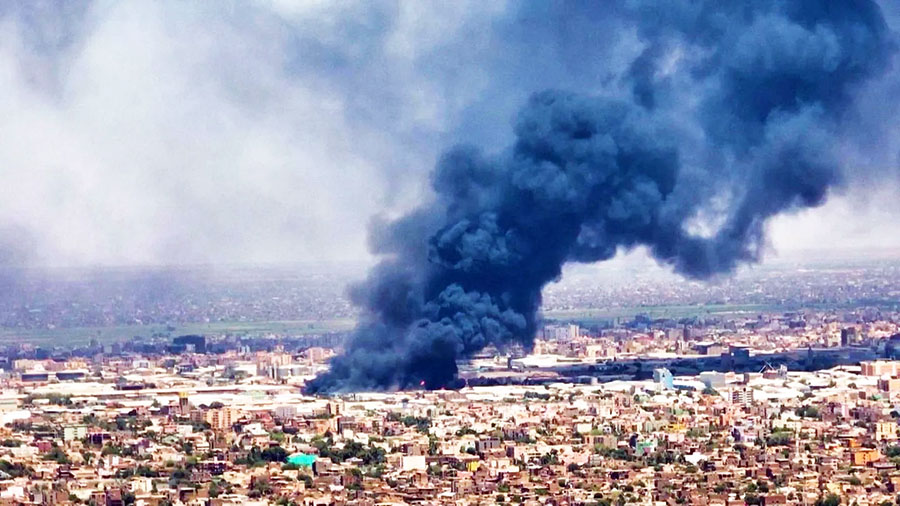
A return to the pre-April 15, 2023 status quo appears, on a realistic level, far more complicated than some political visions might suggest. The balance of power has shifted, weapons have proliferated, the circle of armed actors has expanded, state institutions have been damaged, millions have been displaced, the economic and social fabric has altered, and political and societal divisions have deepened.
Therefore, the post-war phase should not be reduced to a ceasefire, the formation of a transitional government, or a call for elections. Rather, it is a matter of redefining the state itself and building its institutions in accordance with a permanent constitution that defines the right to possess and use force, establishes how authority is structured, sets the relationship between the army and the government, determines wealth distribution between the center and the regions, and ensures that war does not return by addressing its root causes.
Media personality Mujahid Nasr El-Din says the significance of Al-Atta’s statement lies not only in discussing the future of General Abdel Fattah Al-Burhan, but in the political concept it carries regarding governance and the future of the Sudanese state. He added: "Saying that Al-Burhan could stay in power for several terms to give parties a chance to strengthen themselves opens a broader debate regarding who holds the right to determine the future of authority in Sudan, and what role the military establishment ought to play in political life."
Nasr El-Din pointed out that using the phrase "we will force Al-Burhan into power" goes beyond the person of Al-Burhan to touch the core of political legitimacy in Sudan. He maintained that a head of state remaining in power should not be a decision imposed by a political or military force, but rather a matter governed by constitutional institutions, popular will, and the rules regulating the transition of power.
Distinguishing Between Two Matters
The issue is not about the right of military personnel to participate in politics as citizens—a right that can be regulated by the constitution and the law. Rather, it concerns the professional and functional nature of the military establishment under a civilian system of governance, ensuring that neither it nor its military power and position are exploited in politics.
If the military establishment becomes the entity that defines the transitional phase, sets its timeframe, chooses who leads the state, and determines the conditions for political participation, then elections themselves may become part of a political arrangement whose rules are set by the military establishment before it even begins. Conversely, if the army is a national institution subject to an elected civilian authority, its role during the transitional phase remains governed by the constitution and the law, not by the balance of military force.
Post-war questions will continue to surface as we feel our way toward discovering what we will do with Sudan when the guns finally go silent.

