Updated: 28 September 2026 13:17:42
In the Absence of the Guardian at the Gate of Hope
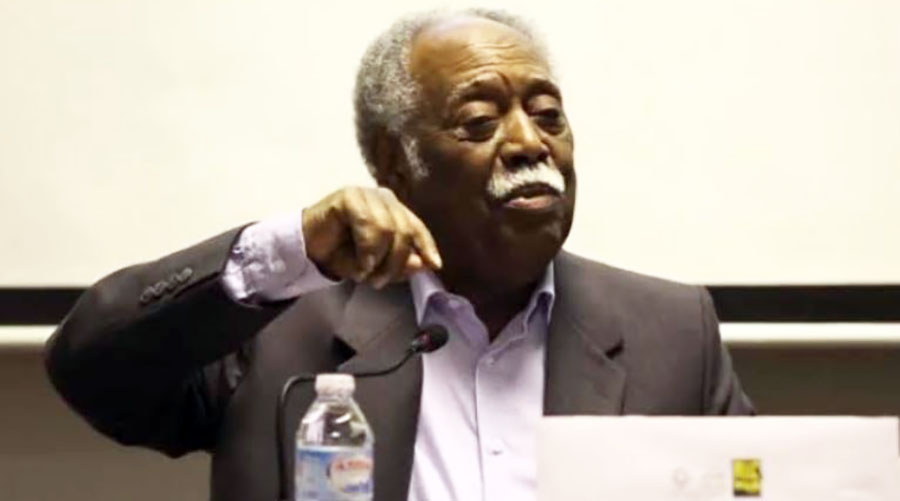
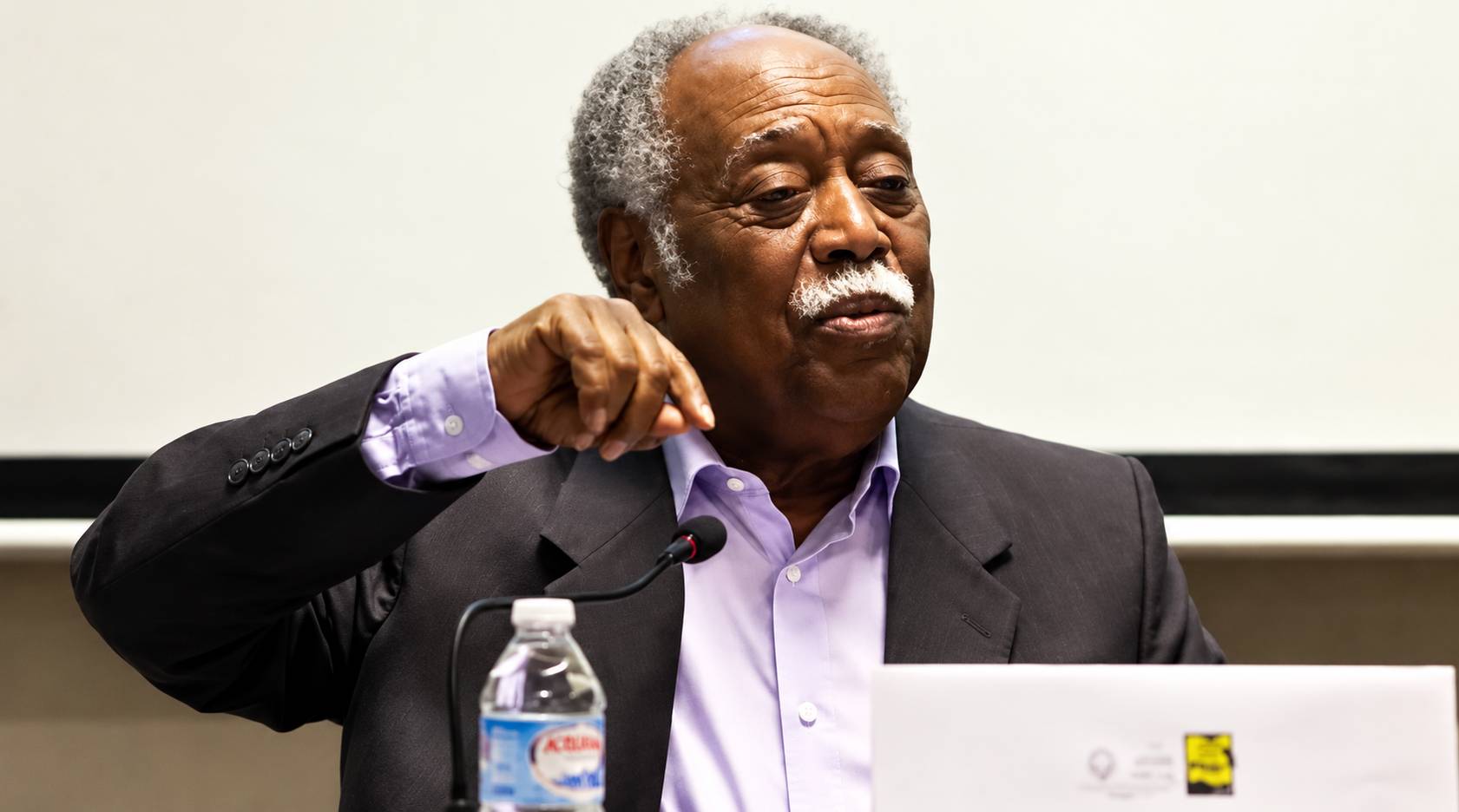
In Cairo, on September 25, 2026, the prominent Sudanese thinker, writer, and sociologist Dr. Haydar Ibrahim Ali passed away at the age of eighty-three. His departure follows an intellectual, academic, and cultural journey spanning more than five decades, during which he was deeply consumed with issues concerning Sudanese society, the state, democracy, freedoms, and enlightenment. He leaves behind an expansive body of work in sociology, as well as political and religious thought, along with the legacy of the Centre for Sudanese Studies and its journal, Kitabat Sudaniyya (Sudanese Writings).
Perhaps the true value of Dr. Haydar Ibrahim Ali lies not only in the books and studies he left behind, but even more so in the synergy between his intellectual project and his public persona. In the eyes of many who knew him or followed his work, he remained an intellectual who viewed knowledge as a moral responsibility toward society, and writing as an act that transcends mere authorship to become a vehicle for understanding and transforming reality.
Eulogies of Poets
In his eulogy, the poet Abdel Latif Hassan moves beyond intellectual writing itself to speak of the human being behind it. He writes that many qualities made him love Haydar Ibrahim "far beyond his rigorous intellectual writings, his methodology in analyzing Sudanese problems, his engaging narrative style, his way of asking questions, and his proposed solutions." Abdel Latif adds that Haydar was, in his eyes, "a free human being in the truest sense of freedom"—one who rose above petty matters and restrained himself from sliding into vulgarity.
Abdel Latif believes that this personal integrity earned Haydar respect even among his intellectual opponents, noting that he was never fond of constructing personal glory. Rather, he was "stern and sincere in his intellectual endeavors to address the issues plaguing Sudanese society," dedicating his knowledge, time, and effort to the service of Sudan.
The poet encapsulates the depth of his loss in a profoundly meaningful phrase: "Haydars death was not the death of a single man, but the collapsing of an entire nations foundation." In his passing, as Abdel Latif puts it, we have not merely lost an intellectual figure; we bid farewell to the life of a man who—despite what Abdel Latif describes as times of decadence and deterioration—remained far above personal feuds and petty squabbles, remaining steadfastly preoccupied with the grand issues of his nation.
The Experience of the Centre for Sudanese Studies
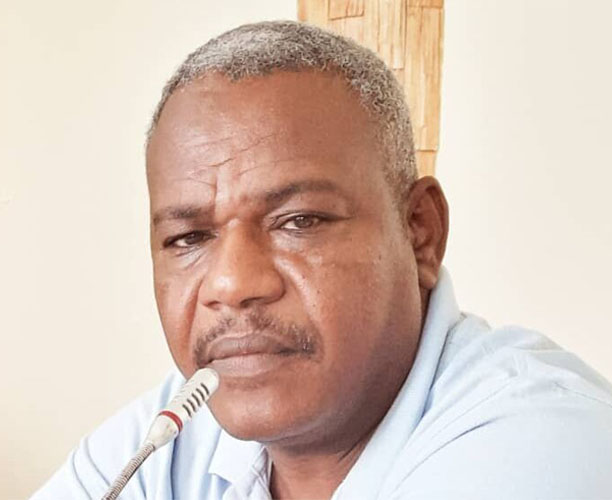
The poet Babiker El-Wasila approaches Haydar’s legacy through the lens of his knowledge project. He recalls Haydar’s academic beginnings, his move to Germany to study social sciences, and his subsequent work on social and cultural transformation within Sudanese society. In El-Wasila’s testimony, Haydar emerges as one of those intellectuals who were not content with merely describing reality, but actively sought to contribute to the creation of a "new culture" that transcends what El-Wasila terms an "old mindset."
Viewed from this angle, the experience of the Centre for Sudanese Studies represents much more than a publishing house or a research institute. Haydar founded the center in Cairo in 1992, and over time it transformed into a hub for research, publishing, and dialogue on Sudan, producing books, academic studies, and the journal Kitabat Sudaniyya. According to center records, Haydar authored dozens of works covering sociology, religion, politics, democracy, and civil society. Among his most notable titles are The Crisis of Political Islam, Democracy and Civil Society in Sudan, Intellectuals: Formation in Sudan, Civil Society and Traditional Society in Sudan, Sudan: The Lost Homeland, and Securityocracy and the Renewal of Despotism in Sudan, alongside his autobiography, Times of Wind, Anxiety, and Freedom.
Babiker El-Wasila describes this project as an effort to "erase the authority of blank paper" and establish the authority of writing and awareness. He considers the centers impact as extending far beyond the books and periodicals it published to encompass generations of writers and researchers who drew inspiration from its ethos. Thus, El-Wasila remarks: "These brilliant cultural lights will not go out as long as successive generations have already quenched their thirst from his flame."
At the conclusion of his tribute, El-Wasila points to a poignant irony: Haydar passed away just as Kitabat Sudaniyya was preparing a new edition. It is as if the project initiated by its founder continues its life after his absence, rendering writing itself one of the ways the man endures.
The Intellectual and Society Debate
The poet Mughira Harbiya chooses a concise title for his testimony: "He wrote a lot. But readers are few." It is a phrase that condenses, in his view, one of the fundamental dilemmas in the relationship between the Sudanese intellectual and society.
Harbiya states that for over fifty years, Haydar Ibrahim remained "diligent and persevering" in confronting backwardness and political and intellectual Salafism, while advocating for the establishment of modern social and civil institutions. He notes that Haydar’s critique of Islamist rule in Sudan was intrinsically linked to his vision of state and society, as well as his deep-seated fears regarding the dismantling of modern institutions in favor of tribal loyalties.
In Harbiya’s reading, Haydar believed that resolving Sudans crises could not be achieved solely by engaging with the center of power, but required attending to communities far removed from the center—developing them, understanding the transformations between rural and urban spaces, and resisting violence and division through the tools of intellect and knowledge. Hence, Harbiya describes him as a "brilliant intellectual who sought to stave off war from urban centers by developing peripheral communities, opposing the centers hegemony over everything through calm, reasoned thought."
From Al-Gureir to the Sphere of Sudanese Thought
Haydar Ibrahim Ali was born in Al-Qureir in northern Sudan in 1943. He began his education in Sudan, earning a diploma in History and Education from Omdurman College in 1966. He went on to receive a Bachelors degree in Sociology from Cairo University in 1970, before obtaining his PhD in the Philosophy of Social Sciences from Frankfurt University in Germany in 1978. He subsequently held numerous academic and research positions inside and outside Sudan, including university teaching posts in Libya, Saudi Arabia, the United Arab Emirates, and Sudan. He also served as the Coordinator for Studies and Publishing at the National Council for Arab Culture in Rabat.
Dr. Haydar specialized in the sociology of religion, focusing primarily on issues of enlightenment, liberation, the critique of political Islam, democracy, and civil society. In 1992, he established the Centre for Sudanese Studies in Cairo, which became one of his most prominent intellectual and cultural endeavors, before the centers operations were later relocated to Khartoum in the early 2000s.
Throughout this journey, Haydar was never an isolated academic detached from public affairs. He maintained an active presence in debates surrounding the Sudanese state and its transformations, writing critically about Islamist governance, despotism, democracy, identity, and civil society. His extensive body of work spanned topics ranging from sociology and development to religion, politics, and culture.